


/file/publisher-c1a3f893382d2b2f8a9aa22a654d9c97/2023/09/9e66e826c72cd3e02fb776490a356294.jpg)

Suaram: Sosma detainees undergo deep psychological, financial trauma
Detainees of the Security Offences (Special Measures) Act (Sosma) and their family members experience deep psychological and financial trauma while in detention and after they are released, Suaram said.
These are among the findings of the human rights group's report called 'The Socioeconomic Impact of Sosma Detention in Malaysia' launched at the Kuala Lumpur and Selangor Chinese Assembly Hall today.
The report interviewed three former Sosma detainees who were
Detainees of the Security Offences (Special Measures) Act (Sosma) and their family members experience deep psychological and financial trauma while in detention and after they are released, Suaram said.
These are among the findings of the human rights group's report called 'The Socioeconomic Impact of Sosma Detention in Malaysia' launched at the Kuala Lumpur and Selangor Chinese Assembly Hall today.
The report interviewed three former Sosma detainees who were later convicted under the Penal Code, two persons who were detained under Sosma and later released, the families of three current detainees, and the family of a former detainee.
Independent researcher Siti Nurizzah Mohd Tazali conducted the interviews between August and September via phone and in person with the consent of the interviewee.
Input for the report was also garnered from a previous town hall held with 120 individuals affected by Sosma, which provides for detention without trial.
Speaking at the launch, Suaram executive director Sevan Doraisamy said the majority of Sosma detainees experienced a drastic drop in their income level, as they ended up losing their jobs after being detained, and found it hard to get employed after their release.
"This not only affects the detainees, who are mainly from the B40 (low income) group, but their families are also forced to take on extra financial burden in the former's absence.
"This includes up to RM1,000 a month to visit their detained kin, and exorbitant legal fees which can go up to hundreds of thousands of ringgit," he added.
Broken families, problematic children
Sevan pointed out Sosma also led to broken families, and psychologically impacted detainees' children.
"The majority of children experienced emotional pressure and instability, to the extent of affecting their education. Some refused to go to school, while others had trouble sleeping.
"This directly translated into a dip in their grades, and many resorted to absenteeism, due to fear of being stigmatised and teased by their peers," he said.
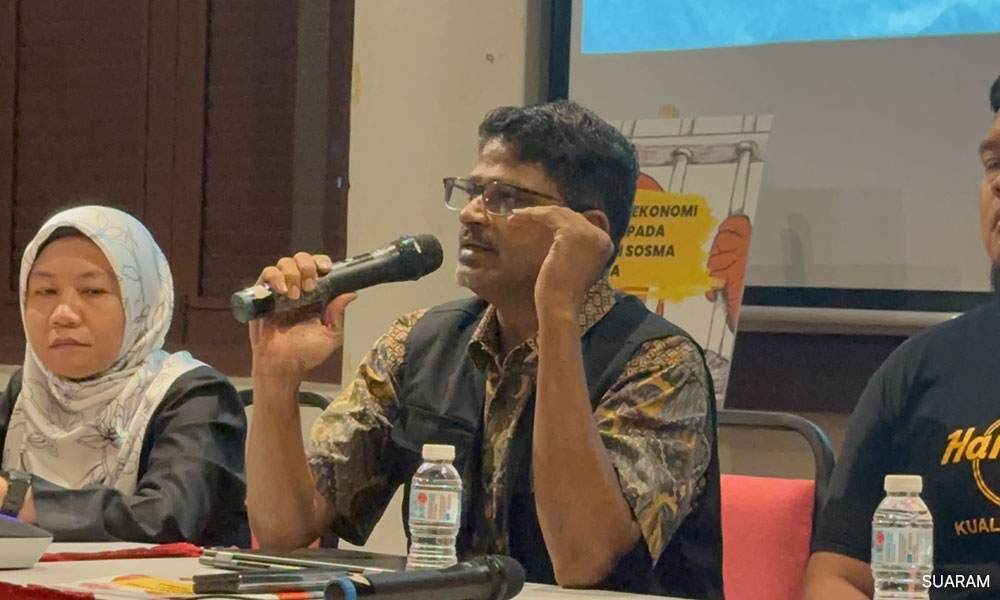
Sevan proposed several ways to remedy the situation, including allowing detainees early access to lawyers, giving them bail, expediting their hearing dates, and providing a support mechanism to detainees and their families during detention and after release.
"There should be education and skills training for the detainees, and financial aid to them post-release so that they can re-integrate into society.
"Mainly, there should be a huge support system for single mothers who have to shoulder the burden after their husbands are detained," he noted.
Suaram urged the government to take heed of the proposals and work on much-needed reviews of the controversial law.
'Treated like a punching bag'
During the report launch, former detainee Nur Redzwan Wan Redzmann related his experience of being detained under Sosma.
In 2016, Redzwan was detained for voluntarily providing support to the Islamic State terrorist group and was also accused of giving support for the commission of a terrorist act involving the use of explosives.
He was later jailed for six years under the Penal Code.
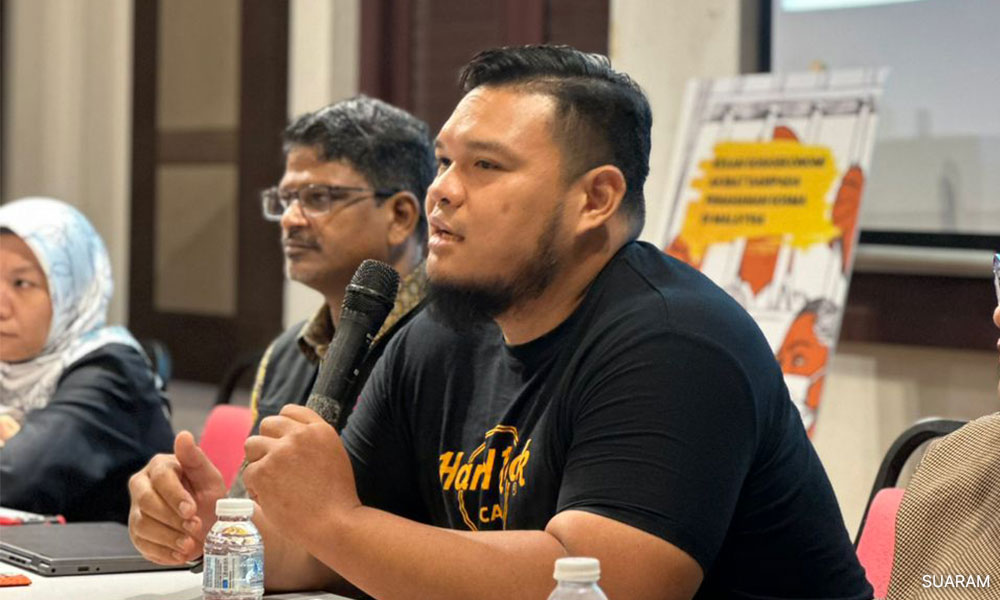
The 35-year-old claimed that he was detained merely for being in a Telegram group that the authorities said was linked to terrorist activities.
"I was invited by a friend to join the group, and since he said it provides updates into the situation in Syria and Palestine, I just joined," he shared.
Redzwan claimed he was treated like a “punching bag” during his 28 days of Sosma detention, probably due to his stout build.
"I was accused of jihad, and they got a forced confession from me. I just signed and confessed to things I did not know about as I could not take the beatings," he said.
Redzwan also claimed he met Prime Minister Anwar Ibrahim while the latter was in Sungai Buloh prison, and said they constantly chatted.
"He (Anwar) always used to give talks every weekend at the prison mosque and narrated his experience. He had personally told me that Sosma was a 'ridiculous' law.
"He used to say 'wait until we become the government' (for changes/repeal of the law), but maybe he is busy with other tasks now, and has not come around to it."
'Charge them if they've done wrong'
The wife of a Sosma detainee also tearfully shared her predicament at the event.
According to Aberameshwary Arumugam, her husband was detained under Sosma in June 2022 and remains in detention to date.
"His next court date is July 2024, and by then, it would be two years of him being detained without trial.
"We, the family, have been deeply affected by his imprisonment and I don't know what else I can do," she lamented.
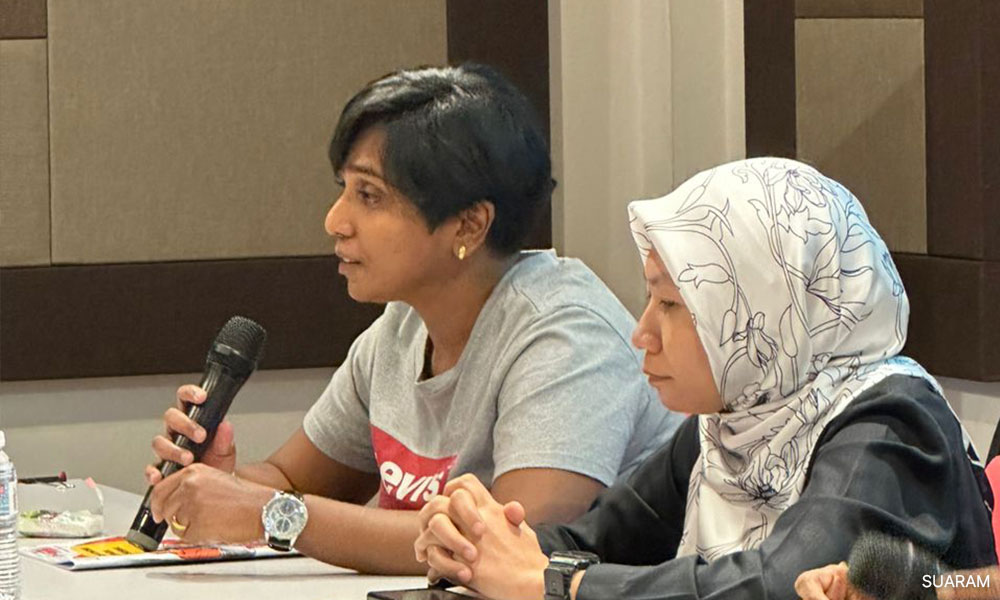
Aberameshwary said her husband was not even allowed to attend his father's funeral and was only permitted a video call half an hour after the latter was cremated.
"I lost my job as a tutor and my earnings have gone down to zero. Luckily, they allowed us to withdraw from the Employees' Provident Fund (EPF) so we are surviving on that.
"In addition, I also owe my lawyer so much of money," she said, adding that she has written to the Home Ministry, the Attorney-General's Chambers, and even the Prime Minister's Department multiple times, regarding her situation but to no avail.
She stressed that she was not defending her husband if the latter had done wrong.
"If they (detainees) have done wrong, charge them in court accordingly. Why detain without trial?" she asked.
/file/publisher-c1a3f893382d2b2f8a9aa22a654d9c97/2023/08/146e6b748f8cf0ebbf3844f3116f8b26.jpg)
/file/publisher-c1a3f893382d2b2f8a9aa22a654d9c97/2022/04/1106d0e313aab212180e41034094285a.png)
/file/publisher-c1a3f893382d2b2f8a9aa22a654d9c97/2022/12/388bdf408c14c1be44a76b6386a5ee4b.jpg)
/file/publisher-c1a3f893382d2b2f8a9aa22a654d9c97/2023/08/193656600ca608cefed81a77fb057256.jpg)
/file/publisher-c1a3f893382d2b2f8a9aa22a654d9c97/2021/01/8ad6f03a006b1788cf136b7e572d2201.jpg)


Are you sure you want to delete this comment?
This action cannot be undone.