




PM: Asia Pacific war would be lunacy
Countries in the Asia Pacific region have forged strong trade and investment links that should make any thought of war a "lunatic proposition," said Prime Minister Abdullah Ahmad Badawi.
Countries in the Asia Pacific region have forged strong trade and investment links that should make any thought of war a "lunatic proposition," said Prime Minister Abdullah Ahmad Badawi.
Abdullah said there would be huge economic costs if these countries engaged in violent confrontations.
"As we trade more and invest more with each other, the costs would in fact become even more forbidding. War would indeed be lunacy," Abdullah said at a regional security forum in Kuala Lumpur.
Trade and investment in East Asian countries are growing at a rapid pace, with 40 percent of Asia's total foreign direct investment flowing among them, Abdullah said.
In 2005, about 70 percent of both exports and imports of APEC countries were within the 21 member nations themselves, he added, referring to the Asia Pacific Economic Cooperation Forum.
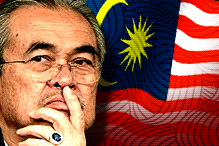 Abdullah said the security situation in the region had improved in the last year, as tensions eased between North and South Korea as well as between China and Japan.
But he described the region's present situation as a "delicate one" while countries strengthen regional cooperation but at the same time continue preparations for possible confrontations.
"We might consider this parallel approach pragmatic and realistic to take care of lingering distrusts... In all probability, we can live with this situation of guarded peace," Abdullah said.
"I think we can do more, much more, to lay down a firm foundation for enduring peace, stability and prosperity in the region than we are doing now," he said.
War unimaginable
The prime minister lauded the Asean set-up, saying that the Southeast Asian countries had developed a system that manages peace and security within a framework of cooperation that had helped bring stability to the region.
Asean is the 10-member Association of Southeast Asian Nations which includes Malaysia and its neighbours. The group was founded in 1967 at the height of the war in Vietnam.
"War has become unimaginable. Many territorial disputes are being settled through peaceful negotiations or through judicial settlement," Abdullah said.
He was speaking at the five-day Asia-Pacific Roundtable of academic experts that began in the Malaysian capital Monday.


Are you sure you want to delete this comment?
This action cannot be undone.