


/file/publisher-c1a3f893382d2b2f8a9aa22a654d9c97/2021/09/9a9986fbe204864e42d9eb6eed5029b5.jpg)

Apex court dismisses Najib and son's appeal over tax ruling
The five-person bench chaired by Court of Appeal president Abang Iskandar Abang Hashim unanimously dismissed the appeal this morning.
Former finance minister Najib...
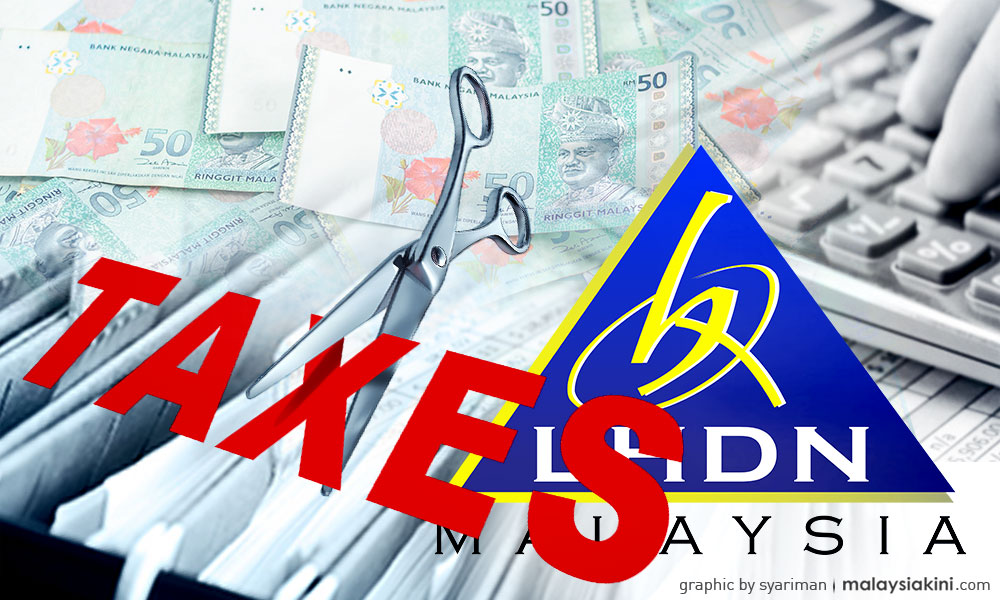
The Federal Court denied an appeal by former prime minister Najib Abdul Razak and his son to quash the summary tax judgments against the duo for RM1.69 billion and RM36.7 million respectively.
The five-person bench chaired by Court of Appeal president Abang Iskandar Abang Hashim unanimously dismissed the appeal this morning.
Former finance minister Najib (above, left) and businessperson Mohd Nazifuddin had sought to be allowed to present their statements of defence against the Inland Revenue Board’s (IRB) tax suits.
The duo’s appeal hinged on their contention that Section 106(3) of the Income Tax Act 1967 (ITA) is invalid for contravening Article 121 of the Federal Constitution. Article 121 is in relation to the powers of the judiciary in Malaysia.
Section 106, in general, empowers the IRB to institute a civil action in court to recover tax arrears and penalties from taxpayers.
Section 106(3) specifically states that in relation to IRB civil actions to recover taxes, the court “shall not entertain any plea that the amount of tax sought to be recovered is excessive, incorrectly assessed, under appeal, or incorrectly increased”.
In reading out the unanimous verdict on behalf of the apex bench, fellow member judge P Nallini ruled that striking down Section 106(3) would result in a delay in the government’s tax procurement.
She said this is because taxpayers at every level of the judicial system would seek full trial of the IRB’s lawsuits to collect the taxes.
Not end of the road
Nallini pointed out that this is not the end of the road for any tax assessment dispute by Najib and his son, as the duo can still bring their case for reassessment before the non-judicial body Special Commissioners of Income Tax (SCIT).
She noted that the Kuala Lumpur High Court, in issuing a summary judgment ruling against Najib and Nazifuddin per Section 106, was merely fulfilling the purpose of recovery or collection only and was not undertaking a full judicial adjudicatory role.
Nallini pointed out that full adjudicatory judicial power is deferred to any appeal that may arise from Najib or Nazifuddin not being satisfied with the outcome of their tax reassessment case before SCIT.
“This is consonant with the ‘Pay first dispute later’ mode of tax imposition by the government,” she said, adding that this mechanism is utilised the world over such as in South Africa, Australia, Ghana, and the China Special Administrative Region of Hong Kong.
“The ITA has the object of ensuring that taxes are collected efficiently and expeditiously in the interests of the citizens of the nation as a whole.
“Section 106(3) ITA has a rational relation to the collection of taxes efficiently and expeditiously in that it serves to ensure that for the purposes of enforcement, section 106(3) ITA precludes matters which are deferred to the dispute resolution mode specified in the statute,” Nallini said.
She also made no order as to costs.
Ongoing appeals
Najib and Nazifuddin have ongoing tax reassessment appeals before the SCIT.
IRB also has separate ongoing bankruptcy proceedings in the civil court against the father and son.
The summary judgment, issued by the Kuala Lumpur High Court in 2020, allowed the IRB's civil action to seek RM1.69 billion and RM37.6 million from Najib and his son respectively, while dispensing with the need to consider the duo’s defence against the suit.
The duo’s appeal basically sought to quash the summary judgment and be allowed to present their defence against the tax suits before the civil court.
Najib and Nazifuddin failed in an earlier appeal before the Court of Appeal on Sept 9, 2021, to reverse the summary judgment.
The duo’s legal team contended that Section 106(3) is unconstitutional as it takes away the court’s power (as per Article 121) to consider the defence of a taxpayer against the IRB’s civil actions to recover the tax.
/file/1360/90e704055c949a5260f6a4e45392b1c4.jpeg)
/file/publisher-c1a3f893382d2b2f8a9aa22a654d9c97/2022/05/b25475565b78f442bc8db5ee1e67b712.jpg)
/file/publisher-c1a3f893382d2b2f8a9aa22a654d9c97/2021/09/9a9986fbe204864e42d9eb6eed5029b5.jpg)
/file/publisher-c1a3f893382d2b2f8a9aa22a654d9c97/2019/08/34bc3f306ffdde414dc0d30168dee87e.jpg)


Report this comment
Are you sure you want to delete this comment?
This action cannot be undone.