


/file/publisher-c1a3f893382d2b2f8a9aa22a654d9c97/2023/10/7fdfab86c48858ef620398ce516a0ae6.jpg)

Groups reject claims that new way to mine rare earth isn’t damaging
Environmentalists and activists reject claims that in-situ leaching for rare earth is not environmentally damaging.
They said even though it might not cause as much above-ground clearing as open mining, the pumping of ammonium sulphate into the ground to extract rare earth over a period of years poses a risk of groundwater pollution, which could contaminate drinking water sources for hundreds of thousands of households.
Environmentalists and activists reject claims that in-situ leaching for rare earth is not environmentally damaging.
They said even though it might not cause as much above-ground clearing as open mining, the pumping of ammonium sulphate into the ground to extract rare earth over a period of years poses a risk of groundwater pollution, which could contaminate drinking water sources for hundreds of thousands of households.
It could also negatively impact biodiversity including aquatic life, especially when mining is conducted in environmentally sensitive areas, Sahabat Alam Malaysia’s Hilary Kung said.
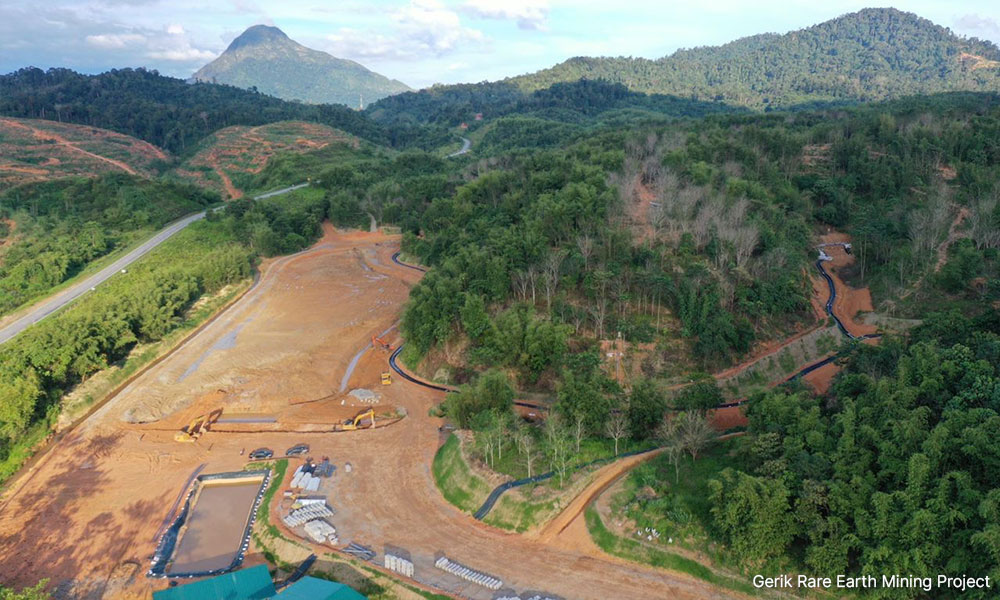
This comes as the government announced that states are allowed to do early exploration of rare earth, following the review of a pilot project for in-situ leaching mines in Gerik, Perak.
Minerals and Geoscience Department director-general Zamri Ramli said an audit revealed that the pilot project also met the requirements of relevant technical agencies, but the report was not made public.
The government is also working on a national standard operating procedure for rare earth mining as part of its bid to develop upstream and downstream industries for rare earths.
Groups speaking out against rare earth mining at a conference in Petaling Jaya yesterday said it is basing its assessment on earlier Environmental Impact Assessment (EIA) reports, including for rare earth mining in Pos Lanai, in Pahang.
However, the project was shelved following community resistance.
PSM secretary-general A Sivarajan, who had assisted the Pos Lanai Semai community in opposing the lanthanide mine proposal, said details of the proposal make it clear that the in-situ leaching plan is not as green as claimed.
READ MORE: After victory over dam and loggers, Orang Asli activist takes on Putrajaya
“Inside the forest, you have many, many ponds, sedimentation ponds and so on. Huge tanks of sulphuric acid, sitting in the middle of the forest, from which they will make ammonium sulphuric acid. And this will sit for two years,” he said.
According to him, there will also be structures like labs and buildings and roads will be made for vehicles to go into the area.
“You have forest clearing. It’s a mess and not much more different than open mining,” he added.
He added that the plan presented in the EIA showed that the ponds would be lined with plastic to avoid chemicals from seeping into the ground but the efficacy is questionable.
“They will put layers and layers of plastic to ensure chemicals won’t seep into the soil but we don’t know whether this will be the case in our tropical climate.
“Who will monitor this in the area which is controlled and managed by the mining company? Will the Department of Environment go in and check all the time? I don’t think so,” he said.
He added in engagement sessions about the project, the National Water Commission (Span) also acknowledged that the Telom River, which could be potentially polluted, also feeds water treatment plants for some 120,000 households.
Misleading to call it non-radioactive minerals
Additionally, Kung said the classification of the rare earth minerals as “non-radioactive rare earth elements” is also “misleading” because they include thorium, which is a radioactive mineral.
“Calling them non-radioactive rare earth elements is misleading and an incorrect scientific fact because uranium and thorium naturally exist alongside the clay and radioactive elements in the process,” she said.
She said the EIA for a pilot mine in Perak showed that two out of six samples of clay, from which the rare earth minerals are extracted, had radioactivity levels above the regulated level of one becquerel per gramme.
She also raised concerns that there may be instances where forest reserves, including environmentally sensitive areas, will be degazetted to allow state governments to mine for rare earth.
She added that instead of trying to capitalise on rare earth, the government should look into developing alternatives to rare earth which the industry is starting to explore.
She said because rare earths are a finite resource which is costly to get, major manufacturers are already exploring different technologies to manufacture their products without being dependent on rare earths.
“Major manufacturing is already investing in this so Malaysia should invest in this alternative to rare earth elements and leapfrog.
“Rare earth elements are non-renewable resources, so when we run out of rare earth elements, what will happen to upstream and downstream resources in the future?” she asked.
/file/publisher-c1a3f893382d2b2f8a9aa22a654d9c97/2022/09/ee680dae5df241e6dae2640287e4c002.jpg)
/file/publisher-c1a3f893382d2b2f8a9aa22a654d9c97/2023/10/fa798eec3b1bf086ef75b9611ff90119.jpg)
/file/publisher-c1a3f893382d2b2f8a9aa22a654d9c97/2019/04/91eebab9f4f0659ddcbe4b9bf99aee9d.jpg)
/file/publisher-c1a3f893382d2b2f8a9aa22a654d9c97/2023/02/b0da8896a2d6d6b0d1bc11e76737a669.jpg)
/file/publisher-c1a3f893382d2b2f8a9aa22a654d9c97/2023/04/dae3aa196a8c4342af9728982831b0ea.jpg)
/file/publisher-c1a3f893382d2b2f8a9aa22a654d9c97/2023/10/25451e43679f98ab633a304a41585396.jpg)


Are you sure you want to delete this comment?
This action cannot be undone.