


/file/publisher-c1a3f893382d2b2f8a9aa22a654d9c97/2023/10/779c4db32fcc6d34917cc7d874b352fe.jpg)

Govt not serious in tackling transborder haze, says group after law dropped
Environmental watchdog Greenpeace has slammed the government for not being serious in tackling transboundary haze pollution.
This comes after Putrajaya decided against the tabling of the proposed Transboundary Haze Act aimed at criminalising conduct that causes or contributes to haze pollution in Malaysia.
Environmental watchdog Greenpeace has slammed the government for not being serious in tackling transboundary haze pollution.
This comes after Putrajaya decided against the tabling of the proposed Transboundary Haze Act aimed at criminalising conduct that causes or contributes to haze pollution in Malaysia.
In a parliamentary written reply, Natural Resources, Environment, and Climate Change Minister Nik Nazmi Nik Ahmad said feedback from the attorney-general and legal experts led the government to conclude that there will be difficulties in obtaining the details needed for successful prosecution.
Transboundary haze could not be resolved through legislation alone, Nik Nazmi said, adding that prevention was the preferred option and this required bilateral and multilateral diplomatic discussions.
In response, Greenpeace Southeast Asia regional campaign strategist Heng Kiah Chun stressed the importance of a transboundary haze law, saying it can act as a deterrent.
Citing Singapore’s enactment of the Transboundary Haze Act, Heng said it could help in determining which companies were linked to forest fires in the region.
“In September 2015, Singapore listed Asia Pulp and Paper as one of the firms it was investigating under the act for links to regional forest fires that led to the haze.
“Although no one has been fined or sued since the enactment of the act, it doesn’t mean that it has been ineffective,” he said in a statement today.
The issue of transboundary haze has repeatedly cropped up in Asean for the past 30 years and calls for transboundary haze laws to be enacted in the region are not new.
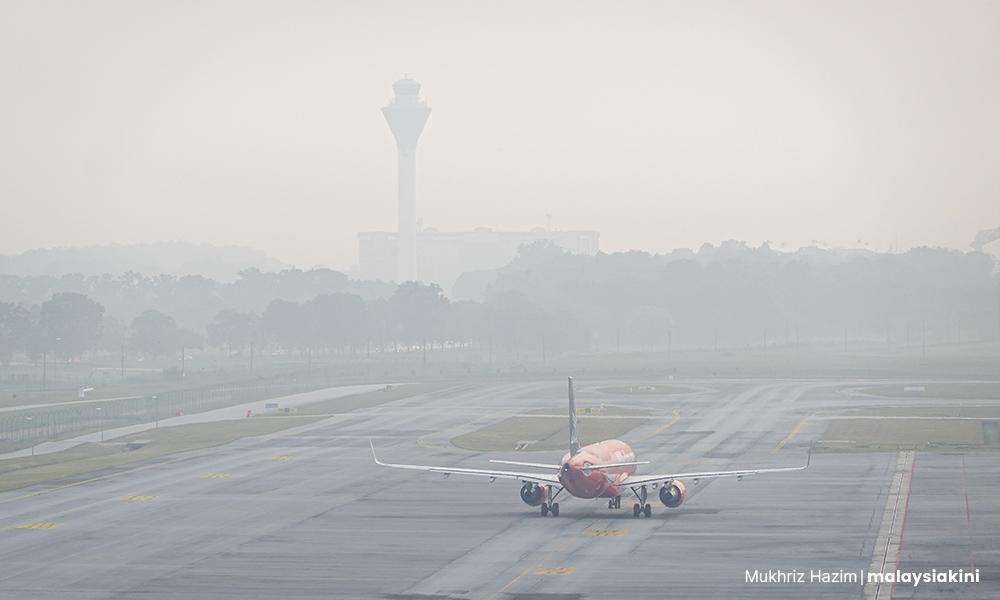
In 2014, Singapore became the first country in the Asean region to enact a law criminalising transboundary haze production.
The previous Pakatan Harapan administration led by Dr Mahathir Mohamad had explored the idea of a law to tackle transboundary haze but nothing came to fruition.
Fined by Indonesian court
Further, Heng pointed out that Malaysian companies have been involved in causing haze pollution.
“Last month, the government said it will not protect Malaysian companies operating overseas that are responsible for large-scale fires resulting in transboundary haze.
“Three days ago, Indonesia’s highest court dismissed the appeal by Malaysian-owned (oil palm company) TDM Bhd’s subsidiary against the republic’s Ministry of Environment and Forestry in relation to a fire incident in 2019 at its land in West Kalimantan province.”
TDM Bhd’s subsidiary in question is PT Rafi Kamajaya Abadi (RKA), which is based in Indonesia.
In 2019, TDM denied Jakarta’s accusation that RKA was behind the largest open burning in Indonesia.
On Dec 27, 2021, RKA was reportedly sued by the Indonesian Environment and Forestry Ministry for allegedly violating laws relating to the fire that occurred at its plantation in 2019.
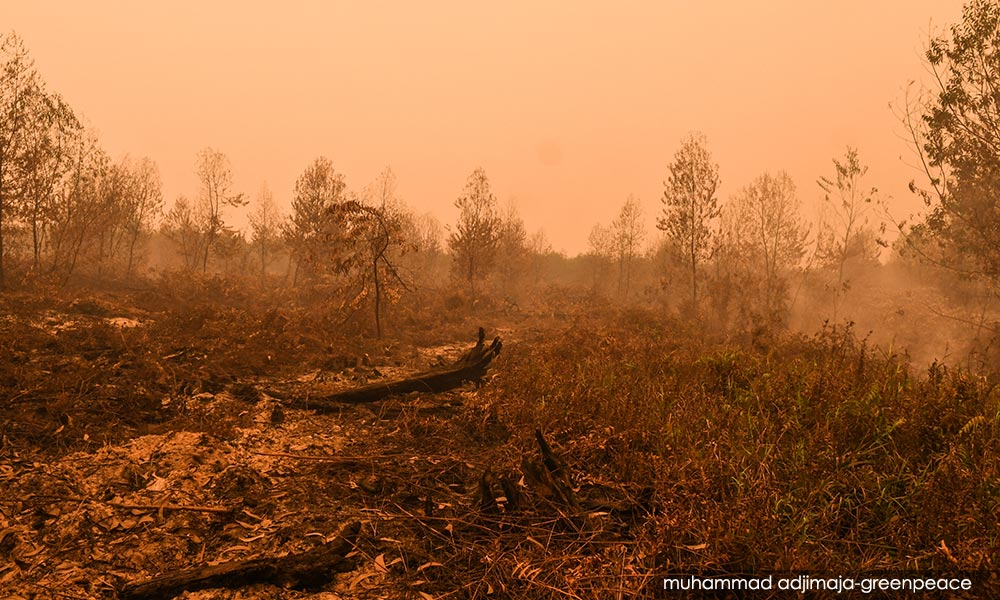
According to a report by The Edge on Nov 3, the Indonesian Supreme Court upheld the decision by the Pontianak High Court, finding RKA guilty and imposing a fine of 188.98 billion rupiah (RM56.68 million) for environmental losses.
It also reported that RKA will have to pay 731.04 billion rupiah (RM219.25 million) for environmental rehabilitation in the affected area of 2,560 hectares.
This means the Terengganu-based company is required to pay a total of RM275.93 million - a sum that is nearly equivalent to its entire market capitalisation of RM293 million - according to The Edge.
/file/publisher-c1a3f893382d2b2f8a9aa22a654d9c97/2023/06/596d62aa17b2a4e56cc0bb5ffbf89114.jpg)
/file/publisher-c1a3f893382d2b2f8a9aa22a654d9c97/2023/10/a1075870518f2f1f9a3864fc61fa95de.png)
/file/publisher-c1a3f893382d2b2f8a9aa22a654d9c97/2023/10/e8ded382d25b421f4be0d606c071eda6.jpg)
/file/publisher-c1a3f893382d2b2f8a9aa22a654d9c97/2023/04/de75bedf52fc1d5beb907cc367297397.jpg)
/file/publisher-c1a3f893382d2b2f8a9aa22a654d9c97/2023/10/d3062f7b708ee12d30d06451cdfc78cb.jpg)
/file/publisher-c1a3f893382d2b2f8a9aa22a654d9c97/2023/10/eeb9d307bf98a2384d18c3916567b5d4.jpg)


Are you sure you want to delete this comment?
This action cannot be undone.