


/file/publisher-c1a3f893382d2b2f8a9aa22a654d9c97/2019/03/9d3b193aa6f6f5c4d405df7a8946db80.jpg)

Amanah Youth contenders want to build new generation of leadership
Eight years after the formation of Amanah in 2015, the party finds itself in a search for leadership renewal, which includes a three-way contest for Amanah Youth chief in December.
While the first generation of Amanah leaders were well-known as former members of PAS' progressive wing, it is hoped that Amanah Youth, which will elect the third generation of youth leadership, will provide successors to that legacy.
There are at least three names who are interested in going for the seat, including current incumbent, Senator Mohd Hasbie Muda, Batu Tiga State assemblyperson Danial Al Rashid Haron Aminar Rashid...
Eight years after the formation of Amanah in 2015, the party finds itself in a search for leadership renewal, which includes a three-way contest for Amanah Youth chief in December.
While the first generation of Amanah leaders were well-known as former members of PAS' progressive wing, it is hoped that Amanah Youth, which will elect the third generation of youth leadership, will provide successors to that legacy.
There are at least three names who are interested in going for the seat, including current incumbent, Senator Mohd Hasbie Muda, Batu Tiga State assemblyperson Danial Al Rashid Haron Aminar Rashid, and national Amanah Youth committee member Mohd Azhar Abd Rahman.
Malaysiakini posed the following questions to the three candidates:
What are the visions and goals if you elected to lead Amanah Youth?
Hasbie: When I was elected as youth leader in October 2021, I set a vision to build a strong team to face the election and champion youth issues.
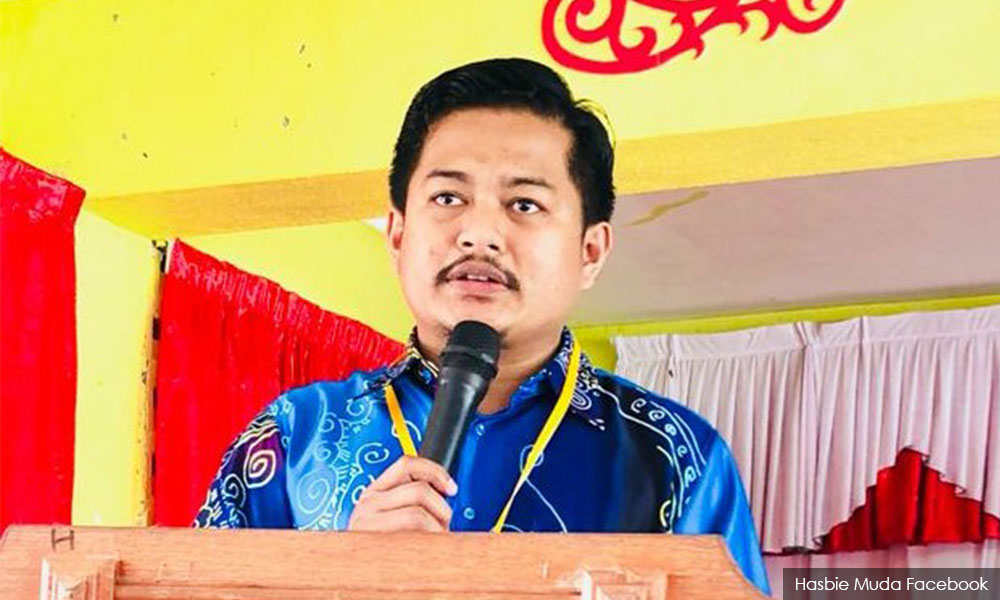
Continuing from that, I want to focus on training and staffing, in addition to empowering the bureaus to focus on the issues of the people, especially the youth.
The aim is to showcase a team that is stronger and makes its presence felt.
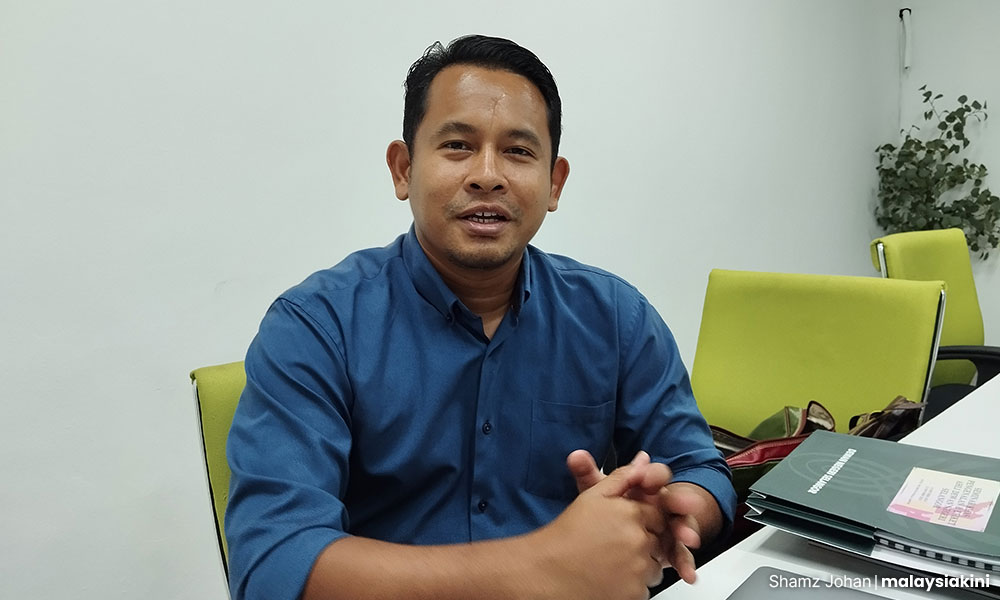
Azhar: I want to bring the youth wing to a better level by developing quality leaders who can shine at any leadership level.
I believe Amanah Youth is capable of being a link between the government and the people; therefore, I will build relationships with youth groups to attract their interest and give support to Pakatan Harapan.
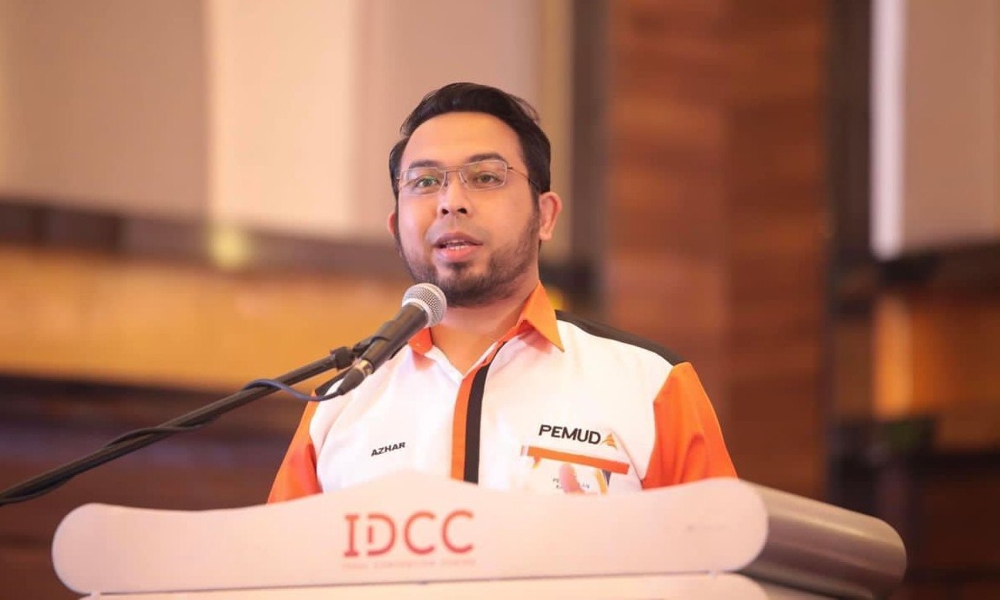
Danial: My vision is to encourage youth participation in the decision-making process where their voices will be heard through dialogue with leaders, development of ideas and involvement in discussion and implementation. Therefore, it is important for us to think about how to position qualified youth talent in government administration.
My goal is to create an innovative and inclusive platform for young people by focusing on human capital development because we still lack great figures in certain fields such as technocrats, science and technology, and economics.
What leadership style will you demonstrate?
Danial: As the leader, I will emphasise leadership based on cooperation, transparency, and effectiveness in voicing the aspirations of the youth.
Azhar: I will maximise the leadership talent in the youth and move as a team and I am targeting the youth and new voters so that we can be sure that Amanah has a line of quality leaders.
Hasbie: I will be more aggressive because during these two years I have only continued the role entrusted by the previous leadership, so, for me, a person needs to be given enough space and time to get positive results.
The 'hype' over Amanah Youth is dead, what happened and what should be done to change this?
Hasbie: If you want to create 'hype', there must be strong teamwork and it must start from the national youth leadership itself. But when there are leaders who 'shoot themselves in the foot', it shows that there are members who like to find fault, do not contribute but choose to criticise, especially at election time.
Amanah Youth needs to be rebranded and rejuvenated and this is being worked on. In fact, we will launch a new cadre platform to prepare for future leadership.
Azhar: I think this is likely due to our position as a government that focuses more on administrative matters, duties and positions in the government.
So, we need to rearrange the work and programmes that can attract the interest of young people to be with Amanah.
Danial: I am determined to bring back that passion by implementing a programme that focuses on the real issues and realities faced by the youth; it needs to be relevant.
Amanah Youth needs to implement reforms and always think outside the box and I believe our abilities are much greater if we dare to try new things.
The young spirit needs to be preserved, we don't need to follow the trend of veterans.
Are there weaknesses in youth leadership?
Hasbie: Among the significant weaknesses is in terms of commitment at all levels; when we organise a programme, we find it difficult to get commitment and it happens because its direction is not communicated well and shared widely.
Secondly, there must be shared responsibility that when we hold a position, it needs to be shouldered together in terms of efforts and finances while third, in terms of the level of sacrifice, I think this needs to be improved.
Azhar: Weakness in determining the direction has an impact on Amanah Youth's work; this is likely due to the frequent change of leadership and requires adaptation to a new leadership style every time the youth leader changes.
In addition, Amanah Youth is also a bit lethargic, especially at the regional level because it feels that it is not needed to fill a space in the government, in addition to having to compete with other parties to get a place.
The shortcoming that can be improved is the seriousness of the intervention measures to counter the Malay-Muslim narrative played up by our opponents. There are many young and new voters who are influenced by the sentiments played by the opposition and this effect can be seen in the last election.
Danial: The obvious weakness I see is the lack of youth involvement at the government level as well as the lack of leadership development programes; we need to show the capabilities of the youth by producing capable youth in all fields.
I believe the values of justice, integrity, and religion in the Amanah Youth leadership, as well as the simple Islamic values, will make it easier for Amanah to be embraced by all levels of society.
Looking at the current challenges, the government needs Amanah to play a role and appreciate and embody Islam in the context of racial diversity in Malaysia.
Is Amanah still lagging behind other parties?
Azhar: Amanah is still not seen as a major player in the government today, but there are things we can be proud of, such as when the late Salahuddin Ayub was domestic trade and costs of living minister, the effect of the Payung Rahmah initiative became a brand felt by the people.
Amanah has not dominated any state over a long period to be used as a testimonial or showcase of the administration model under Amanah to the people, so there needs to be strategic planning to target the impact and seats won.
Danial: Amanah is not lagging behind and has achieved a lot, but needs to continue to be innovative and responsive to change. I think that the weakness in staffing may be one of the reasons for the perception that Amanah Youth is still lagging behind.
Hasbie: Actually, Amanah's achievements today are quite outstanding and as a new party, it is quite encouraging.
As a political party, what strategies can be taken to attract young people?
Hasbie: As a government, we must fight for policies that are beneficial to the people. The challenge is that most of these policies are not popular, therefore, we must take a brave and responsible attitude.
For example, the most efficient taxation system is GST, but because it is not popular, many people do not fight for it. For me, Amanah should look again at policies that are not popular but are good for the country.
For young people, I see the empowerment of Technical and Vocational Education and Training (TVET), the issue of how to provide training that is in line with the demand of the high-value industry, in addition to the question of salary increase which is also one of the goals in the civil economy agenda.
Danial: Strategies include holding youth dialogue sessions, leveraging digital platforms to communicate, and incorporating creative elements in the delivery of political messages.
"As an assemblyperson, I will try to build bridges with young people all over the country.
Azhar: There are several things that we will do to achieve that goal. What needs to be done at this time is identifying the strengths we have, the talents that can contribute to the targets we set, and the organisation of the work we need to do according to the timeline set.
"This approach is also not limited to the party platform alone but other supports that can be synergised to ensure that the outlined goals are successfully achieved.
Several statements criticise the failure of Amanah Youth in bringing the Islamic narrative to young voters. Do you agree and why?
Danial: I do not agree with that statement; we see the development of young people continue to blossom year after year. Those who claim that, do not understand the party's journey through implementation on the ground. This year, we succeeded in winning the Harapan youth leadership in Selangor.
The individual who made the statement may not have experience in the field, that's why his words are too vague. I will strengthen the party's narrative through an inclusive approach and build relationships with the youth to understand their aspirations.
Hasbie: I admit there was a failure; in the last election we lost many seats but this decline is in line with Harapan in general because of the arrival of the green wave.
However, we failed not because we did nothing. They (weaknesses) can be improved in the future, we cannot fall into the 'blame game'.
What is the purpose of the weakness being publicised? It only embarrasses the party and degrades the dignity of the youth. If you want to campaign you can but don't discredit the organisation. We don't ban competitions and fight in the allowed space; don't discredit the personality of the leadership and demand resignations and so on. That's not manly.
Azhar: The Malay-Muslim narrative played by the opposition was indeed one of the contributors to the rejection of Harapan (by some sectors) in the last election and it has spread to young voters.
So, the main issue that needs to be addressed is how to curb it and make our explanations more assertive so that our views can answer every allegation raised.
I see that this effort is not strong enough and that communication work needs to be done more actively, especially on social media. This is not the responsibility of one party or individual only but needs to be shouldered by all of us because the dissemination of information needs to be comprehensive to the grassroots.
/file/publisher-c1a3f893382d2b2f8a9aa22a654d9c97/2019/03/9d3b193aa6f6f5c4d405df7a8946db80.jpg)
/file/publisher-c1a3f893382d2b2f8a9aa22a654d9c97/2023/05/ca993a8002b38eb8b8a310664223febc.jpg)
/file/publisher-c1a3f893382d2b2f8a9aa22a654d9c97/2022/10/5b66ce1974d2a77c333e3b1bcde2a19d.jpg)


Report this comment
Are you sure you want to delete this comment?
This action cannot be undone.