


KINIGUIDE | Local governments and elections
In the decades since, the idea of reviving the third vote has been brought up and shot down multiple times for various reasons.
The latest of such episodes came when Federal Territory DAP chairperson Tan Kok Wai called for the local government election to be held in Kuala Lumpur - which led to brickbats from Umno, Bersatu and PAS.
In this instalment of KiniGuide, we look at...
KINIGUIDE | Malaysia held its last local government election in 1963, after which it was “suspended” indefinitely.
In the decades since, the idea of reviving the third vote has been brought up and shot down multiple times for various reasons.
The latest of such episodes came when Federal Territory DAP chairperson Tan Kok Wai called for the local government election to be held in Kuala Lumpur - which led to brickbats from Umno, Bersatu and PAS.
In this instalment of KiniGuide, we look at what are local governments and the arguments surrounding appointing versus electing its members.
What are local governments and what do they do?
According to the Local Government Act 1976, local governments (or local authorities) refer to city councils, municipal councils and district councils. Or, in the special case of Kuala Lumpur, it refers to the mayor himself.
Putrajaya Corporation and Labuan Corporation are technically body corporates established under separate laws but perform all the functions of a local government in their respective territories.
Local governments are responsible for a wide range of matters that could have an immediate impact on the residents such as town planning, the cleaning and lighting of streets, maintenance of trees and other plants in public spaces, the licensing of businesses, regulating public musical performances and more.
They also have the power to approve or deny development projects, or even the extension of a single building.
Who are the office bearers and how did they get there?
In Peninsular Malaysia, city councils are headed by a mayor, while municipal councils and district councils are headed by a president.
The Local Government Act also stipulates there should be eight to 24 other councillors each serving three-year terms.
The law says they are appointed by the “state authority”, meaning the state’s sultan or governor.
In practice, mayors and presidents are often appointed from amongst the state government’s civil service, while councillors are appointees representing whichever ruling parties at the state government when the appointments are made.

Some councillors also go on to contest in state and federal elections later in their political careers.
Notwithstanding the above, some states also appoint NGO representatives as councillors.
The Penang Island City Council’s 24 councillors, for example, include NGO representatives from Alumni Sidang Wanita Pulau Pinang, Islamic Propagation Society International, United Buddhist Order of Penang and Penang Muslim League. DAP holds 10 seats in the council, PKR has eight and Amanah has two.
The laws are similar in Sabah and Sarawak with some differences. Among others, councillors in Sabah are appointed by the state’s local government and housing minister rather than the governor, and they serve for up to two years.
What about the Federal Territories?
The Kuala Lumpur mayor (also referred to as “commissioner” under the Federal Capital Act 1960 and the City of Kuala Lumpur Act 1971) is appointed by the Yang di-Pertuan Agong for a tenure of up to five years. This person is usually drawn from the civil service.
There are no councillors or equivalent positions in the Kuala Lumpur City Hall. Instead, the king appoints members of an advisory board, of whom at least two members must be nominees named by the Selangor sultan in consultation with the state executive council.

The Kuala Lumpur mayor is empowered under Section 10 of the Federal Capital Act to act against the advice of the advisory board, but only after consulting the federal territories minister. The mayor is also legally obliged to take instructions from the minister.
Meanwhile, at the Putrajaya Corporation, the president is appointed by the federal territories minister, along with five other members.
Three of the five are federal government officials, and two are drawn from the private sector. They serve three-year terms and may be reappointed.
The Selangor menteri besar nominates two more members with consent from the Selangor ruler.
In the Labuan Corporation, the chairperson, his deputy, and all four remaining members are appointed by the finance minister for three-year terms.
The minister also appoints a seven-member advisory council to the Labuan Corporation including the chairperson. They also serve three-year terms and at least three members must be residents in Labuan.
How did the local council election come and go?
According to the 1968 report by the Royal Commission of Inquiry on The Workings of Local Authorities in West Malaysia (also known as the Athi Nahappan Report after the commission’s chairperson), the first municipal election in what was then the United Settlements (Penang, Malacca and Singapore) was held in December 1857.
At the time, only some council seats were up for election while the rest were appointed to the post. The first fully elected council was for the Georgetown City Council on Dec 1, 1956.
Meanwhile, it was reported that the first local government election in Sarawak was held in 1959, and in Sabah on Dec 16, 1962.
At first, the running of these polls was governed by the laws of each state, so each had its own quirks. For instance, some states allowed contests along party lines, while others forbade it on the grounds that a local government election should be free from party politics.
These rules were standardised under the Local Government Elections Act 1960, which still allows state governments to decide whether some or all council seats would be elected positions, and whether and how the head of the local government is elected or appointed.
However, polls under these rules were only held once in 1963 in Terengganu, and 1962 for the rest of Peninsular Malaysia.
The next local government election was scheduled for 1965 and 1966, but was put on hold through the Emergency (Suspension of Local Government Elections) Regulations 1965, and Emergency (Suspension of Local Government Elections) (Amendment) Regulations 1965. This was due to the Indonesia-Malaysia confrontation from Jan 20, 1963, until Aug 11, 1966.
While the Local Government Elections Act 1960 technically hasn’t been repealed, the two emergency laws remain in force today even though hostilities with Indonesia ceased decades ago.

Moreover, Section 15(1) of the Local Government Act was gazetted in March 1976 stipulates that “all provisions relating to local government elections shall cease to have force or effect”.
The Penang government had tried to revive the local election in 2012, but it was thwarted after the Federal Court later dismissed its challenge against Section 15 of the Local Government Act.
What are the arguments for and against third vote?
At first, the election was purportedly suspended due to the confrontation with Indonesia. At the time when the Athi Nahappan Report was written, the conflict with Indonesia had ended but the communist insurgency was cited as the reason for putting off local council polls.
Notwithstanding the official reasons that were given, there was also a persistent popular belief that the Alliance ruling coalition at the time sought to deny opposition parties an opportunity to leverage their urban support base to gain power in town councils, where they could further cultivate their support base while frustrating state government’s attempts implement policy.
As seen in the criticism that DAP’s Tan received, this argument still lives on with a racial twist - the assertion that Chinese Malaysian representatives will “easily” gain power in urban centres at the expense of the Malays.
This view sidelines the rural districts where the local government election may also be held, assumes voters will vote along racial lines, and is despite census data showing the Malay population growing in urban centres and is on the verge of becoming the majority in Kuala Lumpur.

As prime minister of the Pakatan Harapan-led government in 2018, Dr Mahathir Mohamad was among those who cited racial issues as the reason not to hold local government polls.
“No local council election… it may produce the wrong result. The urban (areas) may be different, the rural (areas) will be different.
“There will be conflict, emphasised probably by racial differences and the like. We don’t want that to happen,” he was reported as saying.
Over the decades, opponents of local council polls also cite the cost of running the election as a factor.
Former housing and local government minister Reezal Merican Naina Merican claimed on Dec 20 that it would cost RM3 million for each election, so running the election nationwide could cost up to half a billion.
The figure he gave in a parliamentary reply two years earlier was RM2 million per election, for a total of RM302 million for all 151 local authorities.

Others, such as then-urban wellbeing, housing and local government minister Abdul Rahman Dahlan in 2015, claimed placing local governments under state governments allows “seamless administration of both state government and local government”.
Citing flood response as an example, he said the system allows state and federal governments to step in to deliver aid immediately rather than be slowed by having to deal with an elected councillor.
State governments can also immediately remove non-performing councillors instead of having to wait for an election.
Ministers also often found “other priorities” more important than reintroducing the local government election.
In January, Local Government Development Minister Nga Kor Ming said his priority is to revive the economy and look after everyday issues such as ensuring well-maintained public amenities, and cited surveys purportedly showing that few people want local council polls.

Minister in the Prime Minister's Department (Federal Territories) Dr Zaliha Mustafa said this month that she would discuss the matter with Nga, but “basic policies” such as the management of strata properties in Kuala Lumpur are more important.
On the other hand, proponents of the local government election such as some Pakatan Harapan leaders, NGOs like Bersih and residents associations argue that the third vote is a key part of participatory democracy.
It holds councillors accountable to residents and ratepayers for their decisions, rather than being beholden to their political patrons.
A councillor who is more responsive to their constituents would also free up MPs and assemblypersons to handle federal and state issues rather than having to deal with local issues as well.
The situation is more acute in Kuala Lumpur since the city has no councillors or equivalent positions at all, despite having a population size and budget that is larger than many states.
So, residents often turn to MPs instead for help with local issues.
What about Athi Nahappan Report?
The Athi Nahappan Commission held a series of public and closed-door hearings throughout Peninsular Malaysia between October 1965 and August 1966 on how local governments should function.
Its 347-page report dated December 1968 became the basis of the Local Government Act still in force today. However, its recommendation to reintroduce the local government election was unheeded.
The commission opposed the view that having a local government election would be an expensive “overflow of democracy” too much for Malaysia to handle and instead saw it as a way to foster democratic practices.
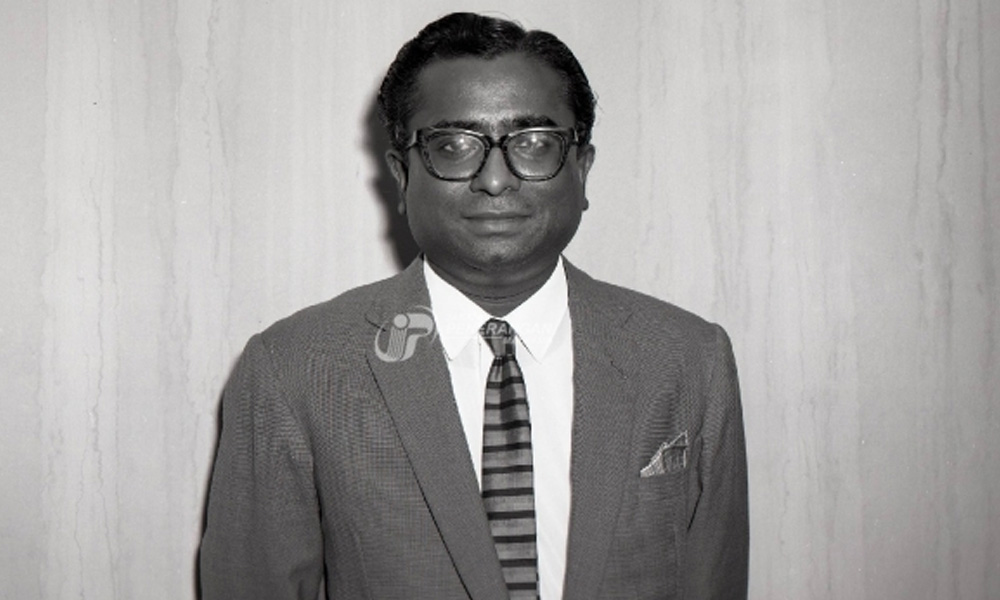
“Local government, whether at the state capital or anywhere else, is the kindergarten of democracy. It is the government that is closest to the people. Grassroots democracy is cultivated here.
“If democracy is understood by the people at his level and they participate in its exercise, they will understand it better at the state and central levels,” the report stated.
It proposed that all municipal councillors should be elected.
For district councils, it said state governments should have the prerogative to nominate councillors if it deems this necessary to ensure adequate minority representation, as well as representation for specific interests such as trade, culture, professions, unions and sports.
This is because rural populations are often mono-ethnic, whereas a more diverse representation is considered desirable.
Such nominated councillors may not exceed one-third of the council’s membership, most of whom shall be elected members.
The council’s mayor or president shall be elected among the councillors by themselves.
Recognising the potential for conflict between state and local governments, it said there should be laws compelling local authorities to comply with the state government’s instructions on matters of national or state importance.


Report this comment
Are you sure you want to delete this comment?
This action cannot be undone.