




New law to hinder haze fight in Riau
A new law in a fire-prone Indonesian province that allows small patches of land to be burned is expected to worsen an annual haze that spreads across the region, said officials.
A new law in a fire-prone Indonesian province that allows small patches of land to be burned is expected to worsen an annual haze that spreads across the region, said officials.
Lawmakers from Sumatra's Riau province passed a regulation last month which permits land parcels under two hectares to be cleared by fire, which allows small-scale farmers to continue their traditional method of land-clearing.
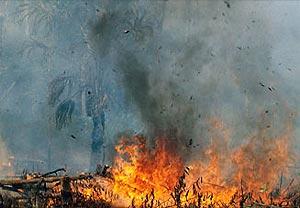 "I personally think hotspots in Riau will increase this year" due to this regulation, the head of Riau Conservation Agency, Rachman Sidik, told
AFP
.
"I personally think hotspots in Riau will increase this year" due to this regulation, the head of Riau Conservation Agency, Rachman Sidik, told
AFP
.
He said that despite his agency's preparation and vigilance, it meant "extra hard work to manage hotspots this year."
"The local (parliamentarians) have a different perspective on this issue," ministry of forestry spokesman Ahmad Fauzi Mas'ud said.
"The minister has requested a review of this regulation," he told AFP , adding that land clearing by burning is a culture that Jakarta aims to change.
"Starting this year, we are offering incentives for those who work on their land without burning, by offering them money, programs or fertilisers in turn," said Mas'ud.
The ministry of forestry detected more than 700 hot spots for the month of June compared to more than 1,000 over the same period last year, with half the fires originating in Riau, usually one of Indonesia's main offending provinces.
Fires on empty land
The conservation agency's Sidik said he had flown over some areas in Riau and seen fires across different types of land.
"On Monday we detected 103 hot spots in Riau and I saw actual fires on empty land and in plantations and forests," he said, adding that Rokan Hilir district was the worst affected area.
Malaysia has agreed to assist Rokan Hilir in Riau, and Singapore will assist Jambi on Sumatra under an "adopt a fire-prone district" program in a bid to cut the pollution, which has angered Indonesia's neighbours.
Western regions in peninsular Malaysia reported a decline in air quality and worsening visibility due to smog from forest-burning in Sumatra on Monday.
Sidik said officials were preparing for this year's fires by increasing patrols, training officials and residents, and upgrading their fire-fighting equipment.
He said 16 fire-fighting teams and two helicopters were ready to cover Riau.
Meteorologists are forecasting that August and September will be the driest months this year, meaning this is likely to be when the haze is at its worst.


Are you sure you want to delete this comment?
This action cannot be undone.