




Oil pipeline: Rural folks fear a murky future
Advocates of the RM23.9 billion Kedah-Kelantan oil pipeline speak of global energy needs, regional logistics and geo-politics. But fishermen and farmers in the slated areas are wondering about their future.
Advocates of the RM23.9 billion Kedah-Kelantan oil pipeline speak of global energy needs, regional logistics and geo-politics. But fishermen and farmers in the slated areas are wondering about their future.
 Fisherman Ismail Muhammadan, who hails from Kedah, said he does not know of the technical aspects or details of the ambitious project announced by the government last May.
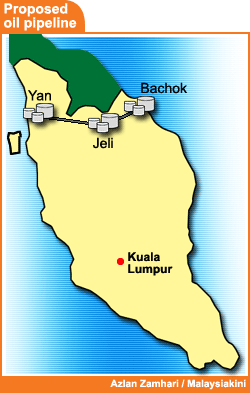
All he has been told is that the project will consist of two oil refineries - one in his native Yan and the other in Bachok, Kelantan - and in between, a 300km pipeline cutting across the two states and Perak.
"Most people around here do not know what the project will mean for them. They agree with what they have been told," said Ismail, who is treasurer of a loose network of peninsular coastal fishermen known by its Malay acronym Jaringan.
The question on his mind, however, is what will happen to the nearly 1,000 fishermen in Yan who, like him, will no longer be able ply their trade once the pipeline project materialises.
For one thing, he said, oil tankers stopping at the oil hub will - in the process of docking, unloading and reloading - put an immediate stop to fishing activities in the area.
In the long run, pollution of the immediate and surrounding environment would ensure the destruction of the traditional fish-breeding grounds in the area, he added.
"When that happens, where are we supposed to go?" he asked when contacted.
'Employment opportunities'
Ismail said the government's promise that once the project is completed in 2014, it will create 'thousands of employment opportunities' does little to relieve his anxieties.
"Almost all of us fishing in these waters are over 40. The majority are between 50 and 60 years old. How many of them will be given jobs at this hub or pipeline?
"As for those of us who are not employed by the companies, what strength do we have to learn a new trade? Fishing, we can still do for a few more years, all we have to bear is the heat and the water, and we've gotten used to both," he said.
Proponents of the project - a private initiative of Trans-Peninsula Petroleum Sdn Bhd - have said it will transport the equivalent of half of the 12 million barrels of oil that currently pass in tankers through the Malacca Straits.
According to them, this mega-project will also help reduce the urban-rural socio-economic gap in the Malay heartlands.
Select few will profit
For farmer Che Ani Mat Zain, however, these promises are accompanied by the troubling prospect of thousands of fishermen and farmers and their families forced to relocate and having to undergo tremendous changes to their lives.
 While the short-term attraction of financial compensation may entice many families to agree to the project, Che Ani, who heads a farmers' committee under the Muda Agricultural Development Authority in Kedah, said the overwhelming profits will end up in the hands of a select few.
After the years have passed and the environmental and social dislocations have occurred, he said those same beneficiaries will be nowhere to be found.
"In the end, things will end up as usual when sweet promises are made. Nobody will take responsibility," he added.
Previously, opposition party DAP had voiced concern about the environmental impact and land problems associated with the construction of the oil pipeline.
Other than fishing ports and rice farms, the pipeline will also pass through forest reserves and the Temenggor lake.


Are you sure you want to delete this comment?
This action cannot be undone.