


/file/publisher-c1a3f893382d2b2f8a9aa22a654d9c97/2023/06/756f6f555b566ea42f59fabc112bc30e.jpg)

Umno Youth chief offers to school Nga on Malayan history
In the latest salvo following the proposal by Housing and Local Government Minister Nga Kor Ming that Chinese new villages be recognised as Unesco World Heritage Sites, Umno Youth leader Dr Muhamad Akmal Saleh has offered to teach him about the history of Malaya.
“There is nothing more to discuss. There is no need for this proposal. Full stop.
In the latest salvo following the proposal by Housing and Local Government Minister Nga Kor Ming that Chinese new villages be recognised as Unesco World Heritage Sites, Umno Youth leader Dr Muhamad Akmal Saleh has offered to teach him about the history of Malaya.
“There is nothing more to discuss. There is no need for this proposal. Full stop.
“If you want to meet, we can, but we want to teach YB the minister about the history of Malay land and the Malaysian constitution.
“If YB agrees, let’s find a date,” he said in a post on his Facebook.
Nga has reportedly been seeking to assuage Umno amid continued objections to the plan along racial lines.
He said he had contacted Umno leaders to discuss the matter.
“We invite them to engage in discussions so that we can deliberate and understand the facts so that they are not misled by the opposition,” he said.
Umno president Ahmad Zahid Hamidi had claimed that the proposal presented by Nga was never discussed with his party.
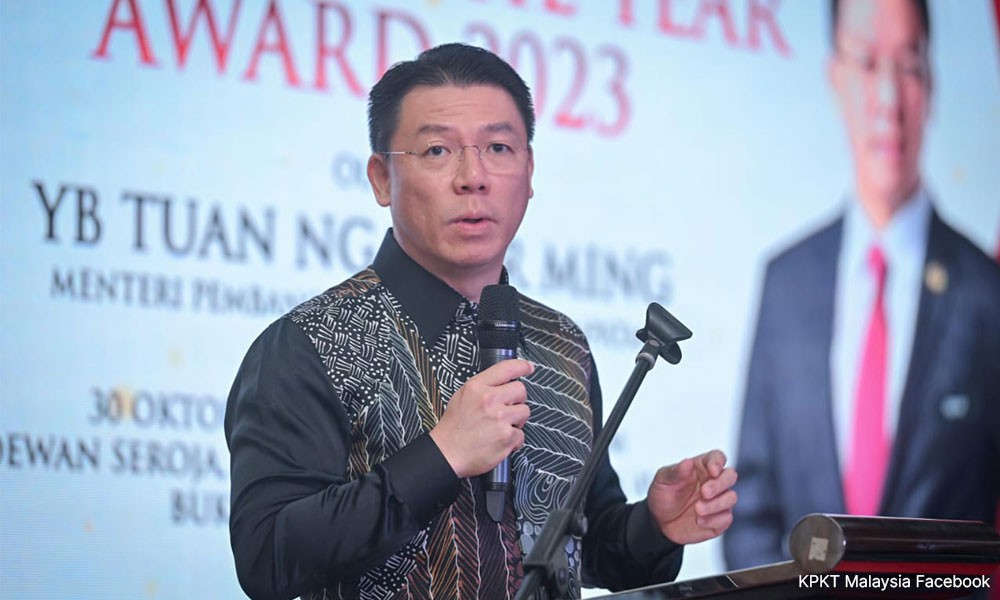
Nga also assured that a thorough study would be conducted, which would then be brought to the cabinet for deliberation.
“I urge all parties to refrain from framing this issue as one rooted in racial tensions, as such narratives only serve to divide us. We must steer clear of divisive attitudes,” he added.
Bersatu, Umno unite in criticism
Chinese new villages were first established as internment camps by the British in the late 1940s and early 1950s as a means of cutting off support for communist insurgents.
Nga had said on Feb 1 that the new villages as Unesco World Heritage sites were to recognise their cultural and historical significance.
This prompted criticism from Bersatu Youth chief Wan Ahmad Fayhsal Wan Ahmad Kamal, who questioned the need to commemorate remnants of the country's war against communists, instead of other elements of Chinese cultural heritage.
Umno soon joined in the criticism as well, with party secretary-general Asyraf Wajdi Dusuki having a wild interpretation that Unesco World Heritage site status would give those who lived in Chinese recognition as “original inhabitants” of the land and for touching on the status of the bumiputera Malays.
However, Institute of Malay World and Civilisation (Atma) lecturer Faisal Tehrani backed the idea, saying it should be supported as it will preserve the history of these areas for future generations.

Researcher and writer WN Khuzairey also concurred, saying that promoting a culture does not mean others are being dismissed, adding that in a country known for its diversity and multiculturalism, those with the source and documents have the right to promote their culture.
Unesco World Heritage sites are not a means to determine a country’s aborigines but a way to recognise sites that possess cultural and historical value.
Among the four Unesco sites in Malaysia are Georgetown, Penang, and Malacca in recognition of their status as historic cities.
The recognition was granted in 2008, back when BN was the federal government.
/file/publisher-c1a3f893382d2b2f8a9aa22a654d9c97/2020/07/b458f26fbb6edbee2c18df7ea69b37d7.jpg)
/file/publisher-c1a3f893382d2b2f8a9aa22a654d9c97/2024/02/4f0524ecd62e1e9147661d2eb6599550.jpg)
/file/publisher-c1a3f893382d2b2f8a9aa22a654d9c97/2024/02/72c45a3c3387d198dc4cc55bb965824b.jpg)
/file/publisher-c1a3f893382d2b2f8a9aa22a654d9c97/2024/02/9dabd80872340b6ff63694ae1d312850.jpg)


Ha ha. For every Chinese village please propose 3 Malay villages to UNESCO. Just like promotions in Glcs. For each NM promoted there will be at least 3 Malays given promotion too.
Report this comment
Are you sure you want to delete this comment?
This action cannot be undone.