




Politics anyone? No thanks
Malaysians just couldn't care less about politics. In fact, they care so little that they don't even register to vote - 4.9 million, mostly young adults in urban areas.
Malaysians just couldn't care less about politics. In fact, they care so little that they don't even register to vote - 4.9 million, mostly young adults in urban areas.
In neighbouring countries, the youth, especially university students, are political movers and shakers, whereas in Malaysia, the typical young person's response to politics would be, "Same thing over and over again."
According to the team of the "Youth Can Make a Difference" young voter campaign, Malaysian youths are brought up to mistrust politics and the political climate in Malaysia.
 "Young people are made to feel like politics is dirty," said Brian Yap, columnist for the
New Straits Times
. "Since high school, you're told to stay out of it and to pursue a professional degree instead," he added when met recently.
"Young people are made to feel like politics is dirty," said Brian Yap, columnist for the
New Straits Times
. "Since high school, you're told to stay out of it and to pursue a professional degree instead," he added when met recently.
Malaysian politics, with its race-based parties and perceived high-levels of a corruption, contrasts with everything young people have learnt since primary school.
Yap noted that the issue of racial politics rears its ugly head in almost every situation. "When we discuss the country's economic future, we cannot seem to move beyond the paradigm of dividing shares between races."
Neither politicians nor the media are helping to rectify this problem.
"People all over the world pay attention to what goes on in Parliament," said Dipendra Harshad Rai, deputy chairperson of the national young lawyers' committee.
When unnecessary conflicts happen between MPs, and harsh words are exchanged, young people quickly become disillusioned at the incongruity between their ideals and the state of Malaysian politics as they see it.
"It's a simple matter, sometimes, of respecting another human being," said Dipendra, reflecting on the recent clashes in Parliament. "We're in an age where we can respect people regardless of gender, colour or creed."
Sense of hopelessness
Yap agreed. He said these disillusioned youngsters usually became apathetic about politics. "They feel a sense of helplessness. It doesn't seem to make a difference whether they vote or not."
The team also said that the media does not help the situation, by refusing to frame such issues in an honest, straightforward way to which the youth could relate.
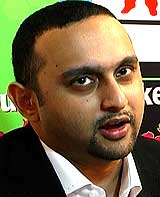 "Young people don't connect with the issues and the language being thrown around by politicians," said Dipendra. "They feel the issues go beyond them."
Furthermore, students literally sign their political ownership away once they step over the threshold of local universities and colleges. The University and University Colleges Act 1971 prohibits student assembly and association with political parties.
"Students don't want to be seen as involved in anything that remotely resembles politics," said Dipendra. "Including our campaign, which just encourages the youth to register as a voter."
"These young people," he added, "go through their university years without any political involvement. Once they come out to work, they have forgotten about their idealism."
"For them, politics is a very alien concept. It's a pity. We're losing a lot of energy and passion."
New trend
Although the prospects seem rather bleak, the team agreed that there has been some change.
"There's a new trend," said Yap."Activists and younger politicians are becoming more well-read and getting more information."
New terms have popped up in the Malaysian vocabulary like "human rights" and "freedom."
However, the change is limited to urban areas and the educated audience, and limited within that sphere to people who actually care.
"These are very small issues, in the bigger picture, explained Yap. "We can go on and on about human rights, or detention without trial but most people don't think these things can ever happen to them."
As it is, the general population does not think things are bad enough for change.
 "A lot of young voters are comfortably well-off," said Dipendra. "They don't feel like coming out of their comfort zone."
Surely, discomfort is not the only way to shake a young adult out of his political apathy. There must be something politicians, or the media, can do to draw the youth back into action.
"I guess, I would like to know what a politician's stand is on major issues, like corruption, religion, the economy - fundamental issues that are important to most people," said Yap.
Dipendra said he would like politicians to focus on integrity of the law. "As long as that remains intact, everything else will fall into place."
The team also wanted more political space for the youth to express themselves, in the hope that more activity will stop young political brains from freezing over. They also list education and freedom of press as high priorities.


