


/file/publisher-c1a3f893382d2b2f8a9aa22a654d9c97/2023/06/6d3d4ed2792f0a623c5f2619175ade10.jpg)

Public caning: No talks between T'ganu and federal govt, says Azalina
There have been no discussions between the Terengganu state government and the Federal government regarding the proposal to implement public caning for syariah offences in the state.
Minister in the Prime Minister's Department (Law and Institutional Reform) Azalina Othman Said said the proposal would not be easy to implement.
She pointed out that managing syariah criminal cases involves...
There have been no discussions between the Terengganu state government and the Federal government regarding the proposal to implement public caning for syariah offences in the state.
Minister in the Prime Minister's Department (Law and Institutional Reform) Azalina Othman Said said the proposal would not be easy to implement.
She pointed out that managing syariah criminal cases involves assistance from federal agencies such as the police for arrests and the Prisons Department for imprisonment.
“Does the state have its own police force? Its own prisons? Who will carry out the caning? ... To impose punishments, there are laws involving federal government agencies. So, we need to look at this comprehensively, or this could lead to various disputes.
"If we intend to implement this, we require comprehensive amendments to existing laws. As an independent nation, we have laws and a constitution that delineate the jurisdiction of state and federal governments," she told reporters after visiting the Kuala Kubu Baharu Court building yesterday.
Azalina made these remarks in response to a statement by State Information, Dakwah and Syariah Empowerment Committee chairperson Muhammad Khalil Abdul Hadi who said that the state government was considering public caning for syariah offences to strengthen the implementation of Islamic syariah law in Terengganu.
Regarding her visit, Azalina said she was briefed on the construction progress of the new Civil Session Court building, which is scheduled to be completed in June.
"We also discussed the implementation of the latest technology and software to streamline processes at court premises.
"As we look ahead to 2025, we need to prioritise training and the adoption of technology in our budget. Developed countries are already using AI language translators," she said.
States’ jurisdiction
Meanwhile, Minister in the Prime Minister's Department (Religious Affairs) Mohd Na'im Mokhtar said the implementation of public caning for Syariah offenders falls under the jurisdiction of the states.
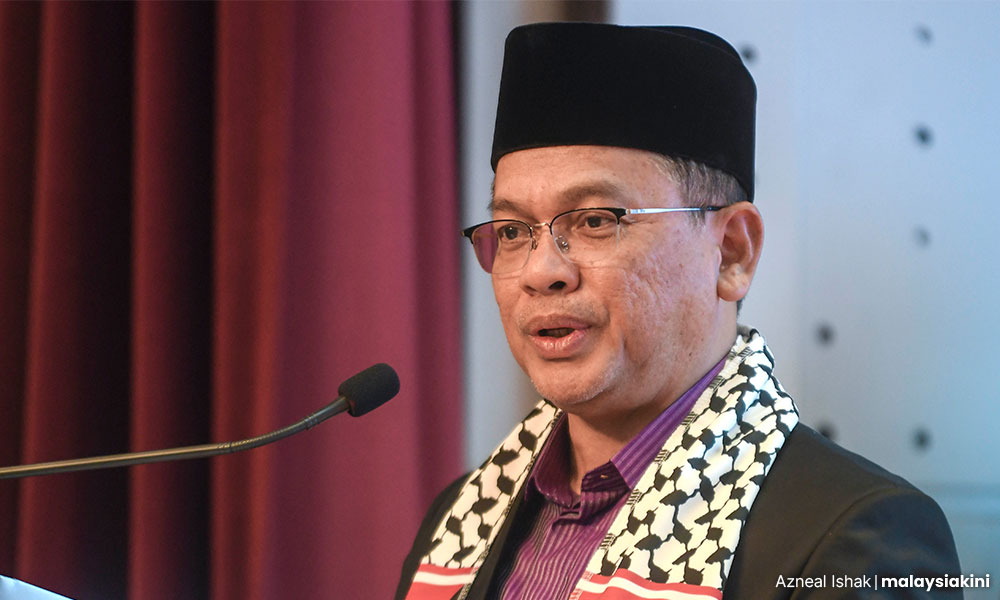
However, he stressed that before such punishment is executed, a comprehensive study involving multiple agencies should be carried out, taking into account all relevant aspects, including the definition of "public" and the philosophy of punishment aimed at balancing educational objectives with preserving the dignity of the offender undergoing punishment.
“I want to emphasise that, as we are well aware, matters related to Islamic law fall under the jurisdiction of the states, including legislative and judicial affairs, which are the absolute prerogatives of the Rulers and the states as stipulated in the Federal Constitution.
“In the context of the Syariah Criminal Offences Act or Enactment in Terengganu, the penalties for such offences typically include up to three years' imprisonment, a fine of RM5,000 and a maximum of six strokes of caning administered by state courts,” he said.
He added that in accordance with Section 125 (1c) of the Syariah Criminal Procedure Enactment, it is at the discretion of the Syariah Court judge to determine the offence and the location for carrying out the caning punishment, whether in prison, within the Syariah court premises, or in public.
He said at the federal level, the Syariah Judiciary Department has issued standard operating procedures regarding the methods of caning, as the implementation methods may vary across states.
- Bernama
Please join the Malaysiakini WhatsApp Channel to get the latest news and views that matter.

/file/publisher-c1a3f893382d2b2f8a9aa22a654d9c97/2019/11/f9023d9fbcb61a3c740c6e5fdba171ab.jpg)
/file/publisher-c1a3f893382d2b2f8a9aa22a654d9c97/2020/07/aaa8488d2da1f5642f57a004e058dc75.jpg)
/file/publisher-c1a3f893382d2b2f8a9aa22a654d9c97/2019/06/ef824feb95c8877fc0222aa8e8a8acdd.jpg)


Are you sure you want to delete this comment?
This action cannot be undone.