


/file/publisher-c1a3f893382d2b2f8a9aa22a654d9c97/2024/04/107fb1aa3a0da10ec533d7c3cc25c2c5.jpg)

New Bar chief talks on sex harassment of lawyers, Najib's pardon
Malaysiakini interviewed him over several issues, including the Bar’s plans concerning the welfare of legal practitioners, the reduced sentence granted to former prime minister Najib Abdul Razak by the Pardons Board, and addressing sexual harassment of some of its members.
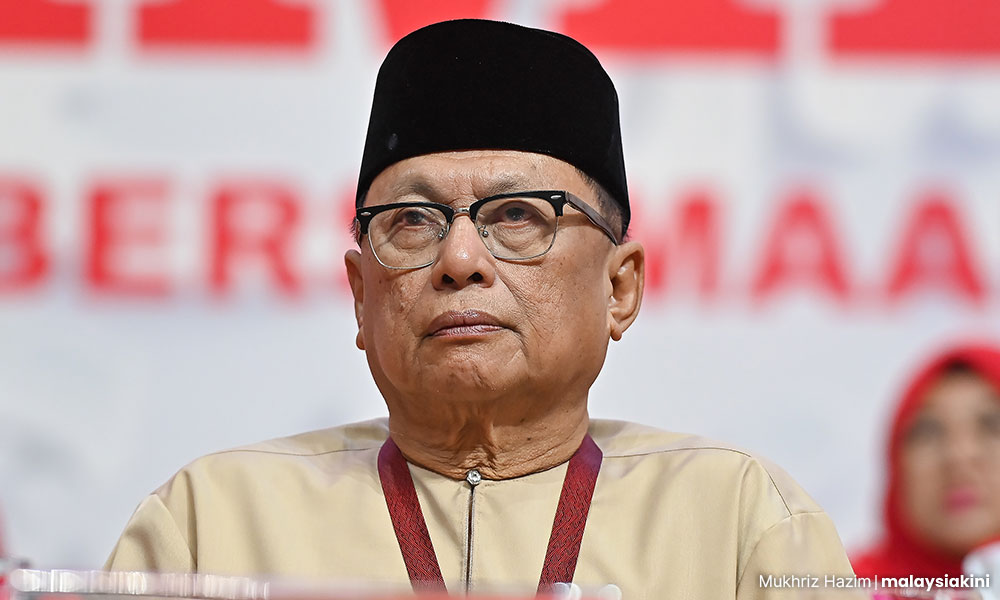
INTERVIEW | On March 16, during the Malaysian Bar’s 78th Annual General Meeting (AGM), its members elected Mohamad Ezri Abdul Wahab as president for the 2024/2025 term.
Malaysiakini interviewed him over several issues, including the Bar’s plans concerning the welfare of legal practitioners, the reduced sentence granted to former prime minister Najib Abdul Razak by the Pardons Board, and addressing sexual harassment of some of its members.
Question 1: Having been elected as the Malaysian Bar president during the Bar’s 78th AGM, what is the first set of agendas you wish to focus on for the body?
Ezri: As the newly elected president of the Malaysian Bar, my primary focus is on four key areas. First, I am committed to enhancing our members’ welfare through improved professional development and support.
Secondly, protecting the legal profession is crucial; this involves strengthening our advocacy, maintaining ethical standards, and enhancing public trust.
Thirdly, I have established new committees to address emerging legal areas, which include, inter alia, the areas of technology and law, environmental law, and human rights.
Lastly, in accordance with the Legal Profession Act 1976 (LPA), we will ensure compliance with professional standards, promote continuous development, carry out disciplinary functions effectively, and facilitate access to justice.
These initiatives aim to strengthen the Malaysian Bar, support our members, and uphold justice and the rule of law.
Question 2: During the AGM, it was announced that the body would file a court challenge over the Pardons Board’s decision for Najib to be given a discounted sentence linked to the RM42 million SRC International corruption case.
In light of Najib having filed a separate judicial review leave application on April 1 over an alleged supplementary royal order by the Yang di-Pertuan Agong that allows him to serve the remainder of his six-year jail sentence on house arrest rather than at the Kajang Prison, would the Malaysian Bar still proceed with its court action against the related Pardons Board decision?
Ezri: Following the resolution, and in fulfilling its statutory duty to uphold the cause of justice, uninfluenced by fear or favour, the Malaysian Bar has applied for leave to commence judicial review against the Federal Territory Pardons Board’s decisions and Najib in the Kuala Lumpur High Court on April 26.
It is the concerted view of the Malaysian Bar that the granting of a pardon is not a discretionary power and must be exercised on advice.
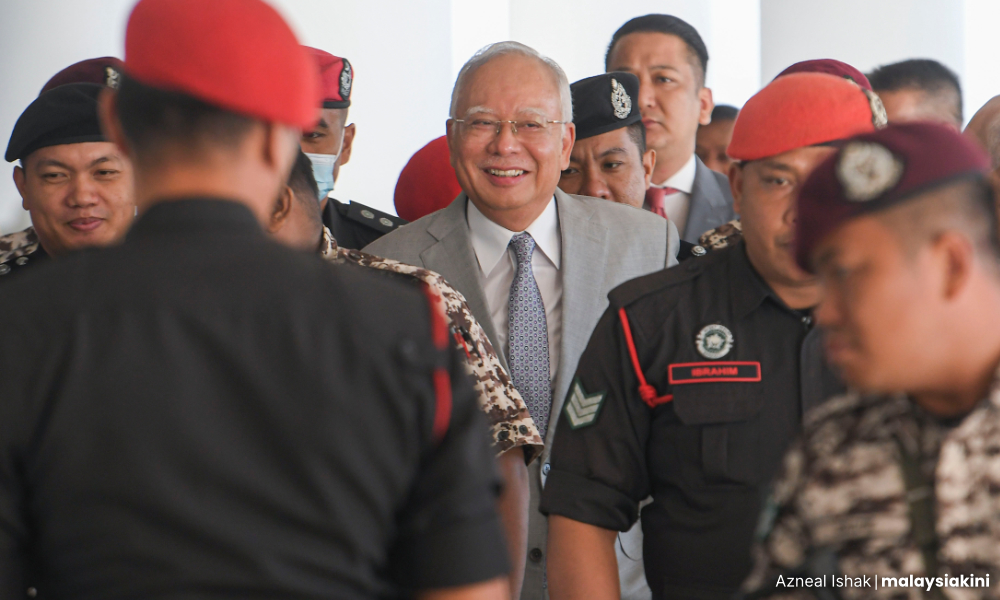
In the leave for judicial review application, the Malaysian Bar seeks, among others, the following relief:
a) A declaration that the Pardons Board’s decisions in reducing Najib’s prison sentence and fine in the SRC International case are unlawful, unconstitutional, and void;
b) A certiorari to quash the Pardons Board’s decisions;
c) A permanent injunction restraining Najib, his servants, agents, or otherwise howsoever, from submitting any application for pardon, reprieve or respite, to the Pardons Board, until and unless all criminal prosecutions or charges against him have been exhausted, he has publicly accepted responsibility for his actions for which he is convicted; and he has expressed repentance and remorse for those actions; and
d) An order of prohibition directed against the Pardons Board from accepting, considering, or determining any application by Najib for pardon, reprieve, or respite, until and unless all criminal prosecutions or charges against him have been exhausted, he has publicly accepted responsibility for his actions for which he is convicted; and he has expressed repentance and remorse for his actions.
The sealed copies of the judicial review application, requisite statement, and supporting affidavit, were served on the Attorney-General’s Chambers (AGC) accordingly.
Question 3: At the AGM, it was announced that the body is prepared to take all steps, including peaceful protest, to push for the government to repeal the Security Offences (Special Measures) Act 2012 (Sosma), which has been described as “oppressive and against the rule of law”.
Before considering the street protest route as a last resort, what are the Malaysian Bar’s steps at the moment to try to engage with and convince the government to repeal Sosma?
Ezri: We will commence engagement with Bahagian Hal Ehwal Undang-Undang (BHEUU, or Legal Affairs Division of the Prime Minister’s Department), the AGC, and relevant stakeholders.
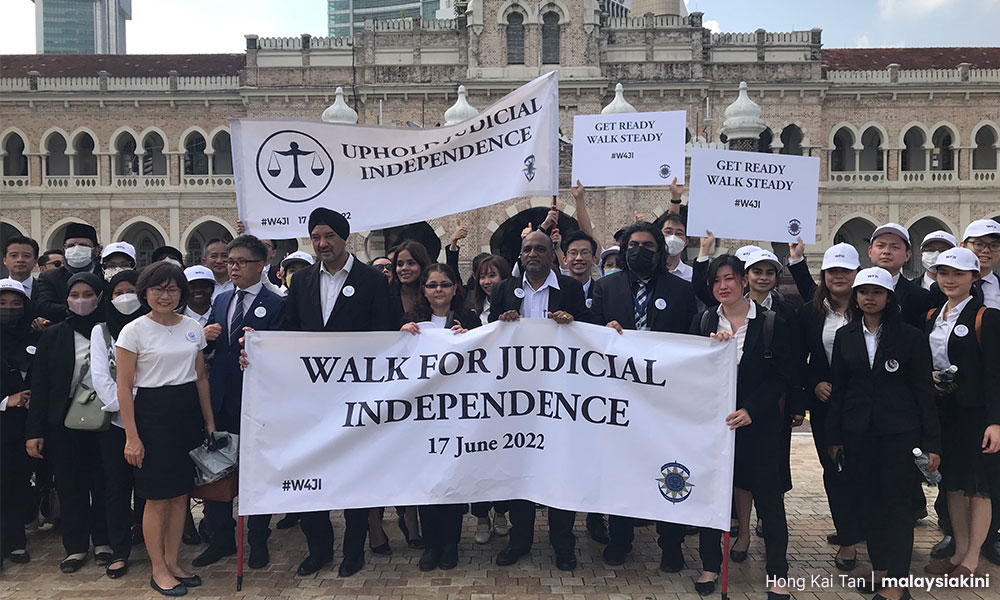
Question 4: During the AGM, the body also unanimously passed a motion to condemn the government strongly over the administration’s proposed regressive citizenship amendments. What are the next steps to convince the government to reconsider the said amendments?
Ezri: We will continue our attempts to engage with the government to reconsider the proposed amendments to the Federal Constitution.
Question 5: In January, the Bar Council issued a circular to safeguard members of the legal fraternity, making clear that winking, path-blocking, wolf-whistling, and certain gestures can constitute sexual harassment in the legal profession.
Among the listed offences were offering promotions for a date or a hug, making unwanted advances, and engaging in sexual coercion.
The circular also listed certain acts such as inappropriate verbal, visual, and physical conduct as sexual harassment offences. However, issues of enforcement of the circular have been raised.
What steps would the Malaysian Bar be taking to enforce the circular to ensure the welfare of legal practitioners?
Ezri: The Bar Council’s Peer Support Network (PSN) issued a series of circulars about sexual harassment, which succinctly describes what constitutes sexual harassment and the impact of sexual harassment on survivor(s).
The purpose of the series was:
(a) to raise awareness about sexual harassment, and to publicise that the actions described in the posters could constitute harassment;
(b) to inform our members and pupils about PSN, and its trained volunteer lawyers (case handlers) who are equipped to assist survivors of sexual harassment in the profession and guide them about their options/rights and how to go about finding redress; and
(c) to highlight that sexual harassment amounts to misconduct under Ruling 14.29 of the Rules and Rulings of the Bar.
Ruling 14.29 states, “Any act of sexual harassment by an Advocate & Solicitor or a pupil in a professional capacity or in a professional setting amounts to misconduct.”
Members who have or are experiencing sexual harassment can reach out to the PSN confidentially to understand their options in detail, including seeking redress within the firm; lodging a complaint with the Labour Department or the Advocates & Solicitors Disciplinary Board; or lodging a Police Report and/or filing a civil suit against the perpetrator.
This guidance empowers the survivor to make an informed decision about how to proceed and the case handlers will thereafter provide any relevant administrative support on that journey.
Bearing in mind that the Malaysian Bar or the Bar Council is not an enforcement body, the emphasis here is not on the perpetrator but rather on the survivors of such incidents. PSN was established to offer support and educate survivors about their specific options.
While the criminal justice system ensures that the rights of the accused are protected to ensure no miscarriage of justice, there is no support structure that supports survivors who have to navigate the same system. The Bar Council sought to fill this gap for its members.
Question 6: In March, Umno supreme council member Mohd Puad Zarkashi reportedly said he was not surprised by the motion that was passed by the Malaysian Bar to mount a legal challenge over the Pardons Board decision to discount Najib’s sentence over the RM42 million SRC International corruption case, claiming that the body “was often biased and played politics”.
Puad contended that Najib did not apply for a reduced sentence but that the ex-premier applied for a full pardon on grounds that he did not receive a fair trial.
Puad challenged the Malaysian Bar to respond to Chief Judge of Sabah and Sarawak Abdul Rahman Sebli’s dissenting judgment in Najib’s review bid over the case.
Would the Malaysian Bar like to respond to Puad’s contention?
Ezri: We reiterate our position that all actions taken by the Bar have been pursuant to our duties stipulated in the Legal Profession Act 1976.
Question 7: Two years ago in 2022, the Young Lawyers Movement sought for the Malaysian Bar to set a binding ruling for law firms to set a minimum pay for chambering students. Is the body still considering the issue?
Ezri: The Malaysian Bar in principle is agreeable to set a minimum remuneration rate for pupils in chambers. Two resolutions were passed and adopted during the AGM. During the Malaysian Bar’s AGM in 2021, two resolutions addressing this issue were adopted:
a) Resolution on Minimum Remuneration for Pupils and Improving the Quality of Pupils; and
b) Resolution to Clarify on the Policy to Implement Minimum Remuneration for Pupils in Chambers.
The resolutions state that:
a) The Malaysian Bar accepts in principle that pupils ought to be protected with minimum remuneration; and
b) The Bar Council shall immediately take all necessary steps to enforce a minimum remuneration by appropriate means, including but not limited to issuing rulings or advocating for legislative amendments.
To this end, the Bar Council has proposed amendments to the LPA to empower the Bar Council to make rules to provide for minimum allowance for pupils. These legislative amendments are currently pending to be tabled in Parliament.
Pending such legislative amendments, the Bar Council is taking preparatory steps to effect the implementation wage once the amendments come into force including engaging with experts/consultants to determine the minimum remuneration rate.
/file/publisher-c1a3f893382d2b2f8a9aa22a654d9c97/2024/03/810aa35583e31890aa3b89758da58bd9.jpg)
/file/publisher-c1a3f893382d2b2f8a9aa22a654d9c97/2024/04/397d38374e855e51f2489c035839eb73.jpg)
/file/publisher-c1a3f893382d2b2f8a9aa22a654d9c97/2024/04/39a5e12c9535a0ec95d37b959d8635f7.jpg)
/file/publisher-c1a3f893382d2b2f8a9aa22a654d9c97/2023/10/cc72cd14013720b944b99779faca92d3.jpg)


Are you sure you want to delete this comment?
This action cannot be undone.