


/file/publisher-c1a3f893382d2b2f8a9aa22a654d9c97/2022/08/0d09432695e91af76aa55109b32d568f.jpg)

Buy now pay later: Academics fear debt impact
The rise of “buy now, pay later” (BNPL) services for e-commerce has academics worried about its potential to drive consumers deep into debt.
However, data presented by a government-led task force and industry players suggest that for now at least, the pattern of BNPL usage is not yet a cause for concern.
Speaking at the Khazanah Research Institute (KRI) webinar...
The rise of “buy now, pay later” (BNPL) services for e-commerce has academics worried about its potential to drive consumers deep into debt.
However, data presented by a government-led task force and industry players suggest that for now at least, the pattern of BNPL usage is not yet a cause for concern.
Speaking at the Khazanah Research Institute (KRI) webinar today, KRI senior research associate Shereen Hazirah Hishamudin cited studies that found BNPL to be a potential “driver of overindebtedness”, especially in the longer term.
Shereen said research conducted by several European economists and academics found that the BNPL schemes appear to be shaping a more indulgent and less restrained consumer culture.
“You could see BNPL possibly causing a decline in credit scores, an increase in household default risk,” she said.
This was echoed by Universiti Malaya’s Business and Economics professor Mohd Nazari Ismail.
Quoting findings from a Universiti Malaya study, Nazari said BNPL poses as much, if not more, a threat than credit cards when it comes to consumer debt management.
“Encouraging credit purchase to consumers to overcome cost-of-living problems is like encouraging drug users to take drugs to overcome their drug addiction problems.
“It’s a cycle. It will worsen cost-of-living issues and increase indebtedness problems in society,” he asserted.
97pct of BNPL users pay on time
During the same discussion, however, Consumer Credit Oversight Board (CCOB) task force deputy director Azryta Abdul Aziz said 97 percent of BNPL users have made their payments on time while only three percent were recorded as one day past due.
Although the credit amount extended by BNPL industry players stood at RM1.4 billion as of the end of Q1 2024, Azryta said this is a small amount compared to the credit card’s outstanding balance of RM45.5 billion.
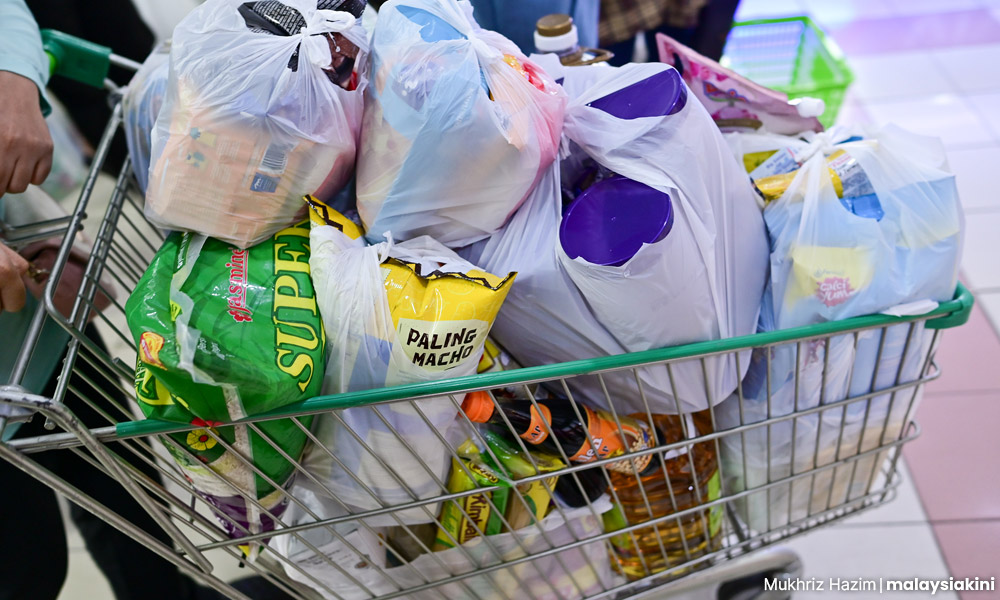
“BNPL only accounted for 0.07 percent of the total household debt.
“At this point in time, CCOB is not worried yet but we would like to monitor BNPL. It could go out of control if not monitored,” she said.
As of the end of Q1 2024, Azryta said 3.7 million users or one in 10 Malaysians are actively using BNPL with at least one transaction in the past 12 months.
In a relevant development, she added that CCOB is trying to promote fairness, efficiency and transparency through the Consumer Credit Act (CCA), which is expected to be tabled in Parliament in the second half of the year.
Led by the Finance Ministry, Bank Negara Malaysia and the Securities Commission, CCOB was set up in July 2021 to drive the enactment of CCA.
Contributes only 0.1pct to household debt
Azryta’s sharing also appeared to be supported by data presented by ShopeePay and SeaMoney Malaysia head Alain Yee.
Yee dismissed claims and misconceptions that BNPL was burdening households with more debt.
“As of Q3 2023, 85 percent of all household debts came from vehicle and property financing.
“BNPL only contributed to 0.1 percent (round off from 0.07 percent). Mathematically it adds to the household debt, but now in the grand scheme of things, it is significantly understated,” he noted.
Further, he said an SPayLater survey - participated by 30,000 respondents - conducted last year found that customer feedback was overwhelmingly positive.
“There are misconceptions that BNPL can be predatory and this is something observed in the West. BNPL players appear to be more prudent in Asia.
“Based on the SPayLater survey, a total of 82 percent of respondents would recommend the service to their friends and family. If it’s truly predatory, the satisfaction rate won’t be this high.
“There has also been a change in behaviour among customers before and after using SPayLater.
“There’s been a 47 percent reduction in borrowing from friends and family as well as a reduction by 43 percent in borrowing from pawnshops.”
/file/publisher-c1a3f893382d2b2f8a9aa22a654d9c97/2022/08/efd0855cafaa92552820632d52145aef.jpg)


Are you sure you want to delete this comment?
This action cannot be undone.