


/file/publisher-c1a3f893382d2b2f8a9aa22a654d9c97/2024/02/b6338eca6a1230ad26679f4a1cc763ae.jpg)

Indira fails in suit to arrest Muslim convert ex-husband, recover daughter
M Indira Gandhi has failed in her civil court action to compel the inspector-general of police (IGP) and the police to arrest her Muslim convert ex-husband Muhammad Riduan Abdullah and recover her daughter Prasana Diksa.
The Kuala Lumpur High Court dismissed the kindergarten teacher’s lawsuit over the police’s alleged failure to abide by a 2014 Ipoh High Court order.
UPDATED 4.58PM | Added judge’s grounds of ruling.
M Indira Gandhi has failed in her civil court action to compel the inspector-general of police (IGP) and the police to arrest her former husband Muhammad Riduan Abdullah and recover her daughter Prasana Diksa.
The Kuala Lumpur High Court dismissed the kindergarten teacher’s lawsuit over the police’s alleged failure to abide by a 2014 Ipoh High Court order.
Judicial commissioner Raja Ahmad Mohzanuddin Shah Raja Mohzan ruled that the police had been trying and are still trying to track down Riduan, who ran off with Prasana when she was 11 months old in 2009.
He said that the evidence does not show that the IGP committed the tort of nonfeasance as there was no existence of malice or bad faith on the part of the authorities in their so-far unsuccessful attempt to track down the Muslim convert.
Riduan, whose original name was K Pathmanathan, was rumoured to be in southern Thailand.
The judicial commissioner said this was not a scenario of Indira’s ex-husband roaming around Kuala Lumpur or any other area in plain sight of the police and the force not taking action despite noticing him.
“If this were the case, I would have viewed that factor in favour of the plaintiff. However, the facts before me indicate that Pathmanathan’s whereabouts were unknown. Evidence further suggests that he was in Thailand at some point in time.
“In conclusion, my interpretation of the evidence suggests that all the efforts made by the IGP and police were not indicative of any neglect of their duties. Furthermore, based on the evidence available to me, I conclude that the IGP and police exercised their duties in the manner they considered to be most appropriate.
“The manner in which they conducted their investigation is within their wide discretion and I am in no position to second-guess them. Essentially, what matters to me is that there is evidence that an investigation has been conducted and is still in progress,” Mohzanuddin said.
Mohzanuddin added that the apex court in 2016 already ruled that the IGP could be excused from not executing the Ipoh High Court order for the police to recover Prasana, as the top police officer was facing two conflicting custody orders.
Previously, the Ipoh Civil High Court granted custody of Prasana to Indira, while the Ipoh Syariah High Court gave custody to Riduan.
Judge expresses sympathy
In dismissing Indira’s suit without any order to costs, Mohzanuddin expressed his empathy for the plaintiff’s suffering in being separated from Prasana for 15 years.
“It is impossible to imagine the agony that the plaintiff has experienced. Her youngest daughter, P Prasana Diksa, barely two years old at the time, was taken away from her sometime in 2009.
“The plaintiff's anguish and pain as a mother have persisted.
“Sadly, the plaintiff has never met her youngest daughter again. It is unknown where the beautiful daughter of hers is located,” Mohzanuddin said.
Senior federal counsel Zetty Zurina Kamaruddin appeared for the IGP.
Law firm Raj & Sach appeared for Indira.
On Oct 28, 2020, Indira filed a lawsuit over the police’s alleged failure to track Riduan down, arrest him, and recover Prasana, now 16, from him.
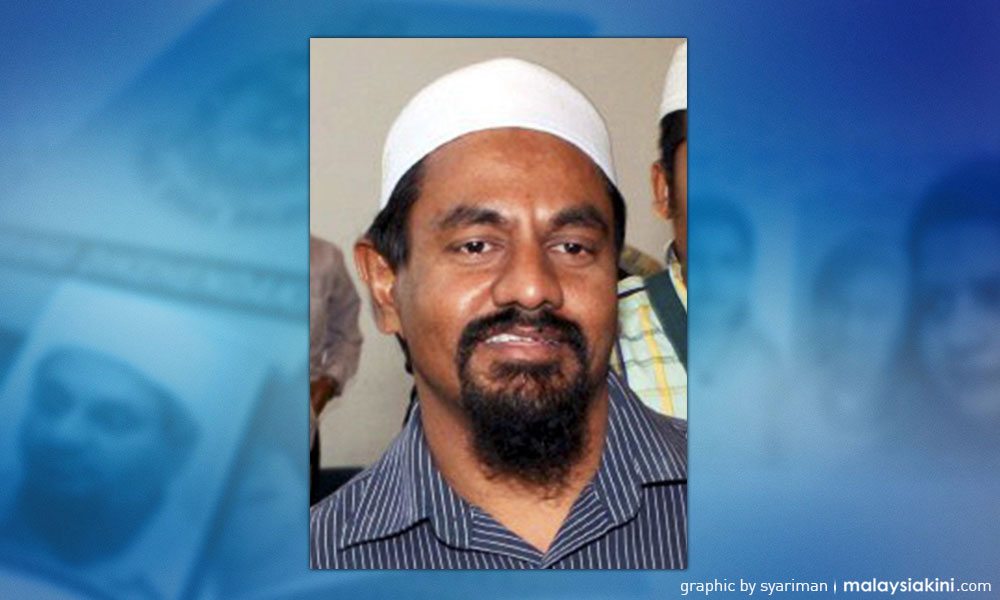
According to the suit, the IGP allegedly failed to abide by two orders from the Ipoh High Court issued on May 30, 2014.
In 2016, the Federal Court also ordered the IGP to arrest Riduan.
The first was a committal order for Riduan to be jailed for failing to return Prasana to Indira. The second was a recovery order for the police and the court bailiff to retrieve Prasana from Riduan and return the child to Indira.
Indira sought declarations that the IGP had committed a tort of nonfeasance in public office and that the other three defendants were vicariously liable for the first defendant’s (IGP’s) actions.
Indira also sought general, aggravated, and exemplary damages, interest, costs, and any other order deemed fit by the court.
/file/publisher-c1a3f893382d2b2f8a9aa22a654d9c97/2024/02/d30d3c8f591dbfb1c12ccc718a967b55.jpg)
/file/publisher-c1a3f893382d2b2f8a9aa22a654d9c97/2023/10/0bfd2165a9dadb4d0f31e8aa166ddc83.jpg)
/file/publisher-c1a3f893382d2b2f8a9aa22a654d9c97/2021/01/885beacd463c43195ae13650aeb781f2.jpg)
/file/publisher-c1a3f893382d2b2f8a9aa22a654d9c97/2020/02/051628355a3ec2524a5e637c6dde71fb.jpg)
/file/publisher-c1a3f893382d2b2f8a9aa22a654d9c97/2022/11/b9534c700fe0c2facb4e51ea7d8d63de.jpg)
/file/1212/6f4c850c8808a423b1354e5638d000e8.jpeg)


Are you sure you want to delete this comment?
This action cannot be undone.