


/file/publisher-c1a3f893382d2b2f8a9aa22a654d9c97/2024/06/2fee2a3a590100a212aa8f9a5684cef9.jpg)

KINIGUIDE | The plight of stateless Bajau Laut in Sabah
KINIGUIDE | The Bajau Laut, known to many for their nomadic lifestyle in Sabah’s coastal edges, is again making news headlines following several incidents involving the community.
Earlier in June, media reported that authorities allegedly evicted Bajau Laut and destroyed their stilt homes in the Tun Sakaran Marine Park (TSMP) in Semporna.
KINIGUIDE | The Bajau Laut, known to many for their nomadic lifestyle in Sabah’s coastal edges, is again making news headlines following several incidents involving the community.
Earlier in June, media reported that authorities allegedly evicted Bajau Laut and destroyed their stilt homes in the Tun Sakaran Marine Park (TSMP) in Semporna.
This action sparked debates on social media regarding the reasons behind such measures and the Bajau Laut’s status in Malaysia, as many in the community are undocumented despite having lived in the country for generations.
Who are the Bajau Laut?
In his 2001 paper, Japanese sociologist Kazufumi Nagatsu described the Bajau-Sama as an ethnic group residing in the Sulu Archipelago, the Philippines, eastern Indonesia, and Sabah, Malaysia, and numbering between 750,000 and 900,000 according to an earlier estimate.

For comparison, the population of Sabah in the 1990s was over 200,000.
“The Sama/Bajau are mostly, if not all, maritime-oriented in terms of way of life. Some were once boat-dwellers in coral reefs and were known as “sea nomads” or “sea gypsies” in European literature.
“In general, Sama is a term used by the people for themselves, while the term Bajau (or Bajo in Indonesia) has been used commonly by outsiders but is currently adopted as a term of self-reference in some areas in Sabah,” he wrote.
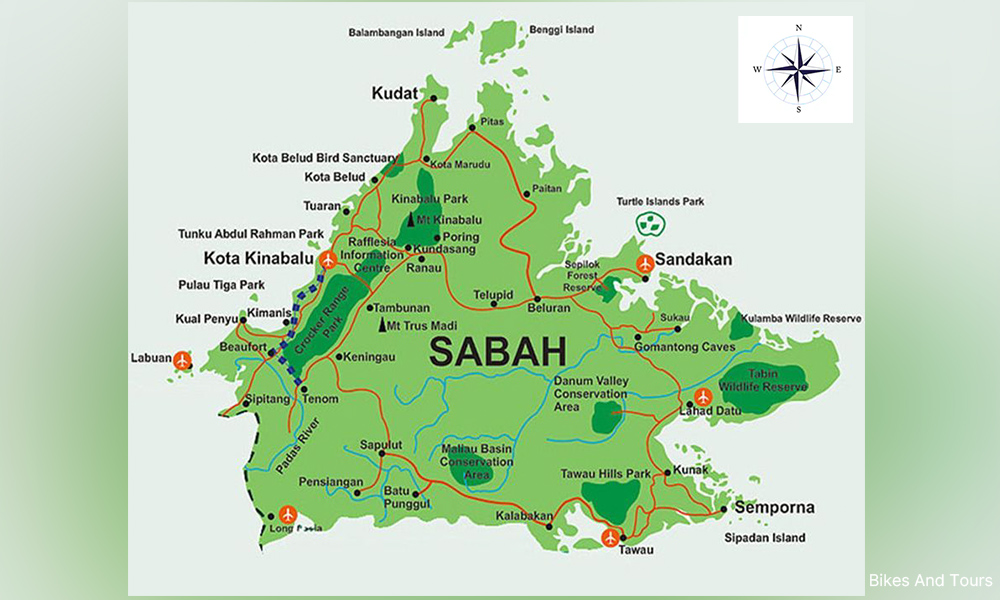
In the Malaysian context, the Bajau are further categorised as Bajau Darat on the Sabah west coast and Bajau Laut on the state's east coast.
The west coast covers the Kota Belud and Tuaran areas, while the east coast includes Tawau, Semporna, and Lahad Datu.
Why are they stateless?
According to Iskul Sama di-Laut Omadal, a charity running a school for stateless children in Semporna, some sea nomads settled in the islands around Semporna before Malaysia was formed.
Others are descendants of those who fled the Sulu armed conflict and political instability in Southern Mindanao, Philippines, in the 1970s, seeking refuge in Sabah. The diving resort island of Pulau Mabul, once known as the UN Island, was used to settle these refugees.
“Now, despite the presence of resort and dive operators and tourists, Pulau Mabul is still inhabited by refugees (a mix of Suluk, Bajau, and Bajau Laut), many of whom are undocumented," the website read.
READ MORE: The Bajau Laut families left adrift and stateless
Iskul mentioned the Bajau Laut communities who managed to get citizenship had settled into a sedentary lifestyle in Sabah before Malaysia Day in 1963 and resided in the first Bajau settlement, Kampung Bangau-Bangau, established in the 1960s.
Others continued their continued their nomadic or semi-nomadic lifestyle with their houseboats (lepa-lepa), even if they lived in Sabah prior to 1963 in places like the TSMP and areas like Pulau Omadal, Pulau Mabul, and the Semporna coast.
Therefore, as Malaysia, the Philippines, and Indonesia enacted citizenship laws and established formal borders as fledgling nation-states, the Bajau Laut - at least those who were still nomadic and historically did not prioritise documentation - ended up getting left out without recognised citizenship.
How does statelessness impact Bajau Laut?
Without citizenship, Bajau Laut’s children cannot get a formal education, making it difficult to find jobs and earn a living wage. This deprives them of basic necessities and opportunities for upward social mobility.
They have instead turned to informal education such as those offered by Iskul Sama di-Laut Omadal or Borneo Komrad.
Their statelessness is also why many Bajau Laut avoid seeking medical help. Unlike Malaysian citizens who pay only RM1 for treatments at government healthcare facilities, the undocumented are charged a “foreigner’s fee”, which is much higher.
As part of a series of reports last year about their plight, Malaysiakini uncovered cases of Bajau Laut infants being forcefully put up for adoption without their parents’ consent because of their stateless status.
Another heart-wrenching story was about a nine-year-old stateless boy who died after being deprived of HIV treatments for years.
What about the terms ‘Palauh’ or ‘Palau’? Do they refer to the Bajau Laut too?
The term is considered derogatory and should not be used.
While the term is widely used in describing Bajau Laut, even by some media and government agencies, Universiti Malaya gender studies senior lecturer Vilashini Somiah has called for an effort to stop using it.
Speaking to Malaysiakini, Vilashini said the word had a similar impact to the derogatory word “K” used against the Indian community in the country.
However, unlike the Indian community, where there are agencies who could speak up against it, Vilashini said the Bajau Laut community has no one to support them.
Citing her nearly eight months with the Bajau Laut community in Lahad Datu, Vilashini said many had spoken to her about how they hated and detested the word.
“Many locals would use the word quite freely, but the Bajau Laut have said they hated it.
“The only reason they accepted it is that they are socially and economically powerless, that as long as calling the term allowed them to get some assistance, they just put up with it,” she said.
Vilashini said some Bajau Laut who spoke to her refer to the word in various meetings, such as “those who get kicked out”, vomit, or disgusting.
What is the government doing?
To date, the government has yet to lay out a concrete plan to address the plight of the Bajau Laut, nor the issue of statelessness more broadly.
Malaysia has not signed the two international conventions on statelessness: the Convention on the Reduction of Statelessness and the Convention Relating to the Status of Stateless Persons.
The Immigration Act 1959/1963 does not distinguish between asylum seekers, refugees, irregular migrants, and undocumented or stateless individuals. In the eyes of the law, all these are “illegal immigrants” who could be rounded up, punished, and deported.
This leaves the Bajau Laut exceptionally vulnerable during raids by law enforcement agencies.
During parliamentary debates on July 1, Kota Belud MP Isnaraissah Munirah Majilis urged Suhakam to host more open forums to discuss the issue of stateless people and migrants illegally entering Sabah.
Isnaraissah stated that the two groups should be distinctly differentiated when stakeholders at both state and federal levels engage in discussions on this “sensitive issue”.
With no prospect of granting citizenship to the Bajau Laut anytime soon, former Suhakam commissioner Jerald Joseph has urged the government to promptly gather data and devise plans to assist this marginalised community.
He said successive state and federal administrations have conducted various initiatives to study and collect data about the Bajau Laut and come up with proposals. He questioned where have the data and proposals gone.
“Statelessness is unacceptable in any country, as it deprives individuals of their rights and access to essential services.
“No one should be stateless, including the Bajau Laut in Sabah, who have lived undocumented for generations,” he told Malaysiakini.
/file/publisher-c1a3f893382d2b2f8a9aa22a654d9c97/2024/07/1577a750e7dc4ba91916cb488e08a8af.jpg)
/file/publisher-c1a3f893382d2b2f8a9aa22a654d9c97/2024/06/b43301fcda7dd65f56bf964a7d184b96.jpg)
/file/publisher-c1a3f893382d2b2f8a9aa22a654d9c97/2024/06/28d29d95e0aaa85d8b6ab1e6089937dd.jpg)
/file/publisher-c1a3f893382d2b2f8a9aa22a654d9c97/2020/10/c5ce36274e24fa5afeab2500b0df3adb.jpg)
/file/publisher-c1a3f893382d2b2f8a9aa22a654d9c97/2024/06/c7345dba6624eeedea5305130f4dad7d.jpg)
/file/publisher-c1a3f893382d2b2f8a9aa22a654d9c97/2024/03/810aa35583e31890aa3b89758da58bd9.jpg)


Report this comment
Are you sure you want to delete this comment?
This action cannot be undone.