


/file/publisher-c1a3f893382d2b2f8a9aa22a654d9c97/2021/07/5b7a143287301b9c9fe45c2010a00bdb.jpg)

Dewan Rakyat greenlights amendments to Medical Act 1971
PARLIAMENT | The Dewan Rakyat has passed changes to 12 provisions under the Medical Act 1971, drafted as a “solution” to resolve issues surrounding the registration of medical practitioners as specialists.
It includes those seeking specialist training for selected postgraduate qualifications abroad.
Health Minister Dzulkefly Ahmad tabled the Medical Act...
PARLIAMENT | The Dewan Rakyat has passed changes to 12 provisions under the Medical Act 1971, drafted as a “solution” to resolve issues surrounding the registration of medical practitioners as specialists.
It includes those seeking specialist training for selected postgraduate qualifications abroad.
Health Minister Dzulkefly Ahmad tabled the Medical Act (Amendment) Bill 2024 for second reading yesterday, and debates continued this afternoon.
In his winding-up speech, Dzulkefly addressed several opposition lawmakers’ concerns surrounding one amendment to empower the Malaysian Medical Council (MMC) to accredit new specialist courses, a function previously carried out by the Malaysian Qualifications Agency (MQA) under the Higher Education Ministry.
“I hope that Arau (Perikatan Nasional MP Shahidan Kassim) understands that when we make amendments to recognise accreditation for purposes of registering medical practitioners as specialists under this (Medical) Act, it is something regular (lawful),” said Dzulkefly before the Bill was tabled at the committee stage.
This was followed by a third reading of the Bill which was passed via voice vote.
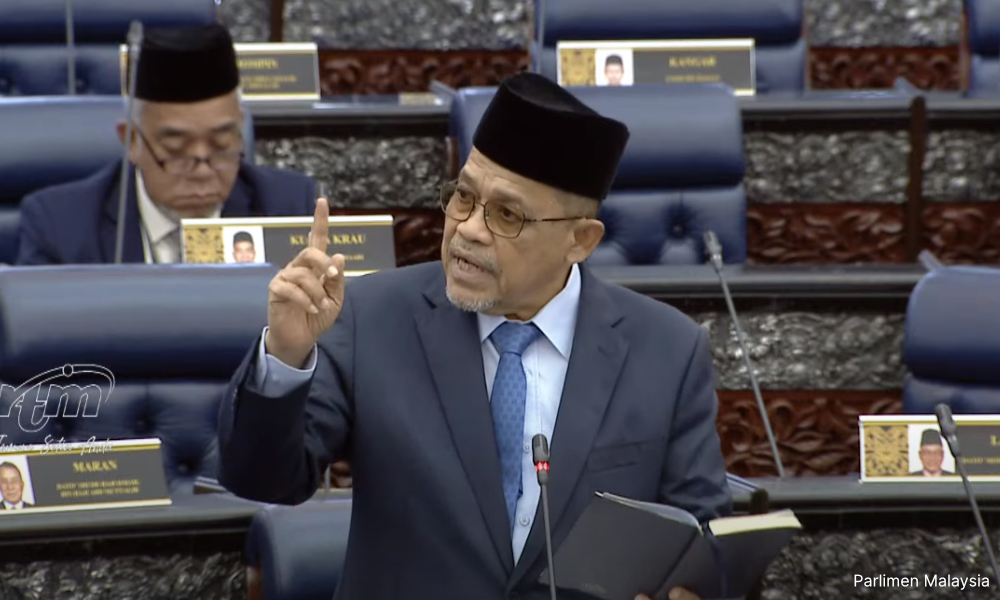
Shahidan, as well as Ahmad Yunus Hairi (PN-Kuala Langat), were among the opposition MPs who questioned the MMC’s increased powers under the new amendments, and whether it would result in the overall quality of newly registered specialists being compromised.
Change of terms
Dzulkefly, when tabling the amendments yesterday, said the Bill aims to improve provisions relating to the registration of medical practitioners as specialists and execute the accreditation for specialist training.
He said the amendments were proposed after joint discussions with the Higher Education Ministry and advice from the Attorney-General’s Chambers - that there was a “legal irregularity” involving the two ways for medical practitioners to receive specialist training.

One is through a medical graduate programme at a local university and the other is via a parallel pathway programme, where a specialist qualification is awarded by a foreign institution but specialist training is done at a local Health Ministry facility.
With the amendments, several key terms under Section 2 of the Act have been redacted and replaced with new definitions.
These include changing the term “accredited training institutes” to “local institution of higher education”, removing “accredited specialist qualifications” to be included in a separate schedule, and amending the definition of “registered medical practitioner” to also include specialists.
Amendments to Sections 3 and 4 of the Act relate to the functions of the MMC as a professional body tasked to register medical practitioners as specialists.
“The fourth provision is intended to amend Section 4A (2)(h) to empower the council to accredit qualifications and specialist training for the purpose of medical practitioner and specialist registration,” said Dzulkefly.
Additionally, the fifth to eighth provisions saw changes to Sections 14A, 14B and 14C to clarify specific regulations on the registration of specialists by MMC.
MMC accorded greater powers
According to Dzulkefly, the MMC through the new changes will be empowered to decide on, approve or accredit any new specialist fields without the need to refer to any other Act, including the MQA Act 2007.
“With the new provision under Section 14B(3)(a), all new specialist fields, whether under the (local) medical graduate programme or (foreign) parallel pathway, must be approved and accredited by MMC,” he said.

The minister said all programmes would be evaluated based on the “Malaysian Standards for Medical Specialist Training” or the “Speciality Specific Requirements” set by the MMC.
Further, he said the MMC will also be empowered to make recommendations to the health minister for any medical practitioner to be registered as a specialist if the individual does not fulfil requirements under the Act but still meets the required standards.
In recognition of MMC’s role, Dzulkefly said changes are also introduced to increase the number of representatives from the public service in MMC, as well as representatives from local universities and colleges.
Lastly, he said the changes will also include exemption and transition clauses to address all registrations from July 1, 2017 - when the previous amendment Bill was enforced - up until the new amendments have been gazetted.
“In future, we don’t want any party to question this irregularity.
“We also don’t want the government to be exposed to real legal risks that arise from the principle of legitimate expectation from medical practitioners that have undergone the mentioned specialist training,” he said.
This issue arose after four graduates who earned a Fellowship of the Royal Colleges of Surgeons Edinburgh (FRSC Ed) qualification for cardiothoracic surgery were told they could not register as specialists and practise the specialism in the country because the MMC does not recognise the qualification.

MMC said while it has a list of recognised parallel pathway specialist training programmes, the FRSC Ed qualification is not on it.
The graduates, who are employed in the Health Ministry and the National Heart Institute (IJN), have since sought leave for a judicial review on the matter.
Malaysia is facing a shortage of medical specialists including cardiothoracic surgeons.
Three Health Ministry centres in Kota Bharu, Kuantan and Kota Kinabalu have only one cardiothoracic surgeon respectively.
/file/publisher-c1a3f893382d2b2f8a9aa22a654d9c97/2024/02/2ccdda965bcdc258a4cc20dbc5118cba.jpg)
/file/publisher-c1a3f893382d2b2f8a9aa22a654d9c97/2024/06/11023021cf4784e95bc4c7b1f6177744.jpg)
/file/publisher-c1a3f893382d2b2f8a9aa22a654d9c97/2021/09/4c49be8e246eeb343e0f95bb38933d03.jpg)
/file/publisher-c1a3f893382d2b2f8a9aa22a654d9c97/2023/12/1ddd1238fdd37b7ade65bca30e98634a.jpg)
/file/publisher-c1a3f893382d2b2f8a9aa22a654d9c97/2021/07/6dc88843afc8617ff248b0bbce72811c.jpg)


Report this comment
Are you sure you want to delete this comment?
This action cannot be undone.