


/file/publisher-c1a3f893382d2b2f8a9aa22a654d9c97/2020/12/6ffa730d16a9bb0daf24592b4f2b14f2.jpg)

Interfaith council objects to 'Jakim officers in govt depts'
The Malaysian Consultative Council of Buddhism, Christianity, Hinduism, Sikhism and Taoism (MCCBCHST) has voiced its objection following a report that Islamic religious officers will be placed in government departments.
The group cited Sabah-based Daily Express quoting LDP vice-president David Ong raising concerns regarding reports that officers from the Islamic Development Department (Jakim) will be placed in government departments to ensure decisions align with Islamic principles.
“Before this, there have been...
The Malaysian Consultative Council of Buddhism, Christianity, Hinduism, Sikhism and Taoism (MCCBCHST) has voiced its objection following a report that Islamic religious officers will be placed in government departments.
The group cited Sabah-based Daily Express quoting LDP vice-president David Ong raising concerns regarding reports that officers from the Islamic Development Department (Jakim) will be placed in government departments to ensure decisions align with Islamic principles.
“Before this, there have been various announcements to expand the role of Jakim, for example by Prime Minister Anwar Ibrahim in June 2023.
“The MCCBCHST is concerned with this (reported) move to place Jakim officers in every department and ministry.
“This move has the potential to affect the constitutional safeguards including the fundamental rights guaranteed by Articles 5 to 13, which also form the basic structure of the Constitution,” said the group in a statement.
The MCCBCHST statement was jointly signed by its president Dao Zhang Tan Hoe Chieow, vice-president Archbishop Julian Leow, vice-president Venerable Chuan Yuan, vice-president Ganesh Babu Rao and vice-president Sardar Jagir Singh.
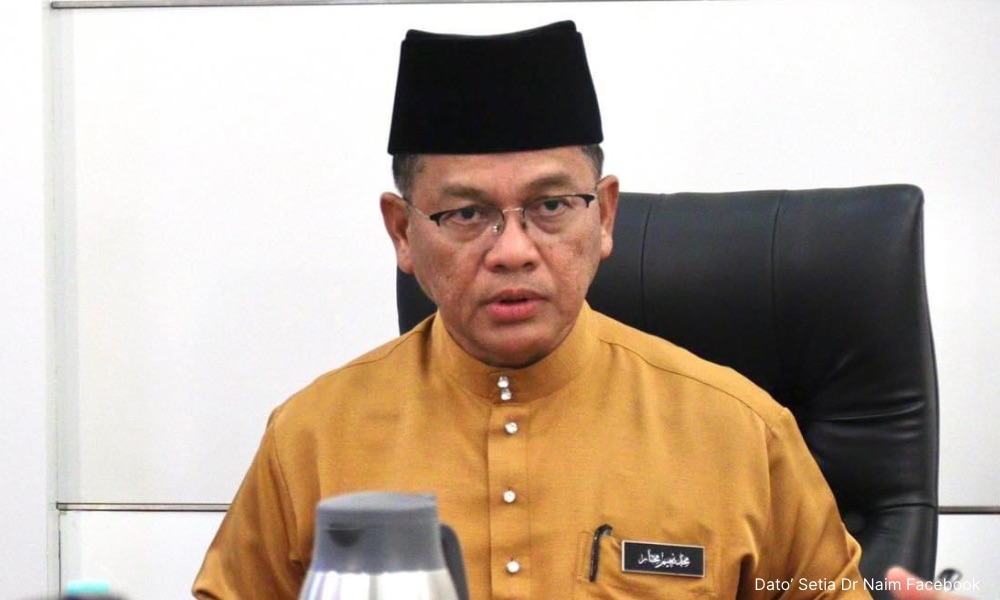
Malaysiakini is seeking clarification from Minister in the Prime Minister’s Department (Religious Affairs) Mohd Na’im Mokhtar and Jakim over the report.
Why keep silent, DAP?
In a separate statement, MCA Youth secretary-general Saw Yee Fung criticised DAP for its silence on the matter, accusing the party of allowing the government to threaten the rights of non-Muslims.
"On one hand, the DAP loudly calls on the Chinese community to resist PAS' 'Green Wave’, but on the other hand, it is self-Islamising, competing with Perikatan Nasional on who is more conservative and religious.
"The DAP's five cabinet ministers need to explain why this policy was allowed to pass,” she said.

She also pointed out the previous policies the coalition government had implemented, saying they had rung alarm bells.
The policies include mandatory gender segregation at concerts, banning of beer logos at Chinese educational charity events, introduction of Islamic teachings into government schools and the Penang government's cancellation of concerts.
Saw said the government’s latest move will embed the doctrine and values of a single religion into all government policies, further Islamising governance.
Meanwhile, the interfaith group said Article 4(1) provides for the “Constitution to be the supreme law of the federation…”, which means any laws promulgated or policies decided must be in line and intra vires (inside the powers) of the Constitution.
“Article 3(1) of the Federal Constitution states that ’Islam is the religion of the federation…’ which has been interpreted by the highest courts to mean Islamic ‘rituals and ceremonies’.
“Jakim’s involvement in the formulation of government policies to purportedly ensure they are aligned to Islamic principles is in the public sphere where it has no jurisdiction to do so.
“Further this encroachment into the public sphere may be unconstitutional as it may affect the fundamental rights guaranteed to all Malaysians. This position is well settled in law,” the group added.
It cited the Supreme Court’s decision in the case of Che Omar Che Soh vs the Public Prosecutor in 1988.
“The Supreme Court when deciding on Article 3(1) held that the term ‘Islam’ or ‘Islamic religion’ in Article 3 of the Federal Constitution in the context means only such acts as related to rituals and ceremonies.
“The Supreme Court (a unanimous decision of five judges) further stated that Islam is not just a mere collection of dogmas and rituals but it is a complete way of life covering all fields of human activities,” it added.
Continuity of secular law
The multifaith council said the Supreme Court then concluded that “the framers of the Constitution understood the meaning of the word ‘Islam’ in the context of Article 3 and if it had been otherwise there would have been another provision which would have the effect that any law contrary to the injunction of Islam would be void.”
“Far from making such provision, Article 162, on the other hand, purposely preserves the continuity of secular law prior to the Constitution, unless such law is contrary to the latter,” said the group.
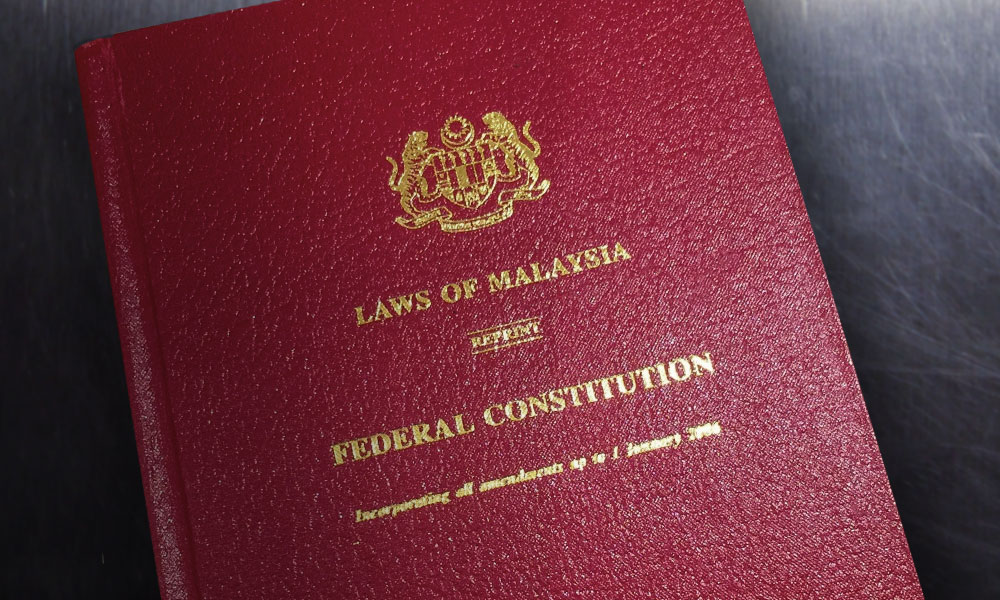
It said the Supreme Court’s decision in the Che Omar case has been subsequently approved and followed by three subsequent Federal Court decisions:
Indira Gandhi vs Perak Islamic Religious Department director and two others;
Iki Putra Mubarak vs Selangor state government & Anor (2021);
Nik Elin Zurina Nik Abdul Rashid Anor vs Kelantan state government (2024)
/file/publisher-c1a3f893382d2b2f8a9aa22a654d9c97/2024/07/89ddb9b0bda9358603d6e85557597eac.jpg)
/file/publisher-c1a3f893382d2b2f8a9aa22a654d9c97/2019/11/9da2199d069676b1c40eed01d07ed0cb.jpg)
/file/publisher-c1a3f893382d2b2f8a9aa22a654d9c97/2024/07/be29ba60f9a6c9c434573a3f89370177.jpg)
/file/publisher-c1a3f893382d2b2f8a9aa22a654d9c97/2023/08/1bc67a94a3233797c01578e8d52d2b29.jpg)


Are you sure you want to delete this comment?
This action cannot be undone.