


/file/publisher-c1a3f893382d2b2f8a9aa22a654d9c97/2024/10/f94f48efac9dd54e2eb2e71b135d4494.jpg)

DOSM: Family of 4 needs RM5,854 a month in S'gor to live decently
Selangor and Kuala Lumpur are the most expensive places to live in order to achieve a decent lifestyle, according to the Department of Statistics’ 2023 Cost of Living data released this month.
To achieve a decent lifestyle, one needs at least RM1,755 a month per person in Kuala Lumpur, and at least RM1,630 in Selangor, the DOSM says, making these states the most expensive places to live in Malaysia.
Selangor and Kuala Lumpur are the most expensive places to live in order to achieve a decent lifestyle, according to the Department of Statistics’ 2023 Cost of Living data released this month.
To achieve a decent lifestyle, one needs at least RM1,755 a month per person in Kuala Lumpur, and at least RM1,630 in Selangor, the DOSM says, making these states the most expensive places to live in Malaysia.
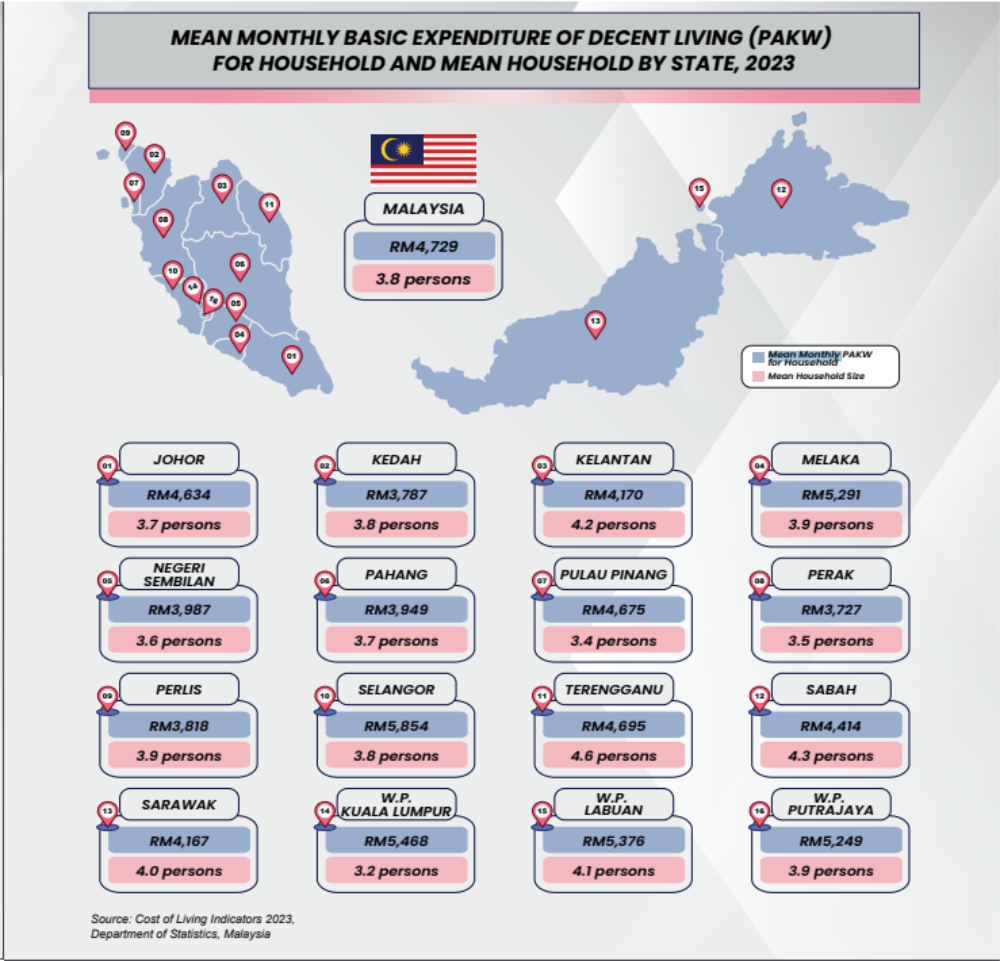
Selangor tops the charts with the average cost of a decent living being RM5,854 a month per household, where the average household has about four people or 3.8 to be exact.
However, Selangor’s median individual salary in Q3 2023 is only RM2,900 a month, indicating that the salary of two working adults may not be enough to meet the needs of a decent lifestyle for a family of four.
This means couples earning the median wage with two children may just be barely making ends meet every month, or have to commit to side hustles for a little extra.
In Kuala Lumpur, a household of about three individuals - 3.2 people to be exact - would need RM5,468 a month to live a reasonable lifestyle.
The median monthly salary for individuals in Kuala Lumpur is RM3,800, again necessitating a dual-income household to meet the needs of a reasonable lifestyle in the city.
This cost for a household to live decently in Kuala Lumpur and Selangor far exceeds the national level.
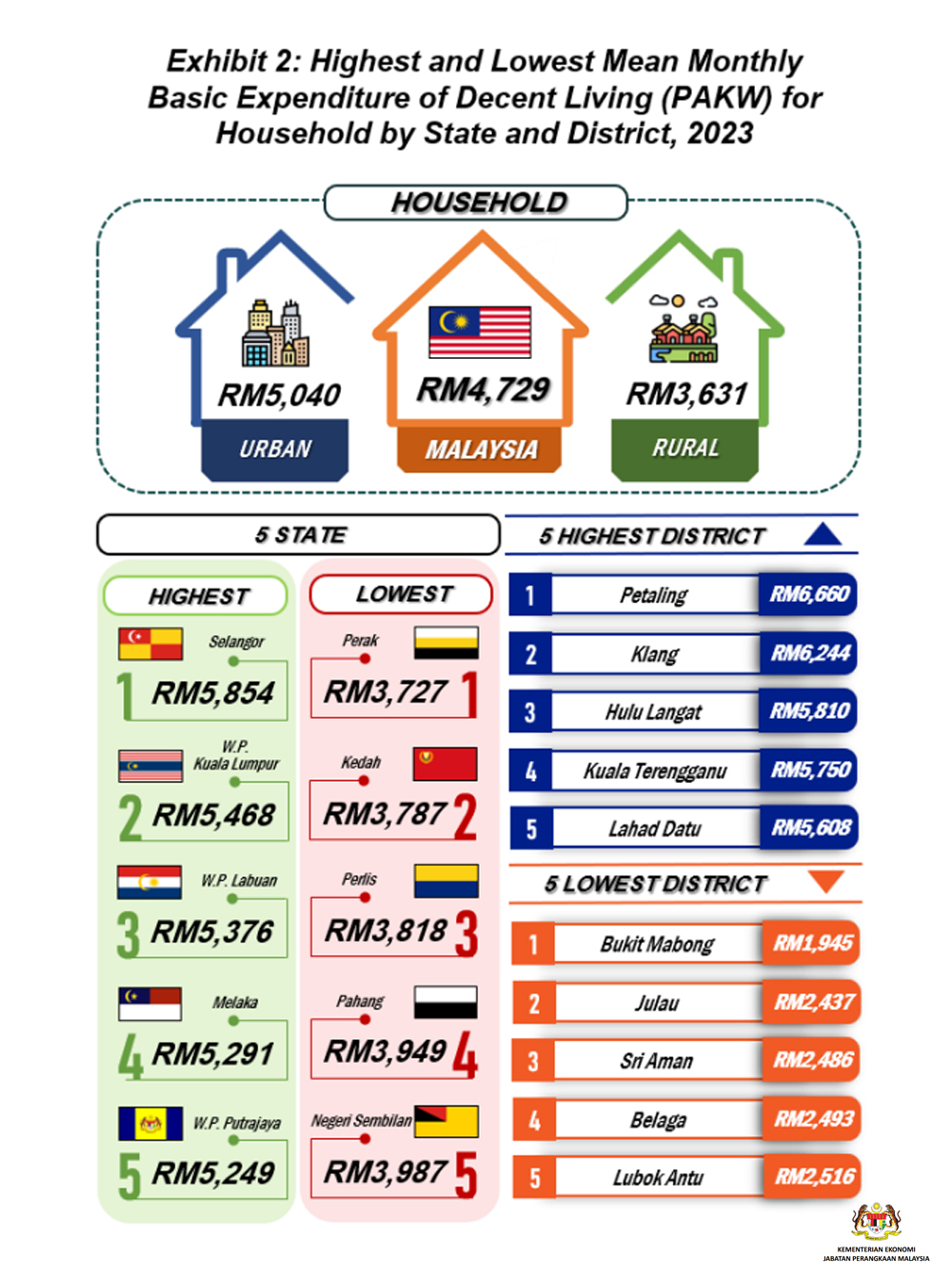
On a national level, the average monthly basic expenditure of decent living in Malaysia for 2023 was RM4,729. This is for a household of 3.8 persons.
Rural areas are cheaper, with the average cost for a decent life being RM3,631 per household.
This is based on an average household size of 3.7 people in urban areas and four persons in rural areas.
Comparing this to the national median salary of individuals of RM2,600 in the third quarter of 2023, urban dwellers will barely make ends meet on two incomes per household.
Petaling district most expensive
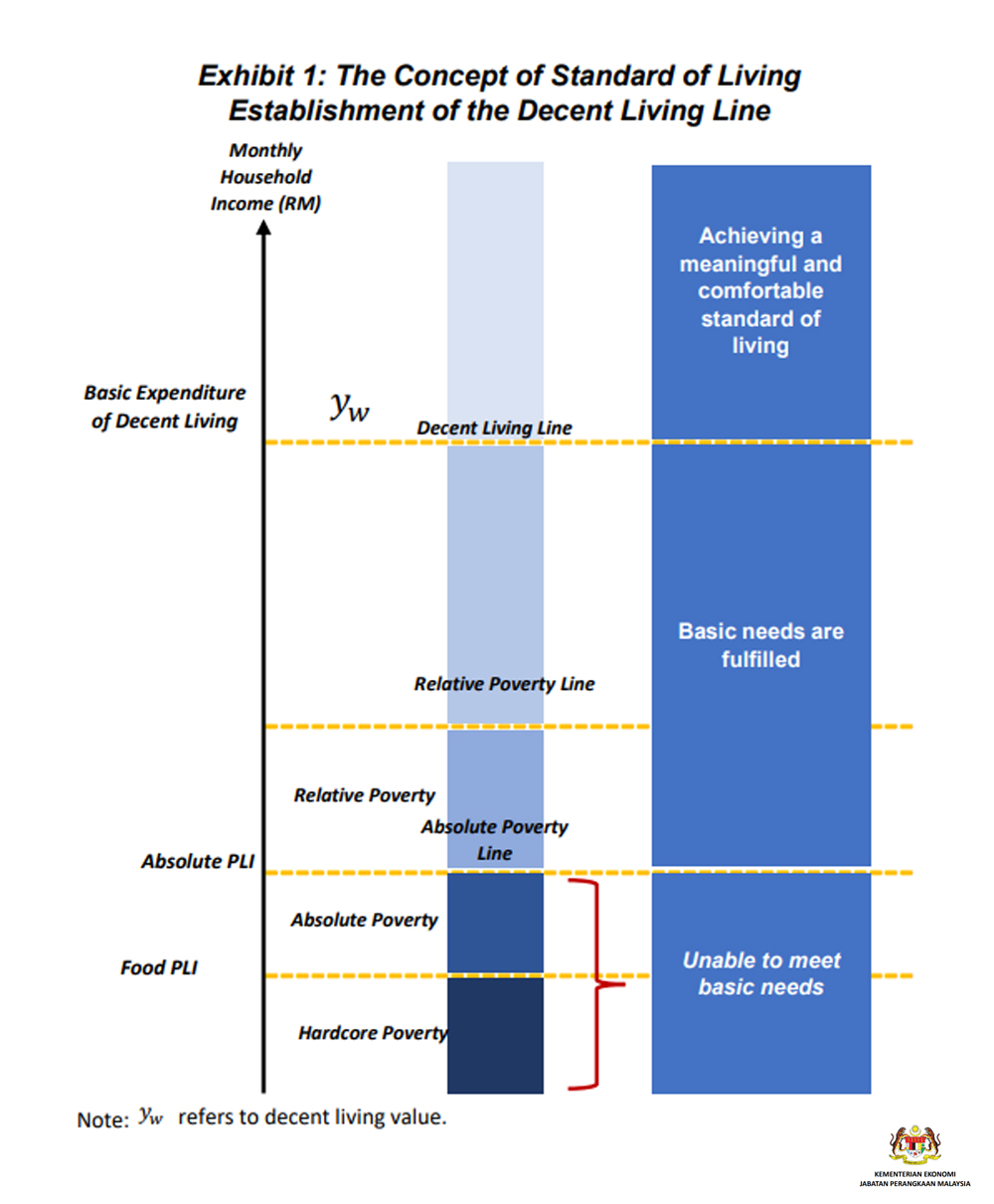
A household reaches the Decent Living Line if it archives a “meaningful and comfortable standard of living”, the DOSM says.
“A decent standard of living refers to the monthly expenditure required by a household to achieve a meaningful and comfortable life, enabling them to meet their basic needs and participate in society.
“The Decent Living Line serves as a benchmark for the minimum income level considered sufficient to meet an individual’s living needs.
“These needs encompass not only basic essentials such as food, clothing, and shelter but also social needs such as education and access to healthcare,” it says.
Based on this definition, the DOSM found the district of Petaling in Selangor to be the most expensive district in Malaysia to achieve a decent standard of living.
The basic average monthly expenditure required per household to meet a decent living in Petaling is RM6,660 a month, followed by Klang (RM6,244) and Hulu Langat (RM5,810).
On a per capita basis, it costs an average RM2,031 per person to live decently in Petaling, followed by RM1,741 in the Timur Laut district in Penang, and the Klang district in Selangor (RM1,618).
It is cheapest to live a decent life in the district of Lojing, Kelantan (RM670 per capita), followed by Sarawak’s Tebedu (RM728) and Julau (RM749).
On a household basis, the cheapest districts to achieve a basic decent life are Sarawak districts Bukit Mabong (RM1,935 per month per household) and Julau (RM2,437), followed by Sri Aman (RM2,486).
Household expenses grew faster than income
The DOSM also said that based on its household expenditure survey, the average household consumption expenditure grew at a faster rate of 3.7 percent compared to the average household income from 2019 to 2022.
“The mean monthly household consumption expenditure rose from RM4,609 in 2019 to RM5,150 in 2022.
“Meanwhile, the median monthly household consumption expenditure increased from RM3,683 in 2019 to RM4,282 in 2022,” it said.
Households spent the most on four groups of expenditure:
Housing, water, electricity, gas & other fuels (23.2 percent)
Food & beverages (16.3 percent)
Restaurant & accommodation services (16.1 percent)
Transport (11.3 percent)
These four groups made up 67 percent of the consumption expenditure, it said.
/file/publisher-c1a3f893382d2b2f8a9aa22a654d9c97/2024/08/296d6738895d770fe072b6251fc832fc.jpg)
/file/publisher-c1a3f893382d2b2f8a9aa22a654d9c97/2021/10/02a8ec58fdf2b17a240dafb7ab6f0fa2.jpg)
/file/publisher-c1a3f893382d2b2f8a9aa22a654d9c97/2024/10/a0f29d290340ada82c1d0301a1159693.jpg)
/file/publisher-c1a3f893382d2b2f8a9aa22a654d9c97/2023/07/af8821d79dccf77df6f1125a3a72bf62.jpg)
/file/publisher-c1a3f893382d2b2f8a9aa22a654d9c97/2024/01/f86cedf70059fcf3124d3f08f11f4559.jpg)


Are you sure you want to delete this comment?
This action cannot be undone.