


/file/publisher-c1a3f893382d2b2f8a9aa22a654d9c97/2021/06/8f3f5f6cad60bc59b1cc5d6bcac0805c.jpg)

Govt taking steps to control insurance premium hikes: Anwar
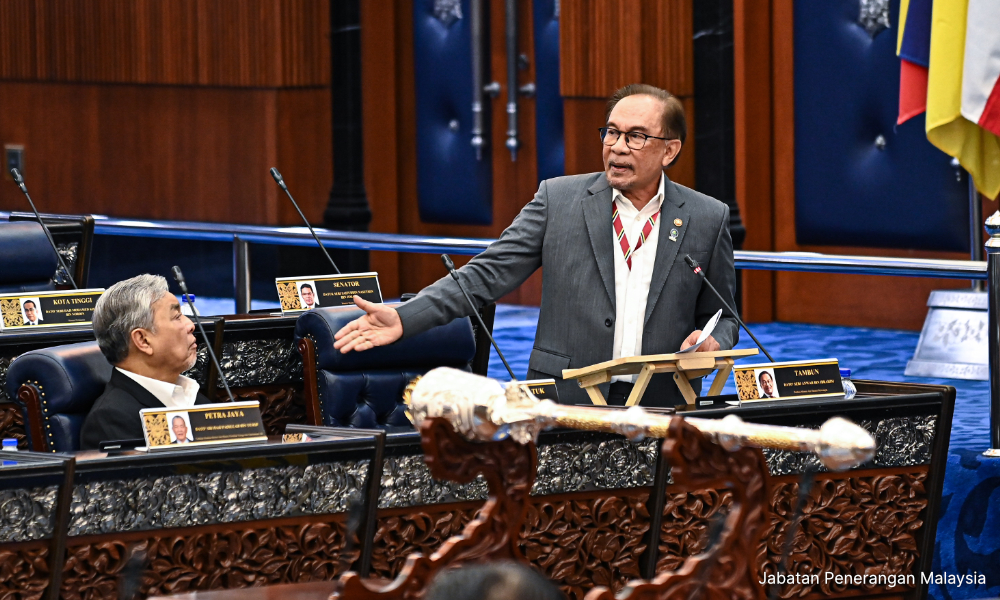
PARLIAMENT | Prime Minister Anwar Ibrahim assured that the government is coordinating efforts to ensure any increase in insurance premiums remains reasonable and does not burden the public.
During the Prime Minister’s Question Time in Parliament today, Anwar said the Health Ministry and Bank Negara Malaysia (BNM) are actively addressing the issue.
“We understand there is a slight increase with reasonable...
PARLIAMENT | Prime Minister Anwar Ibrahim assured that the government is coordinating efforts to ensure any increase in insurance premiums remains reasonable and does not burden the public.
During the Prime Minister’s Question Time in Parliament today, Anwar said the Health Ministry and Bank Negara Malaysia (BNM) are actively addressing the issue.
“We understand there is a slight increase with reasonable justification, but it must be controlled,” he said.
“BNM and the Health Ministry have indicated that they will ensure measures are in place to control the increase, preventing it from becoming too steep and causing significant issues for patients and contributing to inflation,” Anwar added in response to a query from Suhaizan Kaiat (Harapan-Pulai).
The issue has drawn significant attention following reports that premiums could rise by 40 to 70 percent.
‘Mutually beneficial solutions’
On Dec 4, Anwar disclosed that BNM was renegotiating over planned premium hikes for next year with insurers.
Yesterday, several PKR lawmakers urged the Health Ministry to form a task force to investigate the rising premiums and find mutually beneficial solutions involving private hospitals, insurers, and the public.
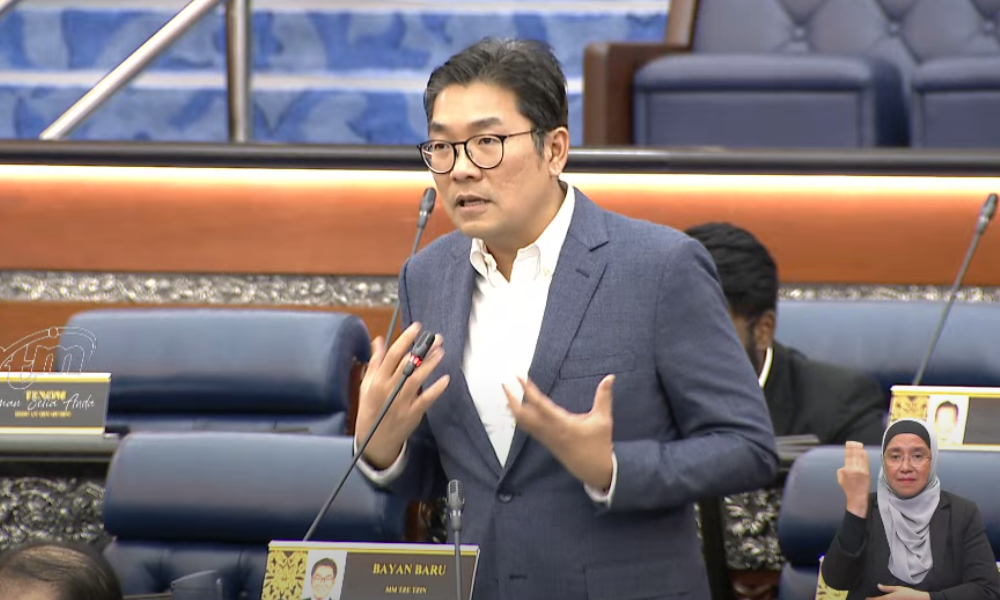
Among them was Bayan Baru MP Sim Tze Tzin, who also called for BNM’s intervention. Sim has encouraged the public to share their feedback by emailing this address.
Further addressing the matter, Anwar said the Health Ministry is studying ways to lower medication and service costs, which insurers have cited as reasons for the increase.
“For decades, the country has lacked price controls for medications, and procurement has been monopolised.
“The government plans to end commitments with one to two companies and is exploring more affordable generic medicine options from countries like Brazil, India, and China,” said the Tambun MP.
“These alternatives could offer significant savings compared to the expensive drugs from the US and Europe.”
Regulating medical costs
Anwar highlighted the government’s consideration of introducing a Diagnosis-Related Group (DRG) system to regulate medical costs.
“Malaysia lacks a standardised mechanism, and specialists provide cost estimates. A clear guideline under DRG is necessary to regulate costs for procedures like MRIs or CT scans,” he said.
He added that the Health Ministry is also studying whether hospitals should cover part or all costs for patients returning for the same procedures within a specific timeframe.
“In countries like the US, procedures such as stent placements often come with guarantees. If patients return with related issues within two or three years, hospitals may be required to bear part or all of the costs,” Anwar said.
The prime minister also announced the introduction of the MOH-Friends Programme, a collaboration between the Health Ministry and government-linked investment companies.
“This initiative enables patients to access additional facilities at minimal cost, avoiding overcrowded public hospitals and the high expenses of private care,” he explained.
Concluding his remarks, Anwar reiterated that while premium increases may be justified, they must be controlled to prevent excessive hikes that could burden patients and contribute to inflation.


Are you sure you want to delete this comment?
This action cannot be undone.