


/file/publisher-c1a3f893382d2b2f8a9aa22a654d9c97/2023/02/5b8d27fa601d01bef67b7d922992a979.jpg)

CCM urged to expose beneficial owners as US rolls back transparency
In response, financial forensic expert Raymon Ram urges Malaysia to make beneficial ownership information publicly accessible to strengthen transparency and prevent illicit financial flows.
Beneficial ownership refers to individuals or parties who are the ultimate owner or beneficiaries of a firm, which could be different from the registered owner in the case of shell companies used for illicit activities.
Currently, companies must reveal beneficial ownership to the Companies Commission of Malaysia (CCM), but...
Summary
The US Treasury Department rolled back beneficial ownership reporting for US citizens and domestic reporting companies, creating room for illicit flows of funds.
Forensic finance expert Raymon Ram says by making beneficial ownership of firms in Malaysia public, the Companies Commission can help prevent illicit financial flows through the country.
If weaknesses in anti-money laundering actions start showing, Malaysia risks closer scrutiny by global watchdog Financial Action Task Force (FATF).
The US Treasury Department has rolled back requirements for beneficial ownership reporting for its citizens and domestic reporting companies, raising concerns of financial crime.
In response, financial forensic expert Raymon Ram urges Malaysia to make beneficial ownership information publicly accessible to strengthen transparency and prevent illicit financial flows.
Beneficial ownership refers to individuals or parties who are the ultimate owner or beneficiaries of a firm, which could be different from the registered owner in the case of shell companies used for illicit activities.
Currently, companies must reveal beneficial ownership to the Companies Commission of Malaysia (CCM), but the information is not made public.
“Making certain beneficial ownership information publicly accessible could enhance transparency and deter misuse.
“Implementing stricter verification mechanisms to ensure the accuracy of reported beneficial ownership information would strengthen the integrity of corporate records,” he told Malaysiakini.
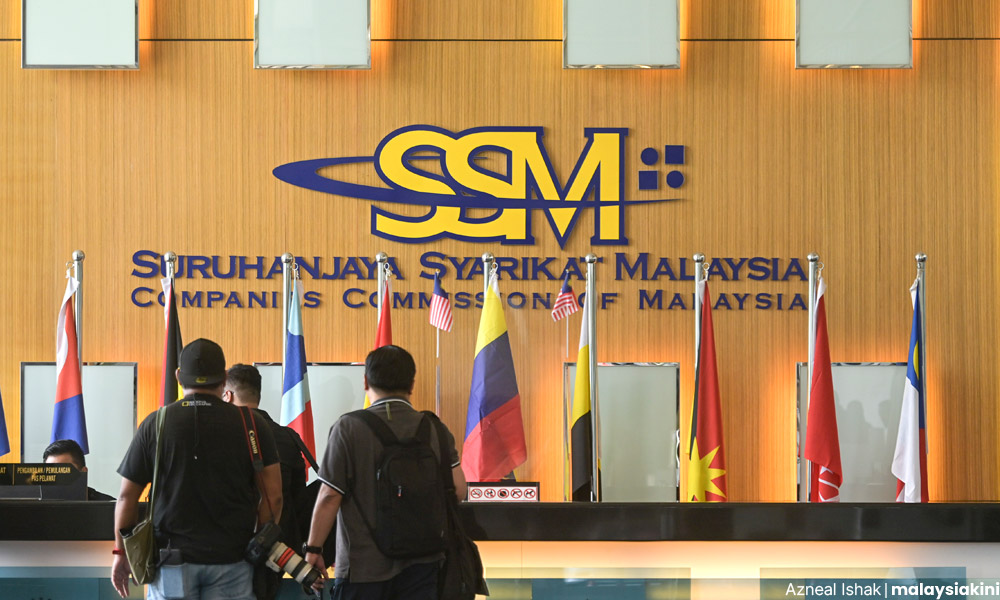
On March 2, the US Treasury Department suspended enforcement of the Corporate Transparency Act against US citizens and domestic reporting companies.
The Donald Trump administration opposed the Joe Biden-era legislation, arguing that it imposed unnecessary burdens on low-risk entities.
It argued that the rollback aims to ease regulations on American small businesses while keeping transparency requirements for foreign entities operating in the US.
“However, global shifts in anti money laundering enforcement, such as weaker measures in major economies like the US, could have indirect effects.
“If Malaysia is perceived as being exposed to higher risks due to global anti money laundering enforcement weaknesses, the Financial Action Task Force (FATF) may scrutinise its defenses more closely,” he said.
The FATF is an intergovernmental money laundering and terrorist financing watchdog.

It maintains a blacklist (formally called “Call for action”) and a greylist (formally called “Other monitored jurisdictions”) to pressure governments to combat money laundering and terrorism financing.
“To maintain its (FATF) standing and avoid being placed on any watchlists, Malaysia should continue to strengthen its anti money laundering or counter financing of terrorism measures, ensure effective enforcement, and engage in international cooperation to address emerging risks,” he said.
Raymon also emphasised that enhancing verification processes to ensure accuracy of information, and increasing collaboration with international bodies, would mitigate the risk of Malaysia becoming a hub for illicit financial flows.
This is particularly amid weakening corporate transparency laws in other jurisdictions.
Corporate Transparency Act in 1MDB investigation
The 1MDB scandal, which has been a major financial crisis in Malaysia, exposed significant flaws in tracking illicit financial flows through shell companies.
While the Corporate Transparency Act (CTA) enacted in January 2021 aimed to combat money laundering by requiring US companies to report beneficial ownership information to the US Treasury’s Financial Crimes Enforcement Network (Fincen), its impact on the 1MDB investigation is limited.
This is because the law was implemented after most of the 1MDB probe had already taken place.
While the law didn’t play a historical role in the 1MDB case, its framework could have, in theory, assisted the probe had it been in place earlier.
If these shell companies had been formed in the US when the CTA was in place, investigators could have accessed beneficial ownership information directly from Fincen, potentially speeding up the identification process.
“Had it existed earlier, investigators could have identified shell company owners linked to 1MDB more efficiently.
“US-registered shell companies linked to 1MDB transactions would have been required to disclose their ownership under the CTA, preventing their use as anonymous pass-throughs for illicit funds,” Raymon explained.
Many shell companies involved in 1MDB were incorporated in jurisdictions like the British Virgin Islands or Seychelles, known for lax transparency laws.
However, some transactions flowed through US-based entities or banks.
“The rollback of CTA enforcement weakens global AML (anti-money laundering) efforts and may allow criminals to exploit US shell companies again.
“Malaysia must strengthen its beneficial ownership disclosure framework to prevent illicit funds from flowing through its financial system,” said Raymon.
Earlier, a global investigation by members of the International Consortium of Investigative Journalists (ICIJ), including Malaysiakini, on the Fincen found that many alerts of suspicious money transfers were not acted on.
Fincen documents obtained by the ICIJ, and scrutinised by Malaysiakini, showed billions of US dollars had moved between the family members of fugitive businessperson Low Taek Jho (Jho Low) and related businesses in multiple US banks without issue.

This was despite red flags later acknowledged by the banks themselves.
Reports the banks filed with the US Treasury, among others, stated they could not locate the source of the funds and “could not rule out the possibility of illicit funds being used”.
Beneficial ownership reporting in Malaysia
In a major move toward corporate transparency, Malaysia introduced mandatory beneficial ownership reporting to the CCM last year and achieved an 87.05 percent compliance rate.
Domestic Trade and Cost of Living Deputy Minister Fuziah Salleh revealed in Parliament last week that five company secretaries were responsible for the highest number of firms still failing to submit their beneficial ownership details.
This new reporting framework addressed legal gaps and brought Malaysia in line with global best practices, particularly those endorsed by the FATF and the Organisation for Economic Co-operation and Development (OECD).
Compliance with FATF recommendations not only strengthens Malaysia’s financial system but also boosts its reputation, assuring the international community that the country is secure and less vulnerable to crimes such as money laundering and terrorism financing.
/file/publisher-c1a3f893382d2b2f8a9aa22a654d9c97/2024/12/980afdb8c71d40ab1b141027566e49c7.jpg)
/file/1357/1e52f11ae2a8b4e196a81ba9fc8fc68c.jpeg)
/file/publisher-c1a3f893382d2b2f8a9aa22a654d9c97/2021/10/069cfb893bd1e1173ae6788ec9c82acd.jpg)


Are you sure you want to delete this comment?
This action cannot be undone.