


/file/publisher-c1a3f893382d2b2f8a9aa22a654d9c97/2025/04/e060740cd6e53564c013e43c124d0c2c.jpg)

US firm exits RM13.7b S'wak oil project amid Petronas-state rift: Report
A simmering dispute between Petronas and the Sarawak government has reportedly unsettled foreign investors, following a surprise withdrawal by US oil company ConocoPhillips from a major deepwater oil and gas project off the Borneo coast.
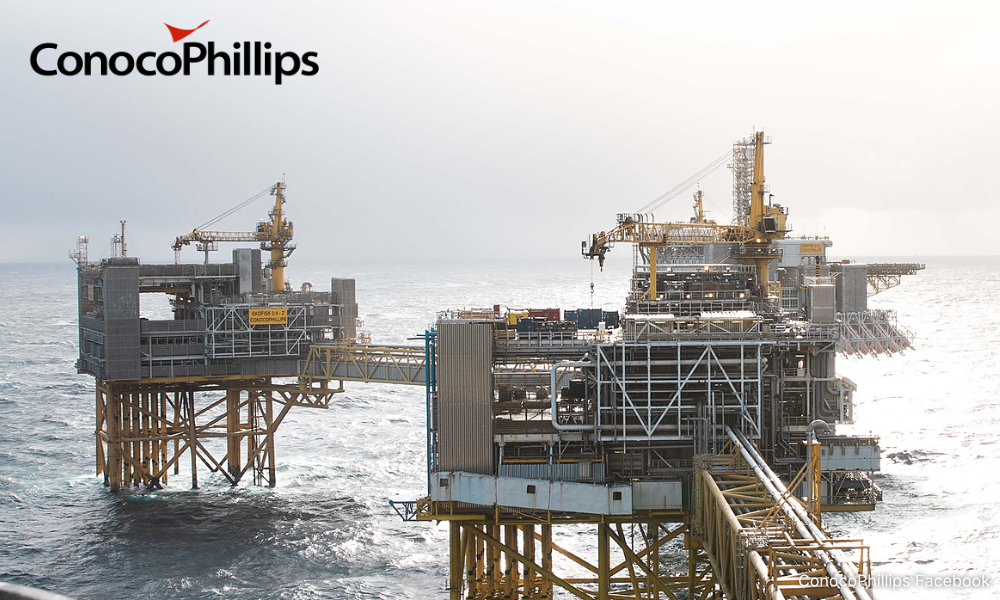
The American firm quietly exited its joint-venture with Petronas on the Salam-Patawali oil field - an RM13.7 billion (US$3.13 billion) project discovered in 2018 - according to a report by Upstream Online on April 15, and later confirmed by two industry sources close to the company, CNA reported.
Summary
US oil firm ConocoPhillips has quit a RM13.7 billion Sarawak oil project amid a dispute between Petronas and the Sarawak government.
This exit and others are due to regulatory uncertainty and tensions over the control of oil and gas resources in Sarawak.
The dispute includes legal battles and allegations of espionage, and could be damaging in the long term.
A simmering dispute between Petronas and the Sarawak government has reportedly unsettled foreign investors, following a surprise withdrawal by US oil company ConocoPhillips from a major deepwater oil and gas project off the Borneo coast.
The American firm quietly exited its joint-venture with Petronas on the Salam-Patawali oil field - an RM13.7 billion (US$3.13 billion) project discovered in 2018 - according to a report by Upstream Online on April 15, and later confirmed by two industry sources close to the company, CNA reported.
ConocoPhillips’ pullout, which has not been widely reported in Malaysian media, is part of what the sources described as a broader “country strategy review”, with no further details provided.
CNA’s attempts to reach the company’s executives in Kuala Lumpur were unsuccessful.
According to the report, industry players hinted the decision was also driven by regulatory uncertainty stemming from tensions between Petronas and the Sarawak administration under Premier Abang Johari Openg, which is pushing for greater control over the state’s oil and gas resources through its own firm, Petroleum Sarawak Berhad (Petros).
“Foreign companies are uncomfortable because they see that Petronas is under pressure in Sarawak, and Petronas is often the joint-venture partner in many exploration projects,” said a senior executive of a Western oil contractor based in Kuala Lumpur.
CNA quoted figures from an April 2024 ConocoPhillips factsheet, that the company has interests across 1.1 million net hectares in Malaysia, including six production-sharing contracts, all with Petronas as a co-venturer.
The Salam-Patawali block itself spans 121,405 net hectares in southern Sarawak.
Work on the field had advanced as recently as 2023, with a 3D seismic survey conducted and data currently being evaluated.
Under standard agreements, private oil firms must return exploration rights to Petronas if they abandon development plans.
‘Investor jitters, espionage allegations’
ConocoPhillips’ exit follows a trend of foreign firms reassessing their presence in Sarawak, with a previous move by Thailand’s PTTEP to restructure its RM28.6 billion Lang Lebah gas project off Sarawak and “improve economic viability”.
Sources told CNA that PTTEP had temporarily suspended development and postponed its final investment decision to 2025.
Meanwhile, the report also indicated that fallout from the Sarawak-Petronas dispute has deepened, with allegations of corporate espionage emerging.
The report cited an April 18 charge against former Petronas manager Khairul Akmal Jasni, who was accused of attempting to leak a confidential document to Petros, titled “Q1 2024 Upstream Business Performance, Operational & Financial”.
Quoting an unnamed senior aide, CNA reported that Prime Minister Anwar Ibrahim had been briefed by Petronas’ management, but “both parties” - the other being Petros - remain “firm on their positions”.
A Petronas official also confirmed that talks with the Sarawak government, which commenced in April 2023, have not progressed since their suspension last December.
Sarawak is challenging the 1974 Petroleum Development Act (PDA), which grants Petronas full control over Malaysia’s hydrocarbon resources.
The state argues that the PDA does not apply within its jurisdiction and instead insists on using the Oil Mining Ordinance 1958, which grants authority over oil and gas found within 200 nautical miles off its coast.
Sarawak claims it holds 60.87 percent of Malaysia’s proven and probable petroleum reserves and accounts for 90 percent of liquefied natural gas (LNG) exports.
‘Economic hit for Sarawak’
According to CNA, the ConocoPhillips-Petronas joint venture was expected to hit peak production by 2028, with an economic lifespan extending to 2067, according to Offshore Technology.
The US company still operates the SK304 block in Sarawak, covering 445,000 net hectares, but exploration there remains in the early stages.
Meanwhile, CNA also cited other related ongoing legal battles, including Petros’ suit against Petronas at the Kuching High Court over a RM7.05 million payment tied to a bank guarantee under a 2019 gas sales agreement.
Petros contends the agreement is void as Petronas lacked the required state licence.
Separately, Shell MDS Malaysia secured a court injunction in January to continue receiving gas supplies from Petronas despite an ongoing dispute with Petros, in order to avoid operational disruptions at its Bintulu facility.
Although many existing projects remain unaffected, CNA reported industry players are warning that unresolved tensions may spook potential investors.
“Petros and Sarawak-based E&P companies don’t have the capabilities yet, and that does not make them attractive partners without Petronas in the mix,” said the CEO of a listed Malaysian engineering firm with longstanding ties to the national oil giant.
He warned that Sarawak’s immediate challenge is to quickly “find a replacement contractor for Salam-Patawali.”
/file/publisher-c1a3f893382d2b2f8a9aa22a654d9c97/2022/09/23b7f8c919f9534ab7b98ee219ee1f66.jpg)
/file/publisher-c1a3f893382d2b2f8a9aa22a654d9c97/2025/02/cea57b1665f5f9ade2dcc34b6b05fb2a.jpg)
/file/publisher-c1a3f893382d2b2f8a9aa22a654d9c97/2022/09/de3a978e3481241ef834b839b78c888a.jpg)
/file/publisher-c1a3f893382d2b2f8a9aa22a654d9c97/2020/06/a863f1b0f1ab9a12cb8c4cbb8a5557d4.jpg)
/file/publisher-c1a3f893382d2b2f8a9aa22a654d9c97/2024/05/a43c833d024ab041b045fd7f6a65f56d.jpg)
/file/publisher-c1a3f893382d2b2f8a9aa22a654d9c97/2024/07/5f3b3d733e7a34578f9add0434f11e38.jpg)


Are you sure you want to delete this comment?
This action cannot be undone.