


/file/publisher-c1a3f893382d2b2f8a9aa22a654d9c97/2025/04/d1c162222787a5cd524770cccfd28057.jpg)

Warisan rep queries govt priorities amid 'unjust disparity' in egg prices
Elopura representative Calvin Chong described the situation as a “glaring and unjust disparity”, warning that the move would further burden Sabahans already grappling with a high cost of living.
“In Sabah, Grade A eggs...
Summary
Elopura assemblyperson Calvin Chong criticises the government for reducing egg subsidies, highlighting a large price difference between Sabah and Peninsular Malaysia.
The Warisan leader questions government spending priorities, claiming foreigners receive more support than locals.
The end of egg price controls is expected to raise prices but may eventually lead to market stabilisation.
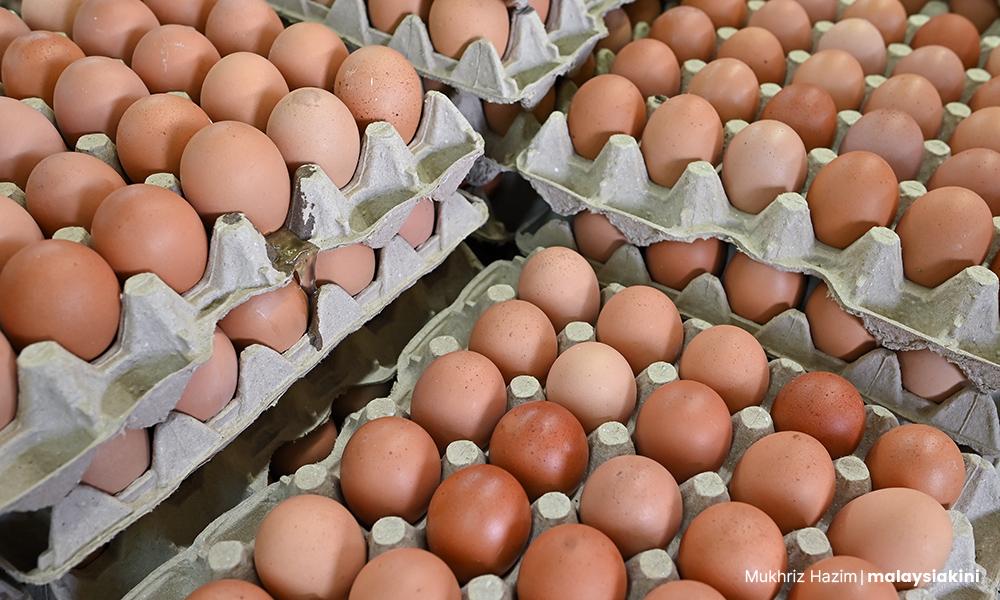
A Warisan assemblyperson has taken aim at the federal government’s decision to reduce subsidies for Grade A, B, and C eggs, citing a stark disparity in prices between Sabah and Peninsular Malaysia.
Elopura representative Calvin Chong described the situation as a “glaring and unjust disparity”, warning that the move would further burden Sabahans already grappling with a high cost of living.
“In Sabah, Grade A eggs now cost RM22 per tray compared to just RM12.60 in Peninsular Malaysia. Is this fair to the people of Sabah? Where are the principles of social justice that the Madani government so often proclaims?” he said in a statement.
“How can a government that claims to uphold humanitarian values and justice allow such a price gap to persist?” asked the Warisan supreme council member.
Chong also took issue with what he claimed were the government’s skewed spending priorities, alleging that foreigners are being favoured over locals.
“Is it logical that at the same time [as the subsidy removal], the government is providing free education and healthcare to foreigners, spending hundreds of millions or possibly billions of US dollars, while subsidies for local citizens are being slashed?
“The government now seems more eager to help outsiders than to care for its own people,” he claimed.
The Agriculture and Food Security Ministry announced on April 30 that egg price controls would be lifted, with the existing 10 sen per egg subsidy to be halved starting May 1 and completely withdrawn in August.
The ministry said the decision was made based on the unsustainable long-term impact of continued subsidies on national finances and the local egg production industry.
A staple food
However, Chong said the move risked worsening the cost-of-living crisis, especially in areas like Sandakan, where the local egg supply is limited.
“I’ve received many complaints that local eggs are extremely hard to find. People have no choice but to buy imported eggs, which are significantly more expensive.
“This is very concerning because eggs are a staple food and a main source of protein for most families.
“We need both an immediate and long-term action plan to ensure the egg supply is sufficient and affordable. The government cannot remain silent. The welfare of the people must be the top priority,” Chong added.

Meanwhile, Free Malaysia Today quoted Mydin managing director Ameer Ali Mydin as saying that egg prices may rise by about 10 sen following the lifting of price controls, but expressed confidence that the market would eventually stabilise.
“Since there’s no price control, the prices of eggs would probably go up by 10 sen and eventually, when there’s more supply in the market, the prices will stabilise,” he reportedly said.
Currently, the prices are capped at 42 sen (Grade A), 40 sen (Grade B), and 38 sen (Grade C) per egg, with the subsidy costing the government an estimated RM100 million monthly.
/file/publisher-c1a3f893382d2b2f8a9aa22a654d9c97/2022/03/72b9308b5c7fab40b075c2b94037d6df.jpg)
/file/publisher-c1a3f893382d2b2f8a9aa22a654d9c97/2022/07/c4366a8f100c8443b2fcde636a7cd0bd.jpg)
/file/1205/efbf5d985dce04f52a5183bac300f9f9.jpeg)
/file/publisher-c1a3f893382d2b2f8a9aa22a654d9c97/2023/09/9344efa90c8968791a61948e3f948a11.jpg)


Are you sure you want to delete this comment?
This action cannot be undone.