


Halal rules, bumiputera equity among US concerns that prompted tariffs
Malaysia’s halal import restrictions and requirements for bumiputera equity in foreign-owned companies have been flagged by the United States as key trade barriers cited among the reasons behind the 24 percent reciprocal tariff on Malaysian exports.
In its 2025 National Trade Estimate (NTE) Report on Foreign Trade Barriers, the Office of the US Trade Representative (USTR) said Malaysia’s halal import requirements were more stringent than international norms.
Summary
The US has cited Malaysia’s halal import restrictions and bumiputera equity requirements, among others, as trade barriers.
These concerns led to a proposed 24 percent reciprocal tariff on Malaysian exports by the US.
Malaysia is negotiating with the US but will not compromise on its core policies.
Malaysia’s halal import restrictions and requirements for bumiputera equity in foreign-owned companies have been flagged by the United States as key trade barriers cited among the reasons behind the 24 percent reciprocal tariff on Malaysian exports.
In its 2025 National Trade Estimate (NTE) Report on Foreign Trade Barriers, the Office of the US Trade Representative (USTR) said Malaysia’s halal import requirements were more stringent than international norms.
Unlike other countries that allow halal food to be processed in shared facilities - provided Islamic cleaning procedures are followed - Malaysia requires slaughterhouses to operate dedicated halal-only facilities, with separate storage and transportation systems.
The USTR noted that such requirements raise operational costs for US exporters.

“All US meat and poultry plants must be inspected and approved by Malaysia’s Department of Islamic Development (Jakim), and certified by an accredited Foreign Halal Certification Body, before they can export to Malaysia,” it said.
‘Overly burdensome, unnecessary’
The report also pointed to additional layers of regulation, including the need for registration with the Department of Veterinary Services (DVS) for all meat, poultry, and dairy facilities involved in the export chain.
“This (registration) process requires submission of an application with extensive supporting documentation for DVS review, which can take several months.
“Following the application review, meat and poultry products are subject to plant-by-plant on-site inspection by DVS and Jakim.
“For all products subject to registration, DVS requires additional documentation to make any adjustment to registration parameters (eg, introduction of a new product in an approved plant and clerical changes to plant numbers or addresses),” said the USTR.
Quoting US industry sources, the report said registration updates could take “weeks to months” and described the process as “overly burdensome” and “unnecessary” given the US’ long-standing record of supplying safe animal products to Malaysia.
Even after registration is approved, minor discrepancies - such as mismatches between facility details and export certificates - can result in shipments being detained for several days or weeks.
The USTR also raised concerns over Malaysia’s Food Regulations 1985, which define alcoholic beverages in rigid terms that hinder the importation of newer products that fall outside traditional categories.
“This has led to the prohibition of imports, including from the US, of certain alcoholic products that do not meet these specified definitions,” the report said.
Bumiputera equity
Apart from halal regulations, the USTR cited Malaysia’s requirement for a minimum 30 percent bumiputera equity in foreign-owned firms as a significant investment barrier.
This includes industry-specific regulations in sectors such as banking and insurance, education, logistics, power generation, water, media and entertainment, and telecommunications.
“In the oil and gas industry, non-Malaysian firms are permitted to participate in oil services in partnership with local firms and are restricted to a maximum of 49 percent equity stake if the foreign partner is the principal shareholder.
“Foreign investments are also prohibited in terrestrial broadcast networks,” the USTR stated.
Government procurement policies favouring bumiputera-owned firms were also identified as posing challenges for foreign companies seeking public sector contracts.
90-day pause
The NTE report was submitted to US President Donald Trump and Congress on March 31. It identified trade barriers across four key categories: tariffs and taxes, non-tariff measures, investment restrictions, and intellectual property concerns.
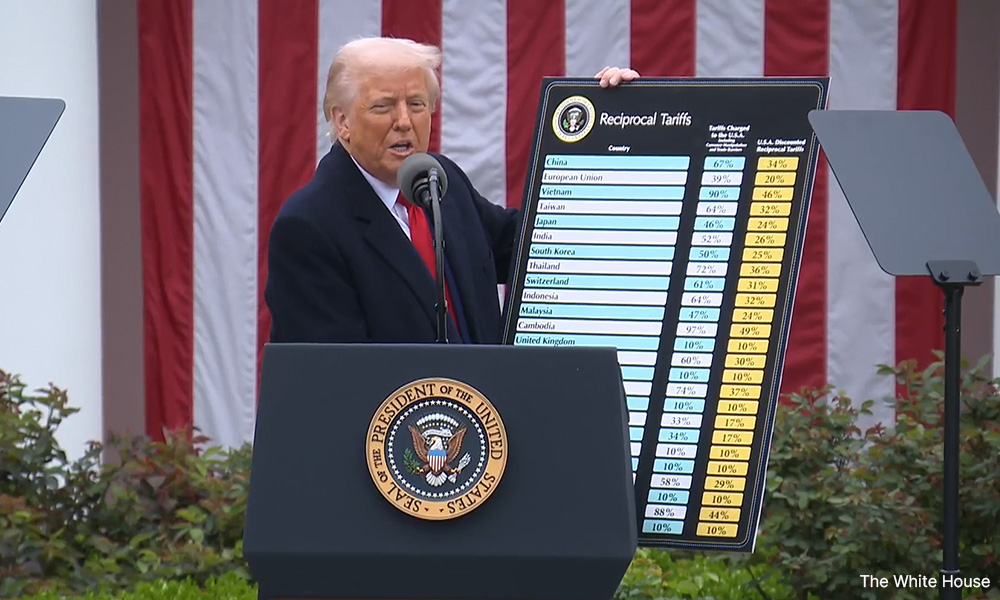
On April 2, Trump announced reciprocal tariffs on imports from multiple countries, including Malaysia, though the 24 percent tariff rate has been paused for 90 days in favour of a provisional 10 percent baseline rate.
Yesterday, Prime Minister Anwar Ibrahim told the Dewan Rakyat that Trump’s administration has agreed to further negotiations, with the possibility of lowering the proposed 24 percent tariff.
Anwar also previously stressed that the government will not compromise on the country’s core policies in tariff negotiations, currently subject to a non-disclosure agreement in line with international practice.
On April 24, Investment, Trade, and Industry Minister Tengku Zafrul Abdul Aziz led a Malaysian delegation to Washington, DC, for high-level discussions with US Secretary of Commerce Howard Lutnick and US Trade Representative Jamieson Greer on the issue.



Report this comment
Are you sure you want to delete this comment?
This action cannot be undone.