


/file/publisher-c1a3f893382d2b2f8a9aa22a654d9c97/2023/08/43277eae51e9fadcb68e59e487899ee4.jpg)

PSM calls for bold economic reforms amid Asean summit
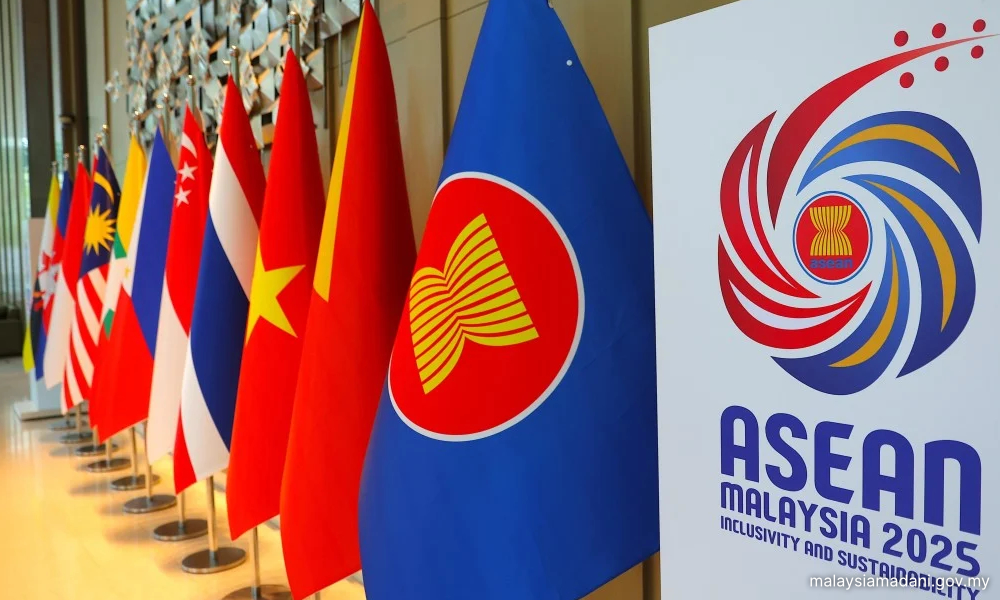
PSM has urged Asean leaders gathering in Kuala Lumpur for an upcoming summit to rethink the region’s economic models, proposing coordinated reforms on wages, corporate tax, and climate action to address deepening inequality.
PSM chairperson Dr Jeyakumar Devaraj highlighted that while Asean countries have witnessed significant economic growth in the past 50 years, the majority of people in the bottom 80 percent of the population in the region are burdened with debt and mired in economic problems.
Summary
PSM calls on Asean leaders to overhaul the region’s economic strategy, proposing coordinated reforms on wages, corporate tax, and climate policy to address widening inequality.
Party chairperson Dr Jeyakumar Devaraj says Asean must shift away from its export-led growth model and focus on building a strong internal market to generate jobs, boost demand, and improve fiscal space.
The party also urges Asean to adopt more humane refugee policies and calls for safeguards in the Asean Extradition Agreement to protect political refugees and human rights defenders from wrongful repatriation.
PSM has urged Asean leaders gathering in Kuala Lumpur for an upcoming summit to rethink the region’s economic models, proposing coordinated reforms on wages, corporate tax, and climate action to address deepening inequality.
PSM chairperson Dr Jeyakumar Devaraj highlighted that while Asean countries have witnessed significant economic growth in the past 50 years, the majority of people in the bottom 80 percent of the population in the region are burdened with debt and mired in economic problems.
Attributing the matter to a reliance on low costs of production and a reduction in government revenue due to a decrease in corporate tax rates, Jeyakumar stressed that it is high time Asean countries rethink their economic strategies.
As such, Jeyakumar said in a statement today endorsed by 55 Malaysian NGOs that Asean leaders must develop the region’s internal market and consider strategies to increase the wages of ordinary workers.
He said Asean must also stop the race to the bottom in corporate tax, formulate an effective carbon tax, tackle the problem of youth unemployment and under-employment, and establish joint ventures to pioneer new green industries.

On its recommendation for Asean leaders to shift away from an overreliance on export-led growth driven by foreign investment and Western markets, PSM warned that the current model is no longer sustainable.
Jeyakumar argued that with the West comprising only 12 percent of the global population and facing stagnating growth due to deindustrialisation, Asean must stop depending on external demand to sustain its economies.
Instead, PSM proposed that Asean nations focus on developing their internal market, which serves a combined population of 690 million.
Strengthening regional demand, it said, would boost local businesses, attract investment, create jobs, and generate more tax revenue while reducing economic vulnerability to Western market fluctuations.
Acting as one
Urging Asean nations to jointly raise minimum wages, PSM cautioned that the region’s decades-long low-wage strategy to attract foreign investors has left ordinary workers struggling to survive.
With wages in Asean countries ranging from one-sixth to one-fifteenth of those in the West, the party said this race to the bottom has stifled domestic demand and widened income inequality.

As such, it proposed a coordinated regional pact where countries like Malaysia, Thailand, Vietnam, Indonesia, and the Philippines agree to raise minimum wages by 10 percent annually over five years.
To ensure compliance, PSM suggested embedding the policy within the Asean Free Trade Agreement, thus allowing for tariffs or “fines” on member states that fail to implement the wage hike schedule.
Highlighting that a race to the bottom in corporate tax rates has only undermined government revenue and limited the region’s ability to fund social programmes and environmental initiatives, PSM proposed a coordinated tax hike among Asean countries, aiming to raise corporate tax rates to 30 percent of company profits over the next decade.
This, Jeyakumar said, would require incremental annual increases - 0.6 percent for Malaysia and one percent for Thailand, for instance - with enforcement mechanisms potentially detailed in the Asean Free Trade Agreement to ensure compliance.
On PSM’s proposal for a unified and effective carbon tax policy, Jeyakumar pointed out that the current rates in the region are far too low to drive meaningful emissions reductions.
While PSM acknowledged concerns among Asean governments on how higher carbon taxes could raise production costs and hurt competitiveness in attracting foreign investment, Jeyakumar argued that such fears can be addressed through coordinated implementation across the region.
Negotiations, he said, should begin on setting a regionally standardised carbon tax to prevent market distortions and accelerate the shift toward renewable energy.
Additionally, PSM also raised the alarm over worsening youth unemployment and underemployment across Asean, expressing concern over how young people aged 20 to 35 are increasingly trapped in low-paid jobs that don’t match their qualifications, besides lacking guarantees or social protection.
Calling on Asean governments to recognise the issue as a regional crisis, Jeyakumar stressed that failure to address the problem risks fuelling disillusionment and radicalisation among the region’s youth.
Acknowledging that a greater fiscal space is required to expand public sector employment in health, welfare, and environmental restoration, PSM also urged private sector investment to be bolstered through stronger domestic demand and suggested gradually reducing working hours to better distribute available jobs.
Regional studies and coordinated policy discussions on the matter, it added, are urgently needed.
Urging Asean nations to form joint ventures in green industries, PSM highlighted the potential to create jobs, boost regional demand, and accelerate the transition to a low-carbon economy.
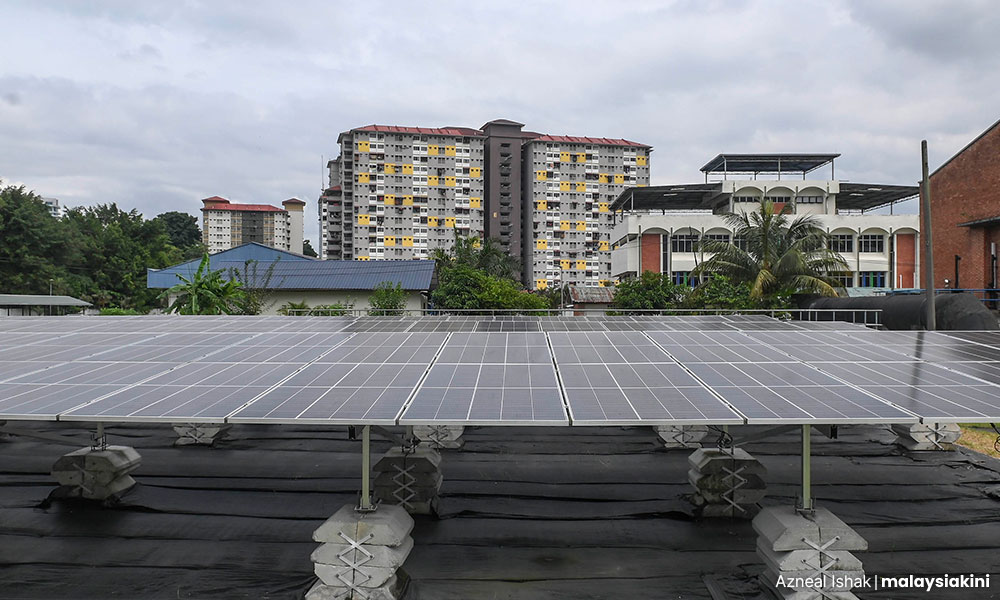
Thus, it proposed collaboration on the production of electric buses, solar panels, and organic waste-to-energy technology as key sectors that can be developed within the region.
By “on-shoring” these emerging industries, Jeyakumar asserted, Asean can reduce its dependence on imported green technologies, cut greenhouse gas emissions, and stimulate sustainable economic growth from within, with such cooperation benefiting the environment and the livelihoods of the region’s people.
Rights issues
Besides the above proposals, PSM also called on Asean leaders to adopt a more humane approach toward refugees, urging member states to grant them legal work rights to reduce exploitation and improve livelihoods.
Pointing out that there are around 160,000 UNHCR-recognised refugees in Malaysia who are barred from legal employment, forcing many into unsafe and informal jobs, Jeyakumar posited that Malaysia can easily reduce its migrant workers’ intake by allowing refugees to work legally.
He added that a portion of work permit fees collected from refugees could be used to subsidise their medical treatment in public hospitals, helping to ease the burden on already vulnerable communities.
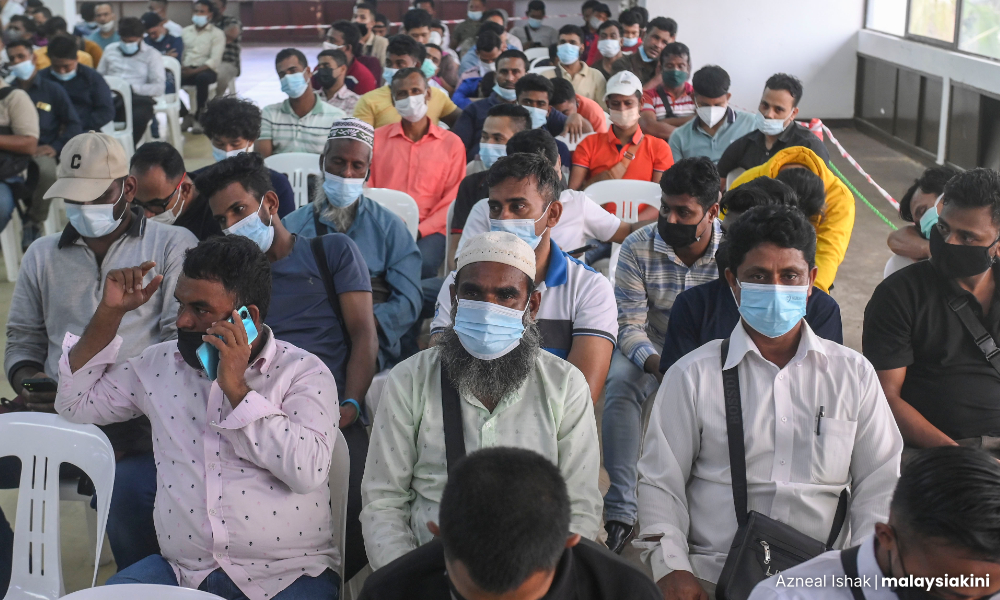
Such measures would offer basic protections and uphold human dignity without placing undue strain on national resources, Jeyakumar noted.
PSM also raised concerns about the Asean Extradition Agreement, warning that without proper safeguards, the pact could be abused by governments to target political dissidents or human rights defenders.
While the agreement obliges member states to return individuals wanted by other Asean countries, regardless of the context, PSM proposed a check-and-balance mechanism to assess extradition requests and ensure that those fleeing persecution or political repression are not forcibly returned.
Jeyakumar stressed that individuals who can prove they are not criminals, but political or human rights refugees, should be granted temporary asylum and protection.
“We apologise if parts of our presentation are somewhat blunt. We speak out of the desire to create a more equitable and wholesome Asean region, and are prepared to meet with any committee that is tasked with looking further into these proposals,” he added.
The 46th Asean Summit began yesterday (May 23) with a senior officials meeting, followed by a ministerial meeting on May 25, while the heads of government meeting will be on May 26.
The theme, “Inclusivity and Sustainability”, is raised as a unifying basis for regional and global engagement.
/file/publisher-c1a3f893382d2b2f8a9aa22a654d9c97/2025/02/a9c0856153e4adf4af5c9b44cd23b9fa.jpg)
/file/publisher-c1a3f893382d2b2f8a9aa22a654d9c97/2025/05/3846f115b4975129a93342e383b9c449.jpg)
/file/publisher-c1a3f893382d2b2f8a9aa22a654d9c97/2022/05/e8ab34e83940bd0e0165b6af4c5cdf63.jpg)
/file/publisher-c1a3f893382d2b2f8a9aa22a654d9c97/2025/04/ef09196852a95153804c29fb563ccba0.jpg)
/file/publisher-c1a3f893382d2b2f8a9aa22a654d9c97/2025/04/2cc226f19167edb43c2ed63c5473768b.jpg)


Are you sure you want to delete this comment?
This action cannot be undone.