


/file/publisher-c1a3f893382d2b2f8a9aa22a654d9c97/2025/08/3806aacdfcc4b3e3b3754fbd60ec98bb.jpg)

Dzulkefly: M'sia embarking on bold healthcare reforms
Speaking at the Malaysian Medical Association annual banquet in conjunction with its 65th annual general meeting yesterday, he outlined several key pillars of the national healthcare reform agenda...
Malaysia is embarking on a bold wave of healthcare reforms aimed at building a more resilient, equitable and future-ready system, said Health Minister Dzulkefly Ahmad.
Speaking at the Malaysian Medical Association annual banquet in conjunction with its 65th annual general meeting yesterday, he outlined several key pillars of the national healthcare reform agenda.
He said these include healthcare financing reform, the Rakan KKM initiative to enhance public hospitals and clinics for all Malaysians and the implementation of the Diagnosis-Related Group (DRG) payment system by mid-2026 to address runaway medical inflation.
He noted that a revamped basic Medical and Health Insurance/Takaful (Mhit) is being introduced in collaboration with Bank Negara Malaysia and industry players to provide better coverage to the M40 population.
“Second reform is a digitalisation programme that has already been rolled out and we now have about 200 clinics using Cloud-Based Clinic Management System (CCMS).
“Nearly 15 hospitals are adopting Electronic Medical Records (EMR) in 2025, with 16 hospitals to follow next year,” he said.
Challenges ahead
Dzulkefly also highlighted the challenges in retaining medical professionals, including an acute shortage, while confirming that the cabinet has been briefed on the consultation fees for private general practitioners and third-party administrator issues.
The minister said the amendments to the Private Healthcare Facilities and Services Act 1998 (Act 586), specifically the Seventh Schedule, are under active discussion.
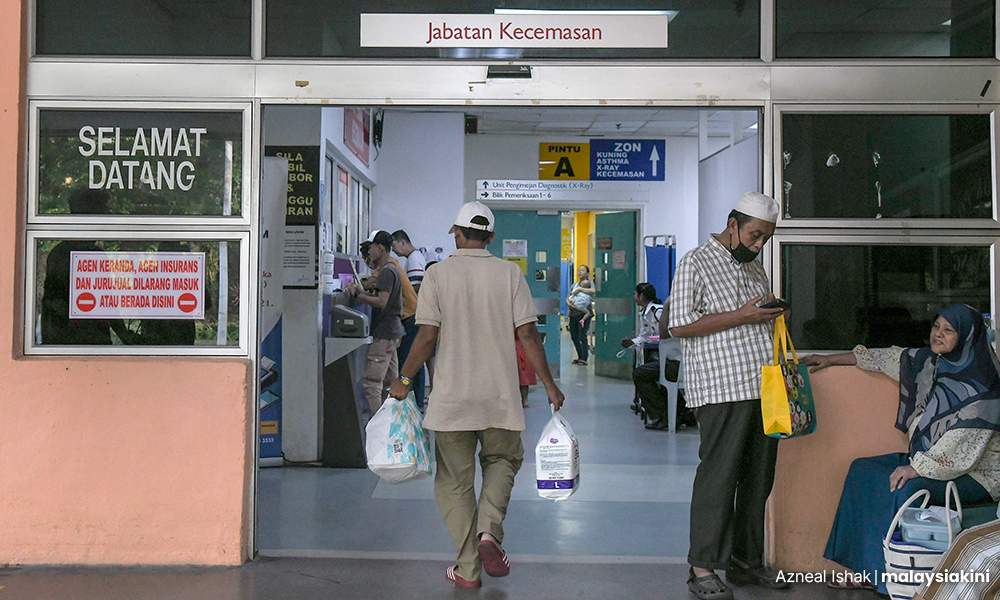
Previously, the media reported that the Seventh Schedule had never been amended since it was gazetted in 2006.
Meanwhile, Dzulkefly also emphasised that the healthcare system now faces challenges from rising dual disease burdens, an ageing population and soaring medical inflation.
He pointed out that the country spends about RM64.3 billion annually on non-communicable disease treatment, including direct and indirect costs such as loss of productivity and premature mortality.
- Bernama
/file/publisher-c1a3f893382d2b2f8a9aa22a654d9c97/2025/06/d29611266a0be9156d4342a577198daf.jpg)
/file/publisher-c1a3f893382d2b2f8a9aa22a654d9c97/2024/02/6a930e7a8884b50c0f193cf79a0720e2.jpg)
/file/publisher-c1a3f893382d2b2f8a9aa22a654d9c97/2025/08/8f48b921053d186f71ad8277bbe33264.jpg)
/file/publisher-c1a3f893382d2b2f8a9aa22a654d9c97/2025/08/3806aacdfcc4b3e3b3754fbd60ec98bb.jpg)


Report this comment
Are you sure you want to delete this comment?
This action cannot be undone.