


/file/publisher-c1a3f893382d2b2f8a9aa22a654d9c97/2023/10/d8421de5d369b371ebe87c1e93864857.jpg)

S'pore court: 1MDB liquidators can't sue banks over pre-2018 deals
The Singapore High Court has blocked attempts by foreign liquidators to sue two banks - Standard Chartered Bank and BSI Bank - over transactions tied to the 1MDB scandal.
The court ruled that the republic’s cross-border insolvency regime cannot be applied retroactively to deals predating 2018, The Straits Times reported.
The Singapore High Court has blocked attempts by foreign liquidators to sue two banks - Standard Chartered Bank and BSI Bank - over transactions tied to the 1MDB scandal.
The court ruled that the republic’s cross-border insolvency regime cannot be applied retroactively to deals predating 2018, The Straits Times reported.
This decision may hamper global attempts to reclaim money siphoned from the Malaysian state fund.
Liquidators from Blackstone Asia Real Estate Partners and Brazen Sky - two firms implicated in the multibillion-dollar 1MDB affair - had sought to file avoidance claims, a legal route used to undo questionable transfers and recover assets for creditors.
Judge Aidan Xu dismissed the applications, which were part of broader international efforts to reclaim assets allegedly siphoned from the sovereign wealth fund.
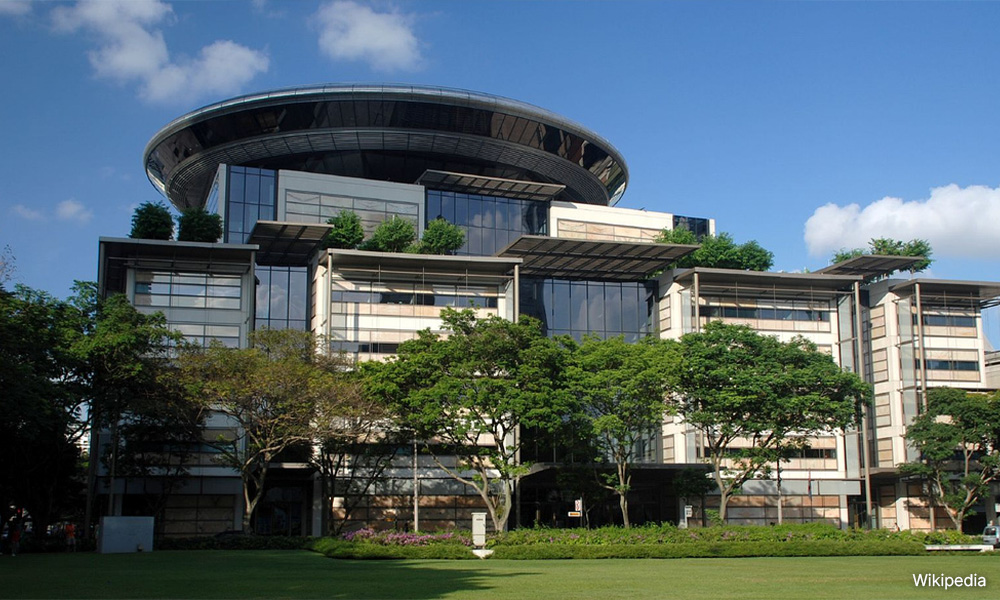
The judge reportedly cited Article 23(9) of the Insolvency, Restructuring and Dissolution Act, which enacted the Model Law on Cross-Border Insolvency in Singapore.
The provision, unique to Singapore and absent from the United Nations Commission on International Trade Law framework, explicitly prevents foreign liquidators from contesting transactions carried out before the law took effect.
Xu, in delivering the judgment, conceded that the decision leaves the liquidators with little recourse, despite what he deemed as “apparently dubious transactions”, noting that while alternative avenues may exist, these would require extra costs and time.
The judge stressed that while the ruling may seem inconsistent with Singapore’s wider push to promote cross-border insolvency cooperation, the city-state’s Parliament had intentionally set the 2018 cut-off point when adopting the Model Law.
“That is the law here in Singapore. The court must give effect to what that law lays down,” he was quoted as saying.
‘Policy shift must come from Parliament’
During submissions, the liquidators reportedly argued that Article 21 of the Model Law allocates the courts with the power to grant “additional relief” to foreign liquidators, including permission to mount a legal challenge against past fraudulent transfers.
Without such latitudes, they cautioned, wrongdoers could evade liability on a mere technicality, forcing foreign liquidators to launch fresh suits in Singapore at greater cost and delay.
However, the banks pointed to Article 23(9) of the Model Law, which explicitly prohibits foreign liquidators from suing over transactions which took place before the law came into effect in 2018.
The banks insisted that such a stipulation was a deliberate safeguard to protect settled expectations and avoid unsettling past deals.
Xu sided with the banks, ruling that Article 23(9)’s plain wording blocks the liquidators’ claims and that the wider powers under Article 21 cannot override the set limit.
Any policy shift, he added, must come from Parliament, not the courts.
Foreign liquidators may still pursue recovery through conventional court actions in Singapore, despite such proceedings lacking the streamlined features of the cross-border insolvency framework.
In Brazen Sky’s case, separate proceedings against BSI and several bankers for alleged dishonest assistance in relation to the same transactions are already ongoing.
/file/publisher-c1a3f893382d2b2f8a9aa22a654d9c97/2024/04/f37108a38c35e0599fbe4868f8db6b29.jpg)
/file/publisher-c1a3f893382d2b2f8a9aa22a654d9c97/2024/03/c7847bd390a579072c3ef243d9d3d3e3.jpg)
/file/publisher-c1a3f893382d2b2f8a9aa22a654d9c97/2025/01/56181582d686d5edf3cd63416a7e0516.jpg)
/file/publisher-c1a3f893382d2b2f8a9aa22a654d9c97/2023/10/44bb1f8c0da4e0901936f22b9f0ddc02.jpg)
/file/publisher-c1a3f893382d2b2f8a9aa22a654d9c97/2024/07/959f27e8171abf41a4731653c553eb61.jpg)
/file/publisher-c1a3f893382d2b2f8a9aa22a654d9c97/2023/09/cfafdc5626e0387a28301fd31ef44ec0.jpg)


Are you sure you want to delete this comment?
This action cannot be undone.