


/file/publisher-c1a3f893382d2b2f8a9aa22a654d9c97/2025/10/25b32f09633081c25475677ef2727bb7.jpg)

M'sian-linked firms strike fear among Papua New Guinea's tribes
Samuel Kime, a customary landowner of natural forest in Papua New Guinea’s border province with Indonesia, fears that contentious logging permits allegedly dominated by Malaysian-linked companies will strip his community of its food, culture, and spirit.
A new report, “Malaysia’s Timber Colony: Exposing Malaysia’s Grip Over Papua New Guinea’s Forests”, reveals that Kime’s fears reflect a nationwide crisis in which at least 97 percent of the forest-clearing licences are tied to Malaysians or Malaysian-linked interests.
Summary
A new report on deforestation in Papua New Guinea echoes the fears of landowners like Samuel Kime, who warn that logging licences dominated by Malaysian-linked companies threaten their food sources, culture, and spiritual connection to the land.
The study finds that 97 percent of the country’s forest-clearing permits are tied to Malaysian interests, deepening concern that Papua New Guinea’s remaining rainforests and the communities that depend on them are being left without protection.
A Papua New Guinea environmental collective warns that 99-year forest leases risk preventing customary landowners from ever regaining their ancestral forests.
Samuel Kime, a customary landowner of natural forest in Papua New Guinea’s border province with Indonesia, fears that contentious logging permits allegedly dominated by Malaysian-linked companies will strip his community of its food, culture, and spirit.
A new report, “Malaysia’s Timber Colony: Exposing Malaysia’s Grip Over Papua New Guinea’s Forests”, reveals that Kime’s fears reflect a nationwide crisis in which at least 97 percent of the forest-clearing licences are tied to Malaysians or Malaysian-linked interests.
“We’ve already lost land around us, the forests that fed and protected us,” Kime (above) said, describing how his clan’s territory in the Vanimo district in Sandaun, West Sepik, has been carved up for oil-palm and logging.
He said portions of at least 300,000ha of customary land have been approved for deforestation under licences issued through the country’s Forest Clearing Authorities (FCA), and selective deforestation commenced in 2019.
The contentious FCA licences are permits allowing temporary forest clearance for agricultural or development projects in Papua New Guinea.
They generally run for about 35 years, but when the cleared land is used for oil palm, the lease period can extend up to 99 years, Kime explained.
He said developers are also required to lodge a bond fee of RM49,575 (50,000 PNG Kina) before operations begin; however, the bond amount for the 99-year lease is unknown.
“When the forest goes, our way of life goes with it,” said the land rights activist with a degree in forestry.
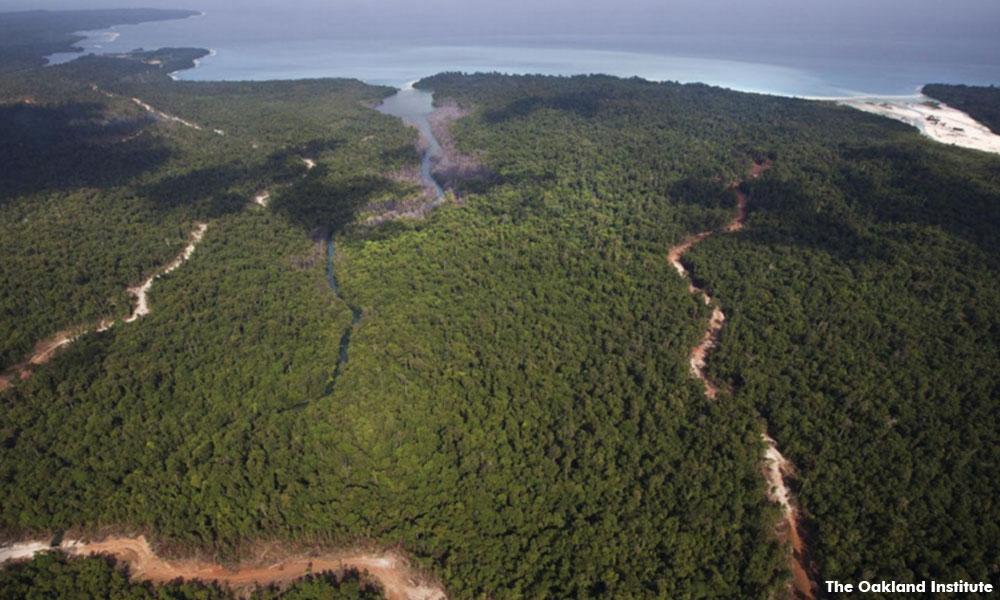
“Forests to us are like our mother. In the analogy of children, we are breastfed by our mothers.
“You take the forest away, it's like you're literally taking the mother away,” said the 54-year-old of the Abau tribe, indigenous to the Sepik River in the region.
Non-sustainable logging
Kime was speaking at the Malaysia launch of the report today, where RimbaWatch director Adam Farhan urged the MACC to investigate the conduct of Malaysian companies involved in the allegedly non-sustainable logging there.
The report also called on the Malaysian government to spearhead anti-Slapp (Strategic Lawsuit Against Public Participation) legislation to protect Indigenous defenders, NGOs and activists from corporate intimidation and silencing.
Papua New Guinea Environmental Alliance (PNGEA) coordinator Pamela Abusi, who was also present at the launch, said most of their forests are owned by customary landowners and have survived for over 50,000 years.
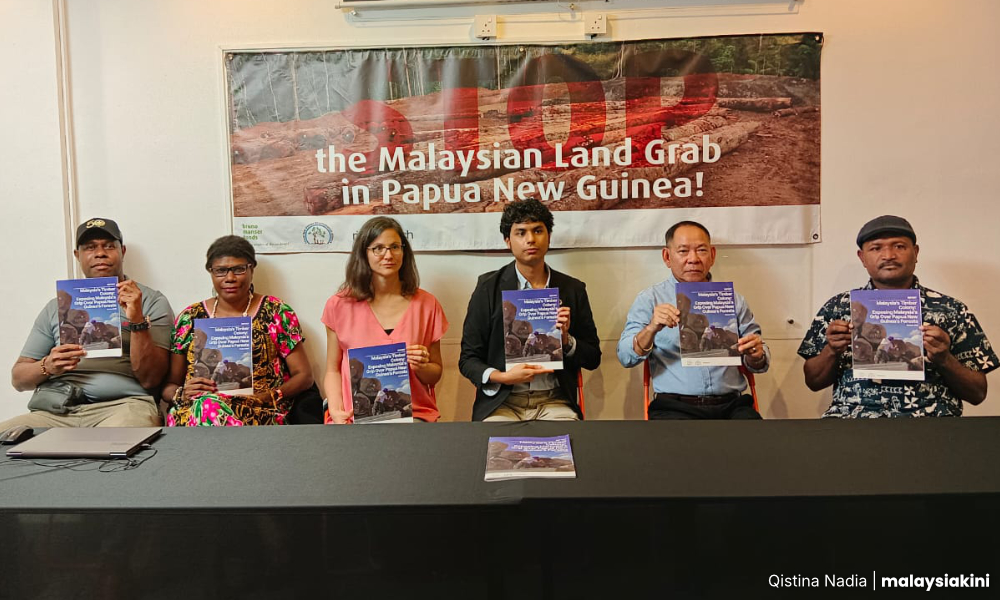
“However, the lifespan of the FCA of 99 years does not guarantee forest development or forest regeneration.
“This will unlikely give a chance for the land lease to be returned to the customary landowners," she stressed.
“Since 2013, Papua New Guinea has been the world's largest exporter of tropical timber, overtaking Malaysia, which had been the largest exporter for 30 years until only 10 percent of its primary forests remained,” the report stated.
Fraught with weak oversight
The report described how 1.68 million hectares of rainforest are under threat from FCA licences, of which 88 percent are classified as “undisturbed forests”.
“At least 175ha within FCA areas can be classified as non-forest - representing an area twice the size of Singapore,” it stated.
The Papua New Guinea Forestry Authority (PNGFA) does not make maps of the FCA licences publicly available.
The report names all the licensees and notes that 65 of the 67 FCA licences are associated with Malaysian-linked companies and alleges that many of the 79 Malaysian-linked individuals identified have connections to prominent business and political networks, including major Sarawak-based logging groups.
The collaborative report by RimbaWatch, Bruno Manser Fonds, and the PNGEA reviewed 67 FCA licences listed in a public investigative data portal to map patterns of ownership and control.
With the disclaimer that the report is based on information available at the time of publication and does not make or imply any accusations or guarantees, the authors note that their findings are for informational purposes only.
Researchers used company records, shareholder data, and investigative reports to identify cases where individuals or entities involved in each FCA had Malaysian citizenship, business links, or registered addresses.
The licensing of forest clearing in PNG has long been fraught with irregularities and weak oversight.
According to the report, FCAs were first issued to holders of Special Agricultural and Business Leases (SABLs) to allow forests to be cleared for agricultural projects.
However, after widespread findings of procedural failures and a lack of landowner consent, the government cancelled the SABLs in 2013 following a commission of inquiry, but the FCAs remained.
Impactless moratorium
A decade later, a moratorium imposed on new FCA licences had made no impact on export volumes, the report argued.
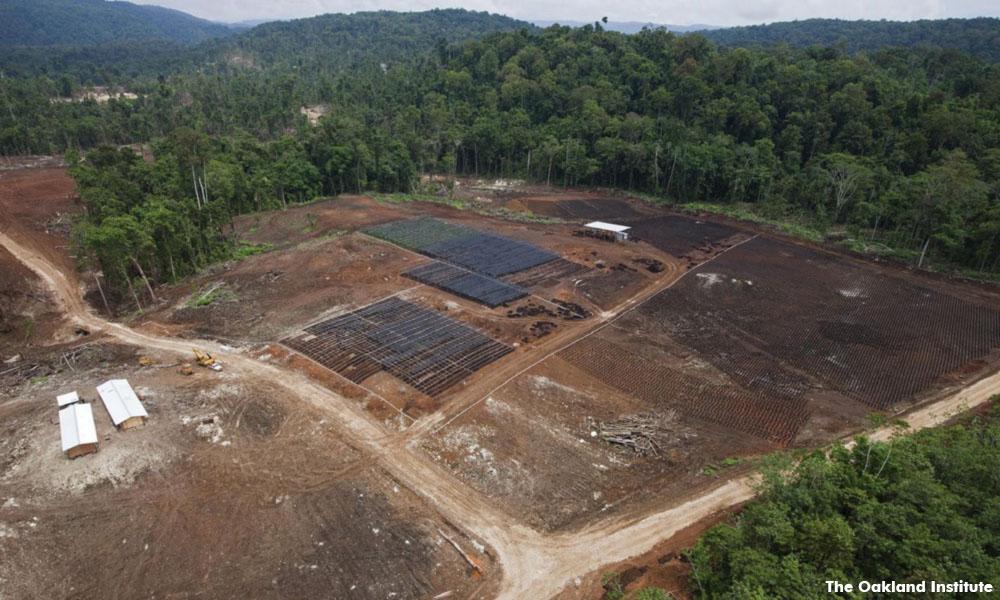
While at least 2.9 million hectares or about 15 percent of Papua New Guinea's rainforest had already been degraded, in 2024, 2.5 million cubic metres of roundwood were exported.
“This represented 25 percent of the world's tropical round log exports.
“These figures remained nearly unchanged from 2.54 million cubic meters in 2023,” said the report.
Malaysiakini is in the midst of contacting the firms named in the report for their comments.
/file/publisher-c1a3f893382d2b2f8a9aa22a654d9c97/2025/09/f0a890ee9052d526d1f4c7852060132f.jpg)
/file/image/68632054_605.jpg)
/file/publisher-c1a3f893382d2b2f8a9aa22a654d9c97/2022/06/fad96066b06ad22aaa2e8269f6dadf89.jpg)
/file/publisher-c1a3f893382d2b2f8a9aa22a654d9c97/2025/05/b8d670015b361e95625f611cdcb6ed22.png)
/file/publisher-c1a3f893382d2b2f8a9aa22a654d9c97/2024/10/1e649ba5617e0f6afec40118f327c2c8.jpg)
/file/publisher-c1a3f893382d2b2f8a9aa22a654d9c97/2025/02/4c1fb470639b8aca6c43537e0d507751.jpg)
/file/publisher-c1a3f893382d2b2f8a9aa22a654d9c97/2025/01/8af9e171212730ba7f7480593b2b5a57.jpg)
/file/publisher-c1a3f893382d2b2f8a9aa22a654d9c97/2024/03/216cf12fb156cd4848f0820b994d0619.jpg)
/file/publisher-c1a3f893382d2b2f8a9aa22a654d9c97/2024/03/189a907c7be45827d83e288dbe98dfae.jpg)
/file/publisher-c1a3f893382d2b2f8a9aa22a654d9c97/2024/03/ee0cf85c003b2d2dffc7659086df7e5c.jpg)


Report this comment
Are you sure you want to delete this comment?
This action cannot be undone.