




PM: Embrace knowledge or get left behind
The failure of a country to embrace knowledge, technology and innovation may lead to its stagnation or to its eventual decline, said Prime Minister Abdullah Ahmad Badawi today.
The failure of a country to embrace knowledge, technology and innovation may lead to its stagnation or to its eventual decline, said Prime Minister Abdullah Ahmad Badawi today.
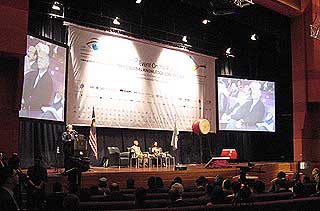 In his speech read out by his deputy Najib Abdul Razak at the opening of the Third Global Knowledge Conference in Kuala Lumpur today, Abdullah said many poor nations are unable to take advantages of technological tools to advance themselves.
Abdullah’s absence was due to a last-minute cancellation.
He said barriers such high infrastructural costs, lack of relevant content, poor technological support and dominance of the English language on the Internet hinder developing counties from participating in the knowledge-economy.
“Indeed the lack of content for developing countries is seen as one of the key factors leading to the widening of the global digital divide,” he said.
He said that, if the problem is not addressed immediately, developing countries may find themselves in a more critical situation.
“Statistics indicate that the gap between the average Internet penetration rate in developed developing countries has not reduced over the course of a decade but has instead continued to widen,” he noted.
Developing countries can bridge the digital divide by adapting current available technologies and localising it, he said.
Biggest challenge
The premier also stressed that poverty remains the single most fundamental challenge to be addressed.
“I believe that once poverty is effectively addressed, other development objectives become easier to achieve,” he said.
 The Malaysian government “remains committed towards utilising the multi-stakeholder partnership approach to address the country’s developmental challenges”.
“We believe that such an approach enables the resources and expertise of the public sector, private sector and civil society to be effectively harnessed and combined, bringing development to all including people at the grassroots.”
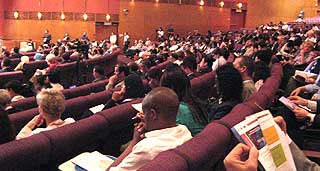
The conference is a unique gathering of 2,000 global visionaries, innovators, practitioners and policy makers aimed at sharing knowledge and building partnerships on a platform created by and for stakeholders from every sector.
This is the second time Malaysia is hosting the global conference organised by Global Knowledge Partnership, with the first having been held in 2001.
The conference ends on Thursday.


