


/file/publisher-c1a3f893382d2b2f8a9aa22a654d9c97/2025/07/f0b937528bea08ddead4373f89e8f079.jpg)

Experts: Trump deal doesn't distance M'sia from China, but tests balance
The newly signed Malaysia-US trade agreement has sparked debate over whether it could strain Malaysia’s long-standing economic ties with China, as Washington’s push to secure “reciprocal” trade terms reverberates across the region.
Central to those concerns is Article 5.1 of the agreement, which commits Malaysia to take “complementary actions” when the US restricts a third country - widely read as a reference to China, whose economic activities had previously been targeted by US President Donald Trump.
Summary
Analysts say the Malaysia-US trade deal does not mark a shift away from China, but will test Malaysia’s balancing act as it navigates Article 5.1, which requires “complementary actions” to US trade curbs.
Experts note the clause gives Malaysia leeway to act under its own laws and timelines, though it increases pressure as Washington targets Chinese sectors.
Economists warn most Malaysian exports to the US now face a 19 percent reciprocal tariff, with few clear gains beyond formalising existing commitments and cutting domestic tariffs.
The newly signed Malaysia-US trade agreement has sparked debate over whether it could strain Malaysia’s long-standing economic ties with China, as Washington’s push to secure “reciprocal” trade terms reverberates across the region.
Central to those concerns is Article 5.1 of the agreement, which commits Malaysia to take “complementary actions” when the US restricts a third country - widely read as a reference to China, whose economic activities had previously been targeted by US President Donald Trump.
The clause states that if the US imposes any tariffs, quotas, prohibitions, or other trade measures against another country to protect the US’ economic and national security, Malaysia must take similar actions or agree on a timeline to do so.
Putrajaya is also expected to crack down on companies owned or controlled by other countries operating in Malaysia that export below-market price goods to the US, or whose actions harm US exports.
Economists, however, argue that while Malaysia can still maintain its economic balance between Washington and Beijing, such efforts will now require greater diplomatic and regulatory finesse.
Samirul Ariff Othman highlighted that while Article 5.1 should not be understood as an automatic alignment with US sanctions on other nations, the clause does create a presumption of support for Washington’s actions.
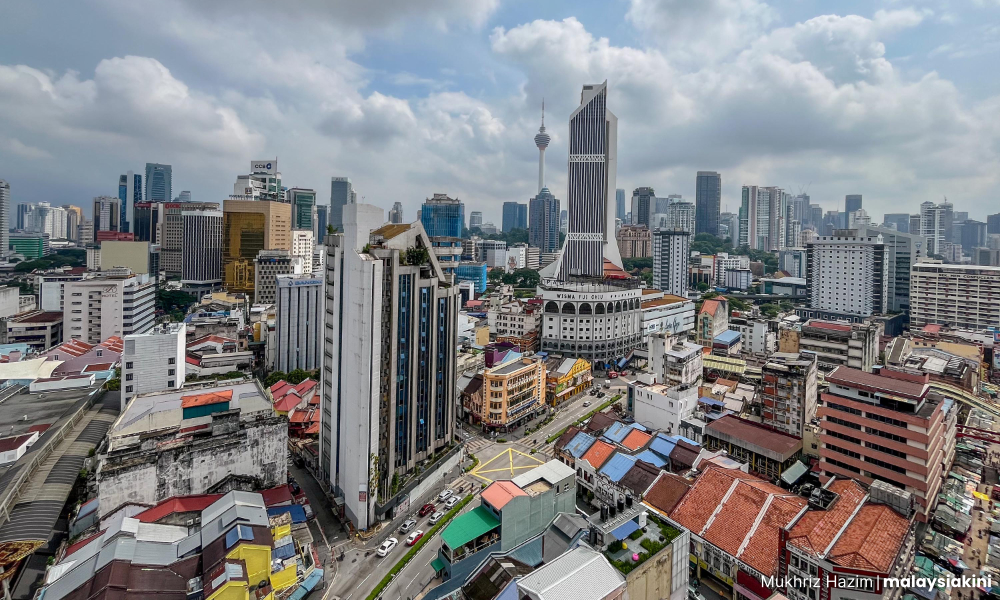
He pointed out that the clause’s wording, particularly the phrases “in accordance with domestic laws and regulations” and "within a timeline acceptable to both parties,” gives Malaysia legal and diplomatic room to avoid taking high-impact measures while still demonstrating cooperation with the US.
“Malaysia must consult and consider an equivalent response, but it can do so under its own laws, with its own timeline, and using its own tools. So, it’s not an automatic sanction,” the Universiti Teknologi Petronas adjunct lecturer told Malaysiakini.
“If managed carefully, it strengthens Malaysia’s credibility with the US while avoiding a head-on clash with China. The key is to frame it as rules-based enforcement, not political punishment.”
‘Flexibility’
Noting that the “flexibility” built into the clause allows Malaysia to demonstrate alignment without appearing to choose sides, he said Malaysia can use trade-remedy tools - such as tighter customs enforcement, product-specific duties or procurement rules - to show compliance without directly mirroring the US’ restrictions.
Still, Samirul, who is also a senior consultant with Global Asia Consulting, cautioned that the clause will make Malaysia’s balancing act more difficult over time, especially if Washington expands its restrictions on Chinese industries.
“We’re still in diversification mode, not alignment, but there’s a harder US tilt in sensitive areas like tech and supply chain resilience.
“The challenge for Putrajaya is managing the optics: how to reassure Beijing that cooperation with the US isn’t containment, and to do so at a pace that doesn’t alarm either side,” he added.
Understandable clause
Carmelo Ferlito, chief executive officer of the Centre for Market Education, said the clause on complementary actions is understandable given past instances where Malaysia had been used as a “re-labelling hub” for Chinese goods re-exported to the US during the first trade war.
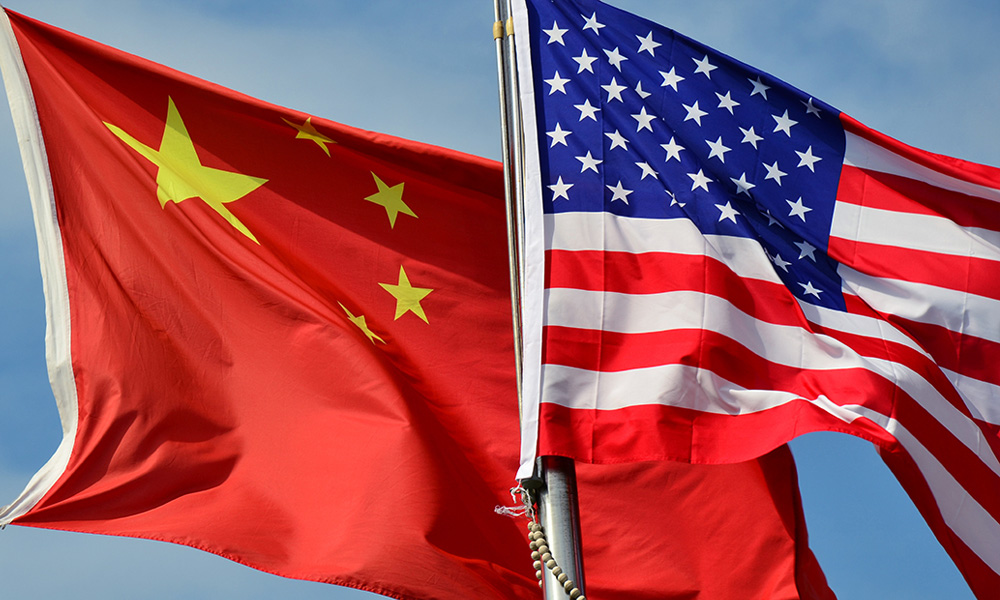
While he opined that Article 5.1 translates to the US now asking Malaysia not to be “subject to (such) games,” he warned that the measure might be difficult to enforce.
“I hope that the current tensions will serve to show how harmful protectionism is for everybody, and we will come back soon to embrace true free trade, which is also fair trade, something China has often forgotten,” he added when contacted.
He also agreed that the deal does not signify a strategic pivot away from China, but rather reflects Malaysia’s attempt to diversify partnerships amid shifting global trade realities.
“China’s economic model, burdened by central planning and high private debt, faces internal contradictions. It is therefore appropriate for Malaysia to shield itself and play on multiple tables,” he said.
Ferlito emphasised that the agreement also underscores a strategic gain for Washington, noting that Trump acted with “great noise,” but achieved the result of bringing the region closer to him, thus reaffirming the US’ central role in regional economic affairs.
He added that Southeast Asia should use such partnerships to attract Western investment and know-how into the region, rather than expecting the US to revive large-scale manufacturing at home.
“It is important to realise that the US won an important fight (from) a trade perspective, but it is quite unrealistic to believe that they may once again become a manufacturing hub. History has already moved in a different direction,” he said.
Damage limitation
Economist Geoffrey Williams, however, offered a more sobering assessment, describing the deal as a “damage limitation exercise” rather than a sign of closer economic alignment with Washington.
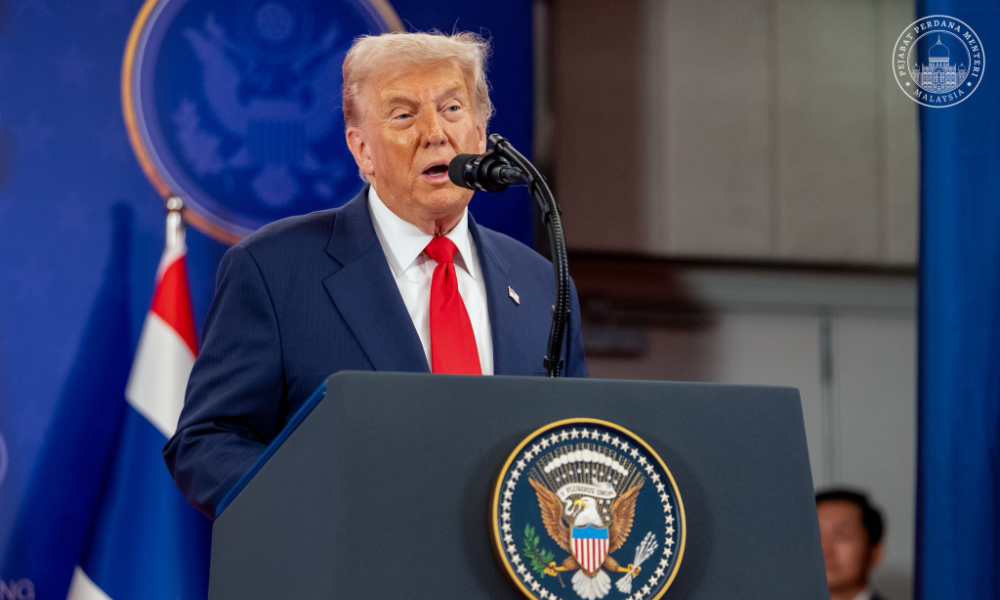
“The trade deal is simply a formalisation of negotiations after Liberation Day. There is no particular tilting towards the US nor a decoupling from China - it is more of a damage limitation exercise,” the founder and director of Williams Business Consultancy told Malaysiakini.
Trump previously declared April 2 as “Liberation Day” to mark the introduction of new import tariffs aimed at protecting American industries and reducing trade deficits.
While Malaysia was initially slapped with a 24 percent tariff, the new trade agreement locked in reciprocal tariffs from the US at 19 percent, while a slew of exports, including semiconductors, remain exempted.
Williams noted that these exemptions - worth about RM21.9 billion, or roughly 11 percent of Malaysia’s total export value to the US in 2024 - leave the remaining 89 percent still subject to the 19 percent reciprocal tariff.
“Before Liberation Day, most of Malaysia’s exports to the US were tariff-free, and now almost 90 percent by value face tariffs, so this is a big, bad impact,” he said, adding that Malaysia has few levers to attract additional US foreign investment since such decisions “come from businesses, not governments.”
While some niche opportunities could emerge, particularly in the rare earth and semiconductor sectors, Williams stressed that most of the commitments under the deal merely formalise existing plans - such as procurement of US-made aircraft - while reducing Malaysia’s flexibility if supply delays occur.
He also warned that the concessions seem to come at a cost to Malaysia’s policy autonomy, referencing Investment, Trade and Industry Minister Tengku Zafrul Abdul Aziz’s previous statement that the government is satisfied with the deal and did not have to backpedal on previous agreements.
“(Zafrul’s) statement that Malaysia did not backtrack on its earlier position appears to mean that the US respects Malaysia’s right to impose trade restrictions and non-tariff barriers in some areas - without really telling us what those are,” he said.
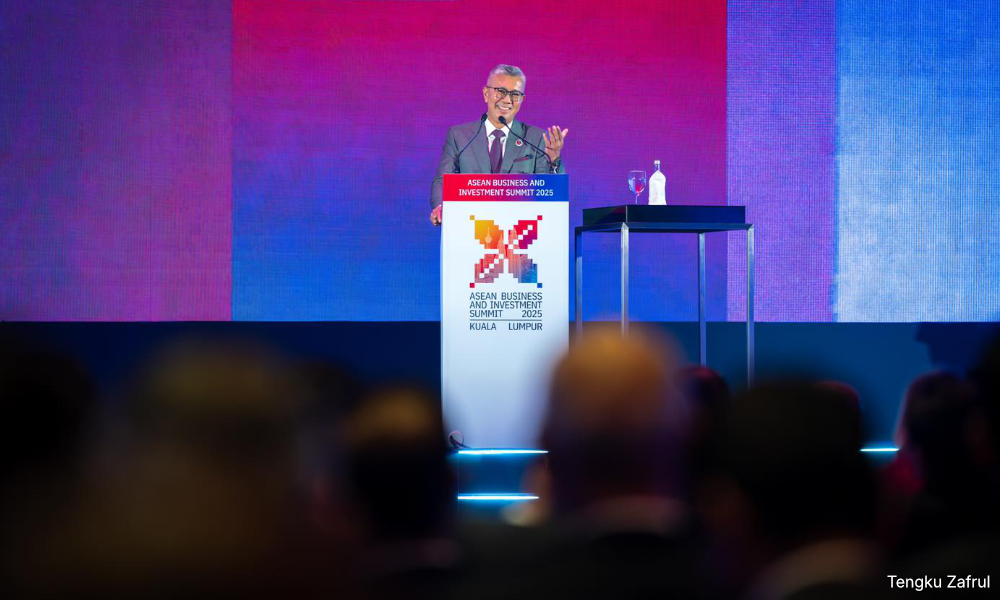
“In return for ‘respecting’ Malaysia’s rights, the US imposed a 19 percent reciprocal tariff. This means Malaysia will pay for its sovereignty and policy autonomy.”
He added that Malaysia’s commitments under the deal - such as curbing government-linked companies’ (GLCs) market distortions, addressing trafficking and labour issues, and prohibiting purchases of nuclear equipment from proscribed countries - will be challenging to implement consistently.
“There are no clear wins from facing a 19 percent reciprocal tariff when the tariffs were much lower beforehand,” he said.
“The indirect win is that Malaysia has cut more than 1,000 of its tariffs on US goods and committed to non-tariff reforms. It’s like a doctor forcing you on a diet - you may not like it, but you end up healthier in the long term.”
/file/publisher-c1a3f893382d2b2f8a9aa22a654d9c97/2025/04/45a3b2c34ca09106f613b257be976905.jpg)
/file/publisher-c1a3f893382d2b2f8a9aa22a654d9c97/2025/07/f0b937528bea08ddead4373f89e8f079.jpg)
/file/image/74487813_605.jpg)
/file/publisher-c1a3f893382d2b2f8a9aa22a654d9c97/2025/09/686089fcb99f60f844e871f9dc97f4f6.jpg)
/file/image/74144654_605.jpg)
/file/image/68904824_605.jpg)
/file/publisher-c1a3f893382d2b2f8a9aa22a654d9c97/2025/09/98efd8d6dc8a7783a71d67340520e3a4.jpg)


Report this comment
Are you sure you want to delete this comment?
This action cannot be undone.