


/file/publisher-c1a3f893382d2b2f8a9aa22a654d9c97/2022/12/8fde8817a2e5e02d350fd76645a12789.jpg)

Sabah leaders hail no appeal decision, but Upko remains cautious
Calling it a stunning victory for the people of Sabah, Sabah Progressive Party (SAPP) president Yong Teck Lee said it reflected the strength of public sentiment ahead of the state election.
“It is undeniable that the PKR-led federal government was forced...
Sabah politicians, regardless of their political affiliation, have lauded Putrajaya’s decision not to appeal against the High Court’s ruling to restore the 40 percent revenue claim for the state.
Calling it a stunning victory for the people of Sabah, Sabah Progressive Party (SAPP) president Yong Teck Lee said it reflected the strength of public sentiment ahead of the state election.
“It is undeniable that the PKR-led federal government was forced by the power of Sabahans to concede the High Court judgment on the 40 percent claim.
“Sabah has won even before nomination day, but the struggle must continue until the full amount, including the 48 lost years, is paid back,” he told Malaysiakini.
Echoing Yong’s sentiments, Sabah PKR chairperson Mustapha Sakmud described the move as a “historic milestone” in restoring fiscal justice under Prime Minister Anwar Ibrahim’s leadership.
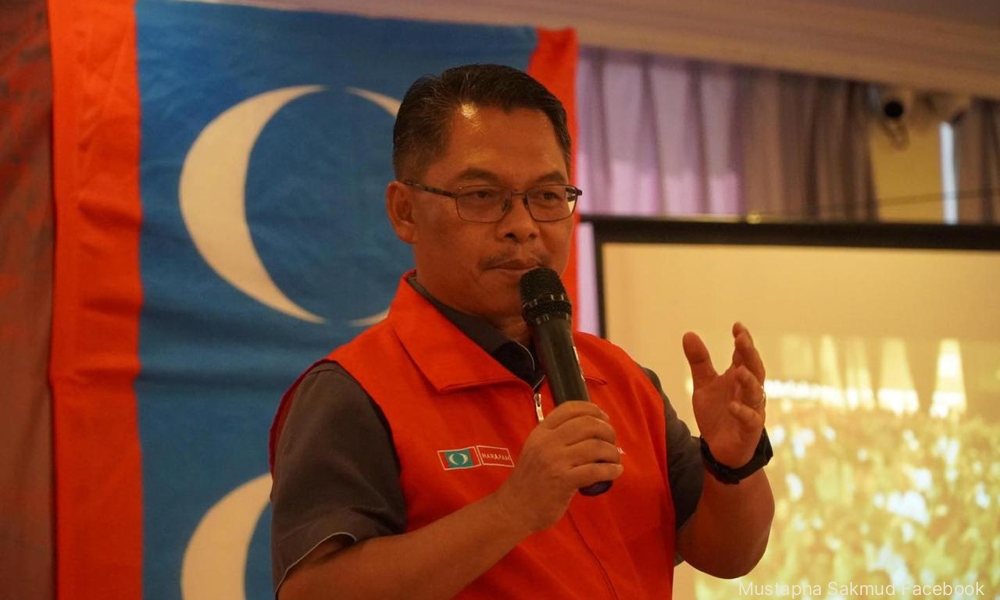
“The decision marks the long-awaited fulfilment of fiscal justice for Sabah, proving the Madani government’s sincerity in upholding the Malaysia Agreement 1963 (MA63).
“It closes a long chapter of uncertainty and opens a new era of mature, respectful, and principled relations between the federation and Sabah,” he added.
Negotiations to proceed immediately
Yesterday, the Attorney-General’s Chambers (AGC) announced that Putrajaya will not appeal the Kota Kinabalu High Court’s ruling affirming Sabah’s entitlement to a 40 percent share of federal revenue collected from the state.
The ruling was over a judicial review filed by the Sabah Law Society (SLS) against the government.
In a statement, the AGC said the federal government respects the constitutional principle of the “Special Grant” under Article 112C of the Federal Constitution and has agreed to proceed with negotiations with the Sabah government immediately.
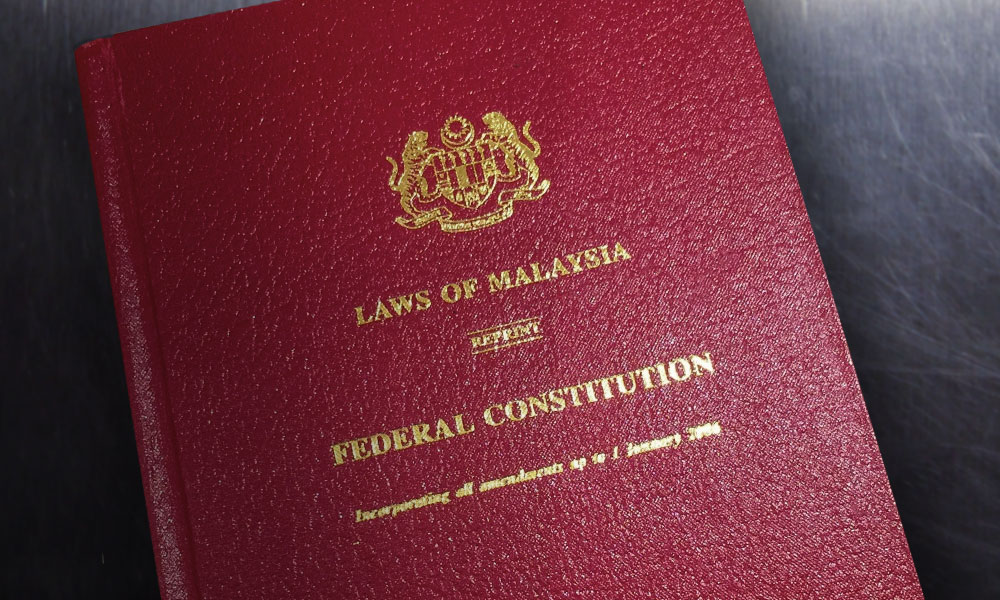
“Therefore, the federal government has decided not to file an appeal against the 40 percent revenue entitlement.
“Consequently, the federal government will immediately initiate negotiations with the Sabah state government,” said the AGC.
Near universal approval
Sabah DAP chief Phoong Jin Zhe said his party has actively supported the SLS throughout its legal pursuit by attending hearings and showing solidarity.
“The party also welcomed the High Court ruling and publicly called on the federal government not to appeal the decision, in line with the true spirit of MA63.
“Moving forward, Sabah DAP will continue to advocate for the full and transparent implementation of the 40 percent revenue entitlement,” he added.

Echoing Phoong’s views, Sabah BN chief Bung Moktar Radin said future negotiations must be transparent, grounded in verified financial data, and free from political manoeuvring.
“Sabah will no longer accept discussions that lead nowhere. A constitutional right is not a bargaining chip; it must be honoured exactly as written.
“This is not a political gimmick. It is a demand for constitutional justice,” he stressed.
Parti Bersatu Rakyat Sabah (PBRS) president Arthur Kurup said Putrajaya’s decision shows that not only does the federal government respect the rights of Sabah but also is fully supportive of the state’s development.
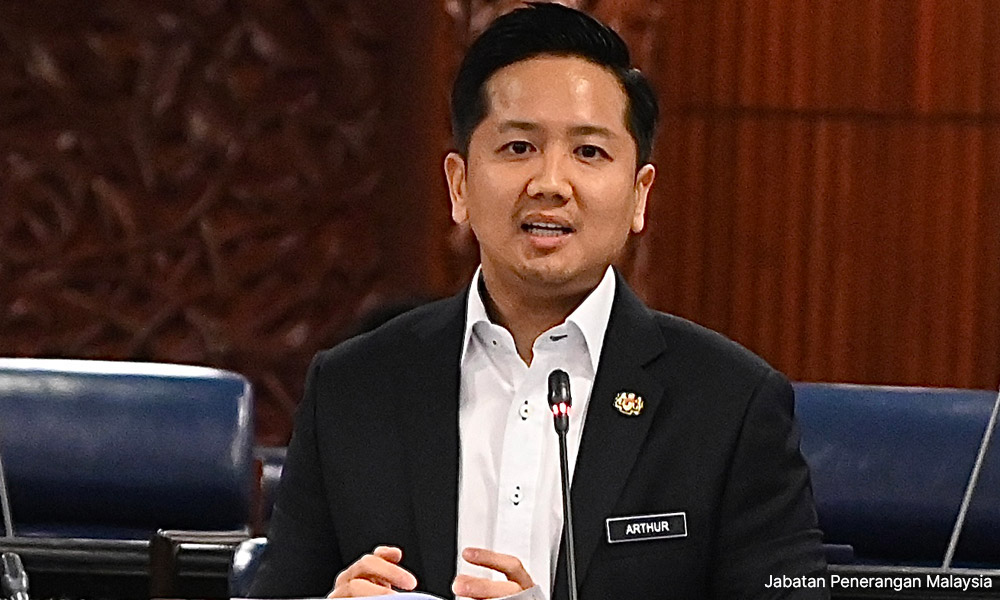
“I urge Sabahans to have faith in our prime minister and in this unity government, which has shown over and over again its genuine effort to help develop and protect Sabah,” he said.
Sabah Bersatu chief Ronald Kiandee said Putrajaya did the right thing by not appealing.
“The 40 percent is stipulated under the Federal Constitution; that’s the spirit of this country, so that spirit has been reaffirmed by the High Court.
“We have been talking about this for how many years, and by not appealing, we welcome the decision,” he said.
AGC’s contradictory statement
However, Upko president Ewon Benedick expressed caution, pointing out that the AGC’s decision to file an appeal against the judge’s remarks felt contradictory.
“What is in the last sentence?” he asked when contacted by Malaysiakini.
Benedick was referring to the AGC’s decision to appeal against one part of the judge’s verdict, which stated that Putrajaya and the Sabah government had abused their powers and breached their constitutional duties over the revenue claim.
To the Upko leader, that statement underscored the lack of clarity and commitment he had been questioning from within the government.
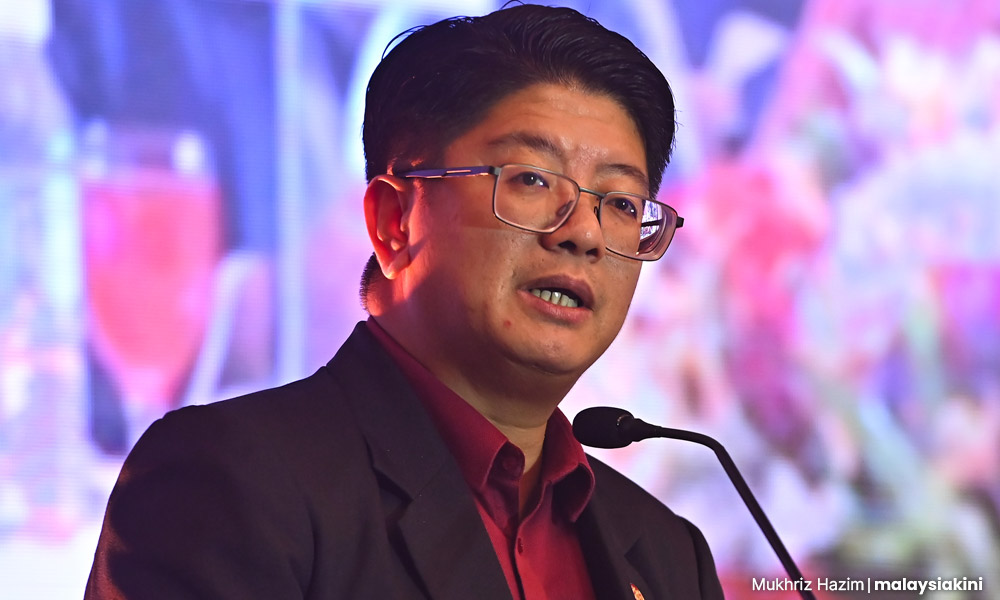
“You read the written judgment and observe what was the AGC’s official stand throughout the proceedings, that was my reason (for resigning),” he said.
Benedick said he had raised the 40 percent issue repeatedly during cabinet meetings over the past three years, but the answers were always the same.
“I have been consistent in the cabinet on the 40 percent (claim) for three years.
“The answers given to me were the same answers that were later told in Gaya Street,” he said, referring to Anwar’s recent remarks that equated Sabah’s special grant with federal allocations.
When asked whether his resignation might have influenced Putrajaya’s decision not to appeal the court’s ruling, Benedick paused and replied, “I leave this question for you to answer.”
Benedick, who resigned as federal entrepreneur and cooperative development minister recently, said the AGC’s stand throughout the proceedings was the reason behind his departure.
Be wary of partial appeal
Upko secretary-general Nelson Wences Angang cautioned that the AGC’s statement might still open the door to a “partial appeal”, one that could inadvertently undermine the entire ruling.
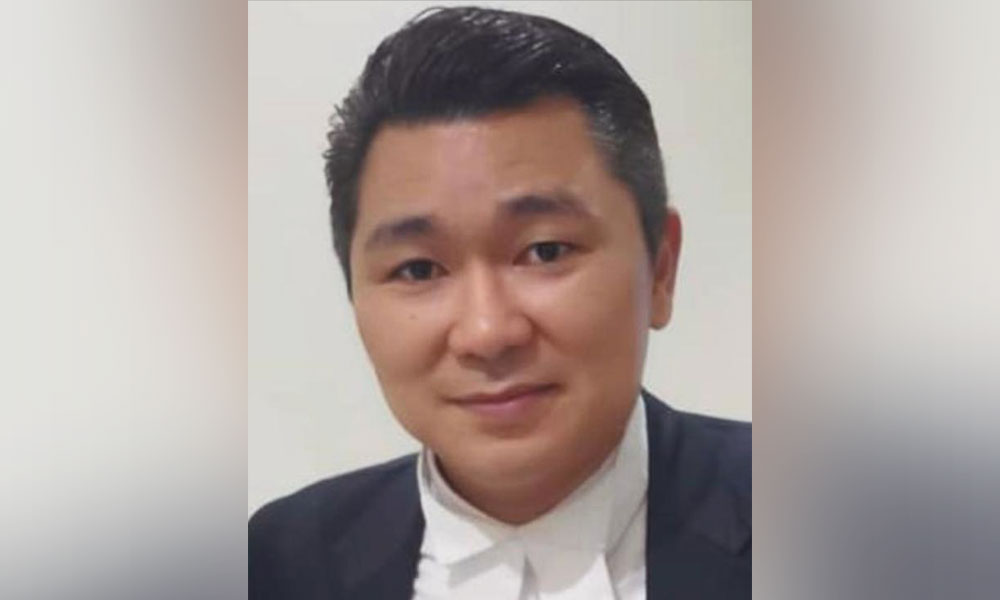
“Assuming the appellate court agrees with the federal AG that the High Court judge’s findings were wrong in certain parts, it could affect the entire judgment since all the grounds are interconnected.
“That scenario could lead to the High Court’s ruling, and its affirmation of Sabah’s constitutional entitlement, being set aside altogether.”
Former SLS president Roger Chin, who led the efforts to initiate the judicial review on the revenue entitlement, expressed similar concerns that an appeal on the wording of the text could impact the entire ruling.
In particular, he said that if the appellate court overturns the decision which invalidated three orders reviewing the federal government’s payments to Sabah, this might mean the government does not need to pay for the 48 lost years.

“Likewise, if the appellate court sets aside the declaration that the federal government acted unlawfully for failing to conduct proper constitutional reviews with the state government of Sabah, that could remove the legal finding of wrongdoing.
“The delay in conducting reviews could then be viewed as an administrative lapse rather than a constitutional breach, making arrears for the lost years a matter for negotiation rather than a judicial entitlement,” he said in a statement today.
/file/publisher-c1a3f893382d2b2f8a9aa22a654d9c97/2021/08/efdd54814f2fc513734c840ae0544d8f.jpg)
/file/publisher-c1a3f893382d2b2f8a9aa22a654d9c97/2021/08/6943bf19c02990484599c62aeba2ad75.jpg)
/file/publisher-c1a3f893382d2b2f8a9aa22a654d9c97/2025/10/8c4374ea2b1ef23210e3995c5534d364.jpg)
/file/publisher-c1a3f893382d2b2f8a9aa22a654d9c97/2025/11/1583205670e9a501fc836d2a6d4b887d.jpg)
/file/publisher-c1a3f893382d2b2f8a9aa22a654d9c97/2024/03/b0d8447170cf9c28e9de6b9432c60b87.jpg)
/file/publisher-c1a3f893382d2b2f8a9aa22a654d9c97/2024/05/e673f4d144e404ec7d3b43653c08d52f.jpg)


Report this comment
Are you sure you want to delete this comment?
This action cannot be undone.