


/file/publisher-c1a3f893382d2b2f8a9aa22a654d9c97/2026/01/5b75ad8626e8d66a832940dd421fd22f.jpg)

'Why have Child Act' - parents ask after baby abuse charge downgraded
The baby’s father, Lim Yi Sheng, detailed his disappointment when he and his wife, Teo Siew Luo, were belatedly informed that the prosecution would be offering an alternative charge under Section 323 of the Penal Code to the accused, Wong Pui Lay.
The parents’ shock and distress stemmed from the fact that...
Editor's note: Tengku Intan Suraya Tengku Ismail has clarified that she was no longer the deputy public prosecutor attached to the case when the alternative charge was submitted. The error is regretted, and Malaysiakini apologises for the inconvenience caused.
The parents of a baby girl are dismayed by a decision of the Attorney-General’s Chambers (AGC) to withdraw a child abuse charge against a caretaker accused of injuring their daughter.
The baby’s father, Lim Yi Sheng, detailed his disappointment when he and his wife, Teo Siew Luo, were belatedly informed that the prosecution would be offering an alternative charge under Section 323 of the Penal Code to the accused, Wong Pui Lay.
The parents’ shock and distress stemmed from the fact that the charge against Wong was initially framed under Section 31(1) of the Child Act 2001 on abusing a child in a manner which is likely to cause them physical or emotional injury.
The legislation provides for a jail term of up to 10 years, a maximum fine of RM20,000, or both.
However, Section 323 of the Penal Code, which is considered a more general law used in cases affecting adults, allocates a maximum one-year jail term, a fine of up to RM2,000, or both.
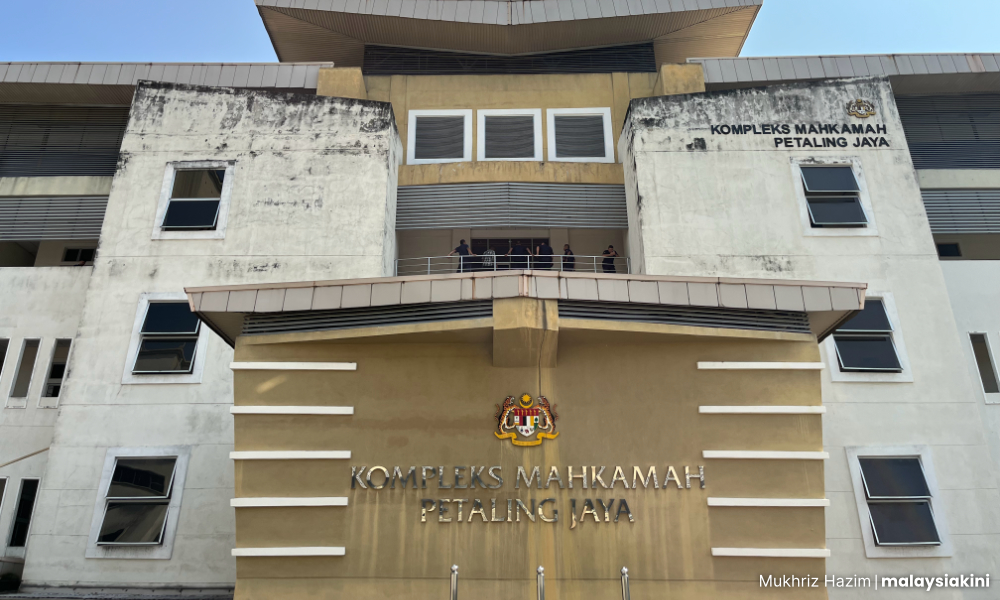
While Wong had claimed trial to the charge under the Child Act on July 11 last year at the Petaling Jaya Sessions Court, the deputy public prosecutor on Jan 7 told the court of the alternative charge.
‘Why bother?’
Lim told Malaysiakini that he and Teo only learned of the change in the prosecution’s strategy on the same day, immediately before the amended charge was submitted to judge Noor Ruzilawati Nor.
“We are very disappointed with our judicial system (which allows) a prosecutor to change the law under which an (alleged) abuser is charged without giving us prior notice or time for us to react,” he said.
“There is a huge flaw in our judicial system (if) charges can be changed so easily to a much more lenient charge. We tried our best to fight for our baby, we attended every court session, we hired a lawyer, but there’s really nothing much we can do.
“Our baby couldn’t speak or fight back. If a baby is not protected by the Child Act, then why bother having the Act in the first place?” he questioned.

Wong has since pleaded guilty to the reduced charge under the Penal Code. The court fixed Jan 19 for sentencing.
‘We don’t want any more victims’
The parents first noticed multiple bruises on the inner thigh of their then eight-month-old daughter on June 13 last year, after picking her up from the accused’s residence, where the baby stayed during weekdays.
Lim said that when he questioned the babysitter, she denied abusing the child, instead claiming that items had fallen on the baby while she was cleaning the house.
A medical examination on the baby was conducted the following day, after which Teo filed a police report.

“We want to bring this issue up because we do not want more victims. Child abuse can have major effects on a baby, but we won’t know exactly what yet, as she is still too young.
“We don’t want someone who has no patience or sense of remorse to be in the childcare industry,” Lim added.
Rape charge downgraded
Previously, Malaysiakini reported on a Bandar Utama mother, Loh Wai Mun, who is seeking clarity over why the rape charge against her assailant was downgraded to a lesser offence without her knowledge.
READ MORE: 'Mishandled' case: Sexual assault survivor meets Suhakam
In Loh’s case, which was also heard at the Petaling Jaya Sessions Court before judge Syahliza Warnoh, the attacker initially claimed trial to a charge under Section 376 of the Penal Code for rape.
However, the accused later pleaded guilty to a reduced charge framed under Section 354 for assault intending to outrage a person’s modesty and paid a RM10,000 fine, with the amended charge coming after the AGC accepted his letter of representation.
READ MORE: Sexual assault survivor's claim of police 'mishandling' fuels IPCMC push
Loh has since sought the AGC’s clarification behind the prosecution’s move, arguing that the reduced charge against her assailant did not reflect the facts of the case, or the level of harm, suffering, and traumatic impact she had suffered.
/file/publisher-c1a3f893382d2b2f8a9aa22a654d9c97/2025/08/39c4ffebc1d5835181f6803786511a04.jpg)
/file/publisher-c1a3f893382d2b2f8a9aa22a654d9c97/2024/07/037b6056fe7fd4af73a51b68430730a9.jpg)
/file/publisher-c1a3f893382d2b2f8a9aa22a654d9c97/2020/01/2838c7d7de17ee4d9711d6ae3e0c2739.jpg)
/file/881/a72c377db797b212164b07c727f2dab4.jpg)
/file/publisher-c1a3f893382d2b2f8a9aa22a654d9c97/2025/11/d15c2dc02f975e944427bcb5ff15a6a5.jpg)
/file/publisher-c1a3f893382d2b2f8a9aa22a654d9c97/2025/09/ee56ad986f806ba2158dbb28eee78d47.jpg)


Report this comment
Are you sure you want to delete this comment?
This action cannot be undone.