


/file/publisher-c1a3f893382d2b2f8a9aa22a654d9c97/2020/10/016b4d66fbad74d3ce60b7e86846eb9d.jpg)

Appeals court allows govt's bid to stay paying Sabah's 40pct revenue
The Court of Appeal has allowed the federal government’s bid to postpone implementing Sabah’s 40 percent entitlement to federal revenue pending its appeal against the Kota Kinabalu High Court’s decision.
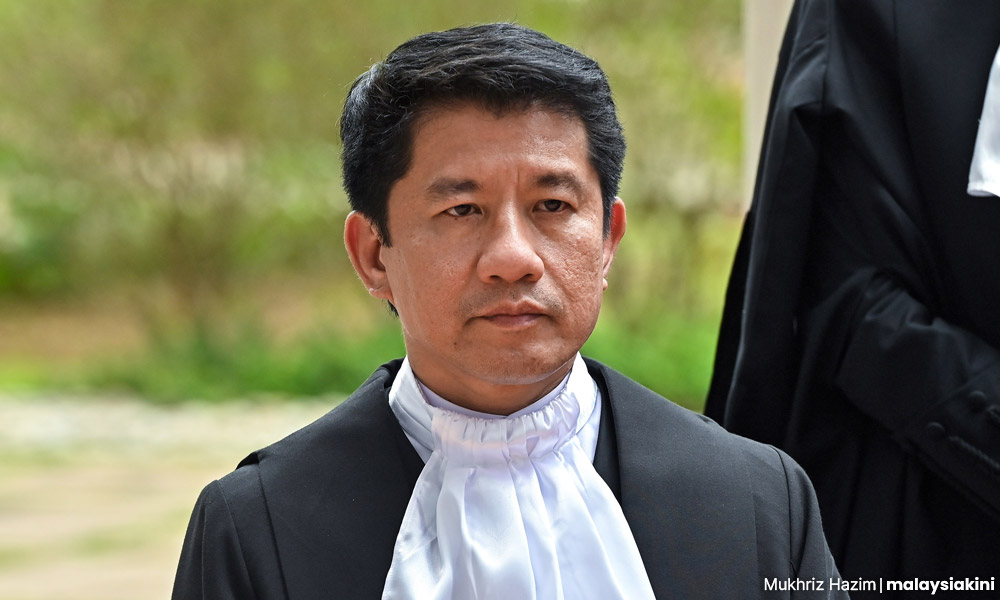
Today’s panel, chaired by judge Zaini Mazlan, said the government would be prejudiced if a stay is not granted because there is a real risk of non-compliance with the timelines imposed by the High Court.
Enforcing compliance in...
The Court of Appeal has allowed the federal government’s bid to postpone implementing Sabah’s 40 percent entitlement to federal revenue pending its appeal against the Kota Kinabalu High Court’s decision.
Today’s panel, chaired by judge Zaini Mazlan, said the government would be prejudiced if a stay is not granted because there is a real risk of non-compliance with the timelines imposed by the High Court.
The High Court, in its verdict on Oct 17 last year, compelled Putrajaya to conduct a review with Sabah’s state government within 90 days and to reach an agreement within 180 days from the judgment date.
The 90-day timeline expired on Jan 14, while the 180-day deadline will soon expire on April 15.
Zaini also highlighted that Putrajaya’s appeal against parts of the judgment has not yet been heard, which means enforcing compliance would deprive the federal government of the opportunity to ventilate its challenge.
“It is clear that the applicant (federal government) is under time constraints.
“The applicant contended that the review would involve a comprehensive evaluation of their financial position and the second respondent’s (Sabah’s state government) net revenue for the period from 1974 to 2021.
“This would require identifying, verifying, and reconciling financial data, voluminous documents, and historical records spanning 47 years, from 1974 to 2021.
“In our view, the applicant would be prejudiced if a stay is not granted (as) there is a real risk of non-compliance with the timelines imposed by the High Court, which, given the scope and complexity of the exercise, seem onerous,” Zaini said in reading out the panel’s decision this morning.
Unrealistic timeline
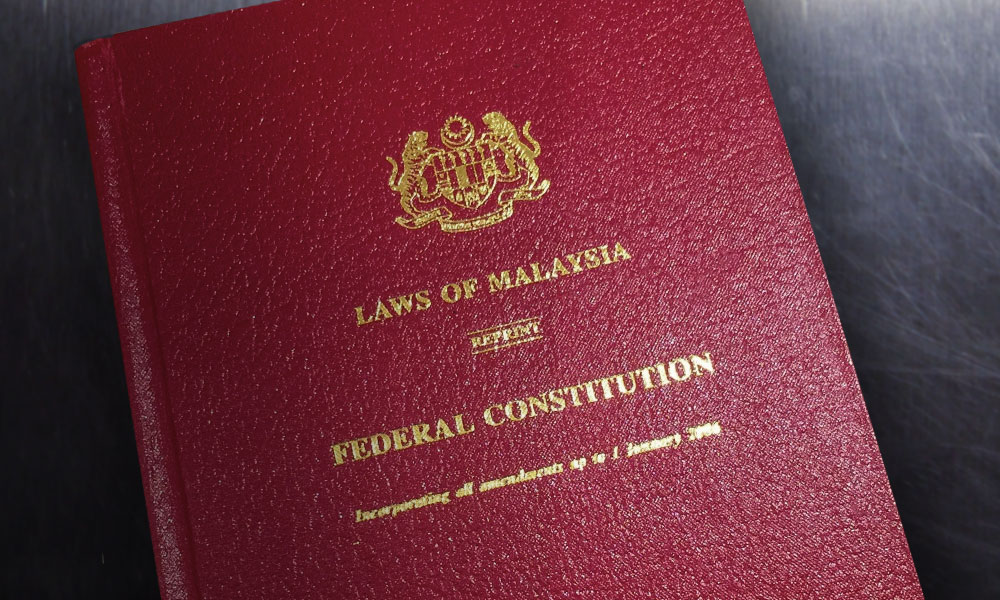
The panel further found that the High Court’s order was not consistent with the provisions of Article 112D of the Federal Constitution, which stipulates that, in case of disagreement, the matter should be referred to an independent assessor.
This would clearly prejudice the government if they are forced to comply with the High Court’s order without the opportunity to present its case on appeal, Zaini added.
The panel also noted that the High Court’s order not only directs negotiations but also requires the government to make payment from the Federal Consolidated Fund within 180 days of the order.
“This could have serious financial consequences, especially given the current challenging global economic climate.
“Under Article 112D of the Federal Constitution, any review must consider the applicant’s financial position in relation to the needs of the second respondent.
“The imposed timelines may not give the parties enough opportunity to determine the correct quantum payable.
“The payments ordered are of such magnitude that their execution, prior to the determination of the appeal, would create a fait accompli.
“We are therefore satisfied that special circumstances have been established. The applicant would suffer prejudice if a stay is refused, and the appeal may be rendered nugatory,” said Zaini in the ruling.
Presiding with Zaini today were judges Ismail Ibrahim and Muniandy Kannyappan.

Senior federal counsel Hanir Hambaly appeared for the federal government in today’s proceedings, while David Fung and Jeyan Marimuttu represented the first respondent, the Sabah Law Society (SLS).
Sabah’s state government was represented by its state attorney-general, Brenndon Keith Soh.
‘Unlawful to deny Sabah’s 40pct’
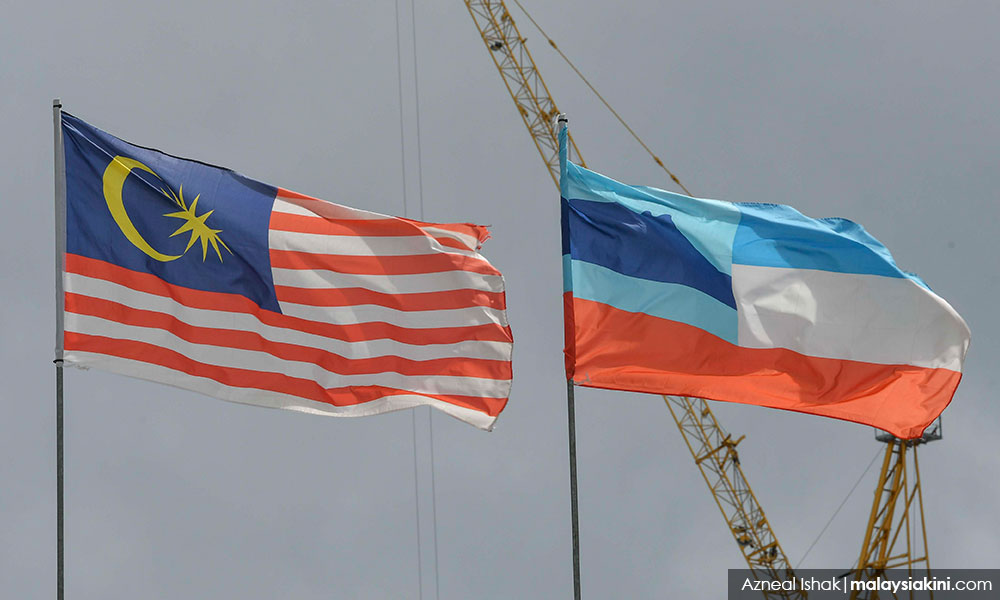
The Kota Kinabalu High Court, on Oct 17 last year, ruled that the federal government had acted unlawfully and beyond its powers under the Federal Constitution by failing to honour Sabah’s 40 percent share of federal revenue for nearly five decades.
The court then issued a mandamus order directing Putrajaya to conduct a new revenue review with the Sabah government under Article 112D of the Constitution and to agree on the state’s 40 percent entitlement for each financial year from 1974 to 2021, with the review to commence within 90 days and conclude within 180 days.
The Attorney-General’s Chambers, in response, said it would not appeal against the 40 percent entitlement in respect of the constitutional principle of the “special grant” under Article 112C of the Federal Constitution.
However, their appeal would be against a remark by the High Court judge, who said that Putrajaya and the Sabah government had abused their powers and breached their constitutional duties.
‘Stay removes binding timeline’
Meanwhile, former SLS president Roger Chin said he was disappointed by the verdict as it removes a binding timeline, the one element he deemed as forcing the revenue entitlement matter to move forward after decades of inaction.
“It must be said plainly that Sabah’s entitlement is not in dispute. It is provided for in the Constitution, it has been acknowledged, and the federal government does not deny that a review must be carried out.
“The difficulty has never been the existence of the right; it has always been whether the right will be honoured in practice.
“What the High Court did and why it mattered was to impose structure on what had long been an open-ended process. It required that the constitutional review be conducted within a defined period and that an agreement be reached within a fixed timeframe.
“That was not incidental. It was a direct response to a history in which the obligation existed, discussions took place, but nothing was ever brought to a conclusion. The stay removes that structure,” he said in a statement today.

Chin added that despite the obligation to honour the court order remaining in principle, it is no longer tied to a deadline or backed by immediate consequence.
He stated this would push the state government to a position where progress would depend on negotiation, discretion, and ultimately political will - a position Sabah is familiar with.
“This is why the decision matters beyond the legal process. A constitutional right that is acknowledged but not implemented is, in practical terms, no right at all. A duty that is accepted but not performed offers no protection to the people it was meant to serve.
“Sabah is not asking for something new, nor is this a matter of policy or discretion. It is a matter of compliance with what has long formed part of the constitutional framework.”
SLS president Nazim Maduarin said the Court of Appeal’s decision does not displace the High Court’s findings, including that there had been a failure to conduct the periodic review required under Article 112D.
“The society emphasises that this decision is procedural in nature.
“The substantive issues, including the interpretation and proper implementation of Article 112D of the Constitution, remain to be determined in the appeal.
“SLS will continue to participate in the proceedings and act in accordance with the law and the record before the court,” he said in a statement.
/file/publisher-c1a3f893382d2b2f8a9aa22a654d9c97/2020/10/016b4d66fbad74d3ce60b7e86846eb9d.jpg)
/file/publisher-c1a3f893382d2b2f8a9aa22a654d9c97/2020/09/0a0bbfe986f7295bcc811e63472c819b.jpg)
/file/publisher-c1a3f893382d2b2f8a9aa22a654d9c97/2025/10/a055cffcffed0038313453e60291b8ce.jpg)
/file/publisher-c1a3f893382d2b2f8a9aa22a654d9c97/2026/01/699c1964f21c44c4b070d43c97bde767.jpg)
/file/publisher-c1a3f893382d2b2f8a9aa22a654d9c97/2025/04/67d307c969d3065e155d60eabe3fb046.jpg)
/file/publisher-c1a3f893382d2b2f8a9aa22a654d9c97/2025/11/d07ef688196c24417f2640b422e9ee73.jpg)


Report this comment
Are you sure you want to delete this comment?
This action cannot be undone.