


/file/publisher-c1a3f893382d2b2f8a9aa22a654d9c97/2025/11/d15c2dc02f975e944427bcb5ff15a6a5.jpg)

AGC to mandate compensation applications for crime victims, families
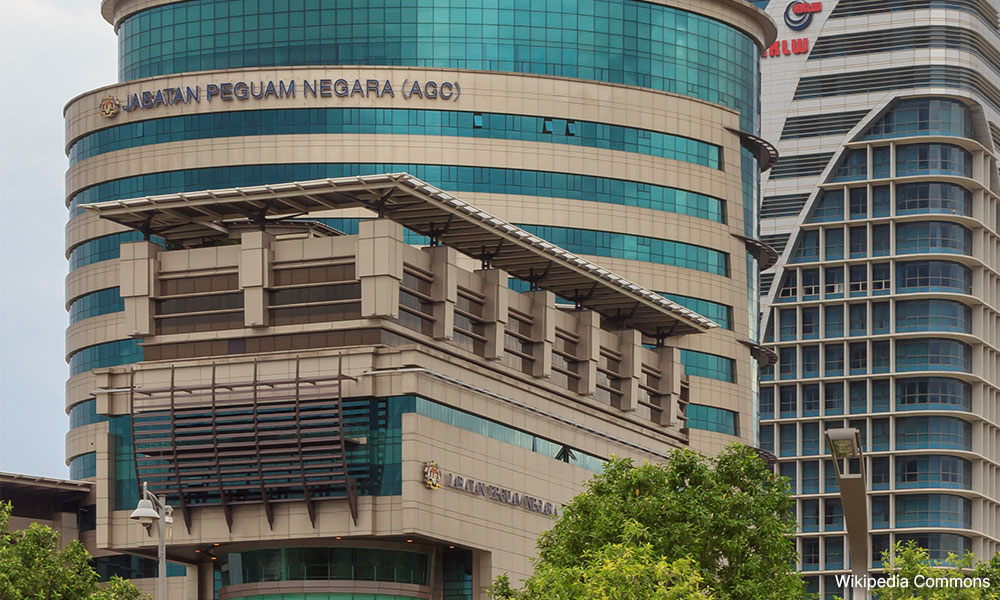
According to a report by Berita Harian, the upcoming regulation issued by the Attorney-General Chambers (AGC) was made to strengthen the use of existing legal provisions, including Section 426 of the Criminal Procedure Code (CPC).
“The order may be...
A new directive will soon require deputy public prosecutors to actively pursue compensation for victims of crime and their families, including cases involving deaths caused by drink-driving.
According to a report by Berita Harian, the upcoming regulation issued by the Attorney-General Chambers (AGC) was made to strengthen the use of existing legal provisions, including Section 426 of the Criminal Procedure Code (CPC).
“The order may be made in addition to fines or imprisonment, aimed at providing restitution to the aggrieved party.
“It is to ensure that victims receive appropriate compensation based on legal provisions in suitable cases, in the interest of justice and public welfare,” Attorney-General Dusuki Mokhtar said.
According to Dusuki, the CPC empowers the courts to order the payment of prosecution costs and compensation to victims of crime.
Meanwhile, Subsection 426(1C) sets out provisions relating to court-ordered compensation payments to crime victims.
Earlier precedents exist
While Dusuki acknowledged that such applications are not commonly made by DPPs, he noted that they have been pursued in previous cases to ensure victims’ welfare is not overlooked, following the conclusion of court proceedings.
“The department remains committed to carrying out prosecutions independently, fairly, and with integrity to ensure justice is upheld, and that the interests of the public and crime victims are always protected,” he added.
Additionally, to support the applications, the AG said prosecutors must present all relevant factors outlined under subsection 426(1C) of the Act during court proceedings.
This would allow the courts to determine appropriate compensation amounts.
“For this purpose, there is a need to obtain additional information to fulfil these requirements,” he added.
The new directive was made following the death of a motorcyclist on March 29, after being hit by an intoxicated driver, 28-year-old R Saktygaanapathy.
The victim, Amirul Hafiz Omar, was killed while on his way to buy a mathematics book for his eldest child.

Saktygaanapathy was subsequently charged with murder at the Klang Magistrate’s Court for Amirul’s death.
The offence carries the death penalty or imprisonment of between 30 and 40 years. If the death sentence is not imposed, the offender is also liable to at least 12 strokes of the cane.
Following the incident, widespread calls emerged for the death penalty to be imposed in fatal drink-driving cases.
However, the Transport Ministry dismissed the proposal, opting instead for a more remedial approach.
This includes plans to amend the Road Transport Act 1987 to make it mandatory for offenders to compensate victims’ families.
/file/publisher-c1a3f893382d2b2f8a9aa22a654d9c97/2023/08/e4cdfca42a3becf35a8c0b53cfcb6dd4.jpg)
/file/publisher-c1a3f893382d2b2f8a9aa22a654d9c97/2022/06/b700313517012ff828445c632729fe36.jpg)
/file/publisher-c1a3f893382d2b2f8a9aa22a654d9c97/2026/04/babaf1e173356d57cffc4b0342b9567d.png)
/file/publisher-c1a3f893382d2b2f8a9aa22a654d9c97/2023/10/9d07dac4b6cf0a399c65ac91748b900d.jpg)


Are you sure you want to delete this comment?
This action cannot be undone.