


/file/publisher-c1a3f893382d2b2f8a9aa22a654d9c97/2026/02/ca52cbc77a88cb443b14927bf2a4bcda.jpg)

Zambry slams claims of 'backdoor' admissions into public universities
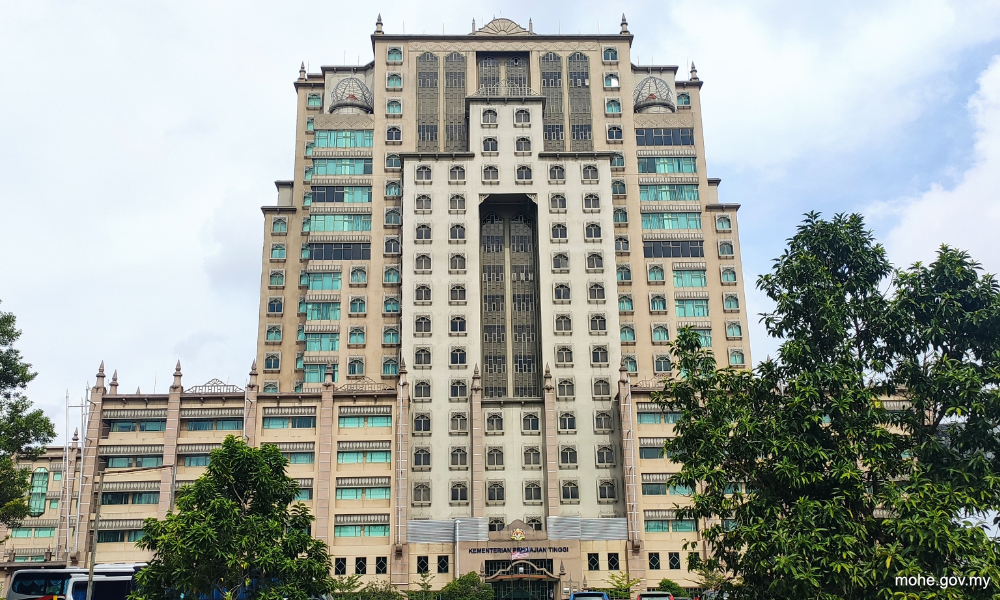
Higher Education Minister Zambry Abdul Kadir has criticised claims that between 30,000 and 60,000 students attended public universities through a “backdoor” channel.
According to Bernama, he said the allegations could shake confidence in public higher educational institutions while fuelling sentiments that spots for deserving students had been traded away for financial profit.
“The admission system for...
Higher Education Minister Zambry Abdul Kadir has criticised claims that between 30,000 and 60,000 students attended public universities through a “backdoor” channel.
According to Bernama, he said the allegations could shake confidence in public higher educational institutions while fuelling sentiments that spots for deserving students had been traded away for financial profit.
“The admission system for public universities in this country is implemented through a clear, transparent mechanism based on merit and the stipulated eligibility requirements,” he said in a statement today.
This is after PAS’ Jitra assemblyperson Haim Hilman Abdullah, who is also a former Universiti Utara Malaysia vice-chancellor, made the claims at a ceramah during the party’s campaign for the upcoming Negeri Sembilan state election.
In response to Haim’s June 13 speech, Zambry said several public universities have already lodged police reports over the claims.

“This action is not intended to suppress criticism or restrict freedom of speech, but rather to ensure that every allegation can be proven and addressed through the proper legal process,” he further explained.
Demanding proof to back the allegations, the BN secretary-general said the right to freedom of speech should not result in baseless accusations.
Backdoor ‘a known fact’
On Monday, the Higher Education Ministry said it is mulling legal action against Haim.
Bernama reported the ministry as saying that it was not the first time Haim had made such accusations, claiming that public universities were “selling places meant for our children to those with money” and tens of thousands of students had gained admission through a “backdoor”.
Yesterday, Haim responded to the ministry by telling it to “answer with data, not threats”, adding that he will not retract his allegations.
In a statement, the Kedah exco member claimed that the existence of “backdoor” channels was a known fact.
“Specifically, in a press statement dated Dec 25, 2024, the chairperson of the Committee of Vice-Chancellors and Rectors of Public Universities himself stated that admission through the open admission channel, or what I term as the ‘backdoor’ channel, involves around 11,860 students per year - one cohort or around 40,000 people for a four-year study period (bachelor’s degree),” he alleged.
On the mentioned date, RTM reported committee chairperson Ekhwan Toriman as saying that the “backdoor” had never existed in any public university admissions system.
He said that the number of students admitted through the open channel amounted to 11,860 out of almost 150,000 students - about 10 percent of the intake.

Critical programmes also have a student limit, he said, adding that courses that have reached the cap will not be offered through the open channel.
Support from across the aisle
In June last year, Haim’s Facebook page shared a TikTok video of MCA president Wee Ka Siong echoing the PAS lawmaker’s concerns on the open admission channel, which were raised in December 2024.
Wee said Haim’s warning that the growing use of the admission route could contribute to systemic inequality and disadvantage students from less privileged backgrounds was grounded in reality.
To support his argument, Wee cited figures from annual reports of Universiti Malaya, which showed a sharp rise in local student enrolment through the open-channel admission route between 2018 and 2022.
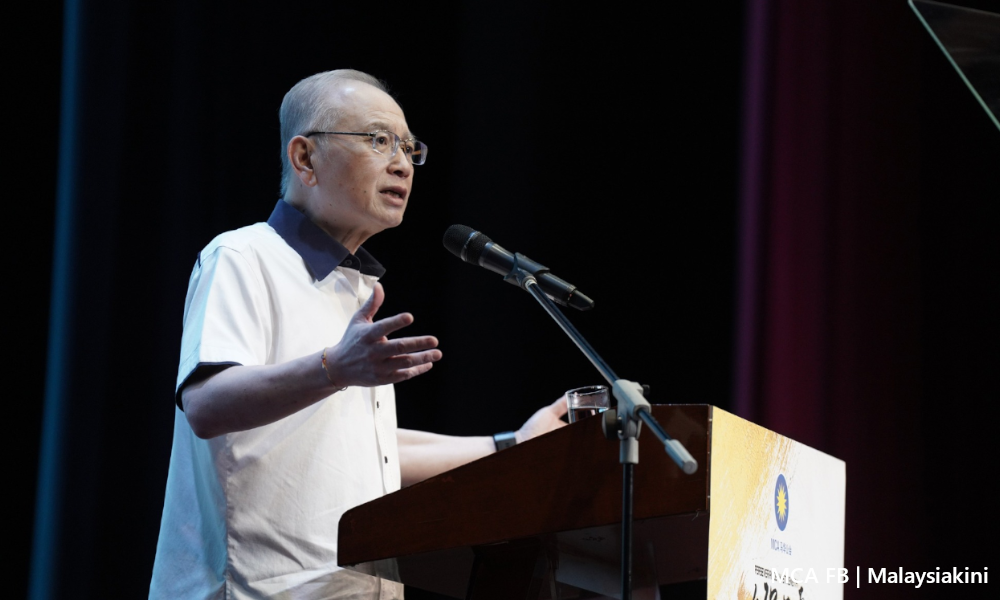
According to the data, admissions increased from 142 students in 2018 to 185 in 2019, 209 in 2020, 351 in 2021, and 399 in 2022.
Wee said the trend was worrying as it could allow students from wealthy families to gain easier access to public universities, potentially at the expense of academically qualified students from lower-income households.
Matter of equity
On Dec 26, 2024, Haim defended his claims, saying that the issue he raised concerned low-income students who meet the minimum admission standards yet fail to enrol for popular professional courses, including engineering, law, and accounting, due to intense competition and high merit scores.
According to the New Straits Times, Haim argued that places that should be filled through the merit-based admission system were instead being allocated to commercial-entry students, a practice he said disadvantages applicants from lower-income households.
To illustrate his point, he claimed a student with a CGPA of 3.90 could be denied admission if the programme’s merit cut-off stood at 3.95, despite exceeding the minimum entry requirement of 3.50.
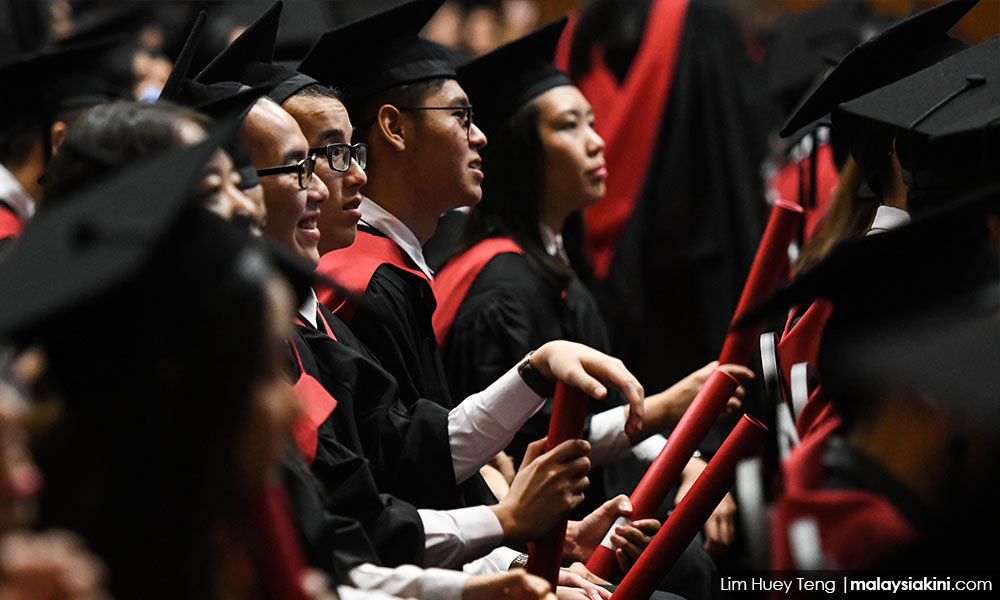
At the same time, he claimed students entering through the open channel could secure places with the minimum qualifying CGPA by paying much higher fees.
He also took issue with the disparity in tuition charges between the two groups, noting that mainstream students pay about RM1,300 per semester, while those admitted through the open route are charged more than RM4,200 despite having access to the same lectures, classrooms, and facilities.
Haim said this raises questions about equity, further contending that public universities’ reliance on commercial admissions as a source of revenue weakens the merit-based admission system.
He instead proposed that institutions establish dedicated campuses or separate divisions for commercial programmes, allowing them to generate income without affecting opportunities for applicants competing through the regular admission process.
Haim opined that such a model would better balance universities' financial needs with the principle of fairness in student admissions.
/file/publisher-c1a3f893382d2b2f8a9aa22a654d9c97/2026/01/c4eaa85d649c9f2dcb5e297e1b143c9f.jpg)
/file/publisher-c1a3f893382d2b2f8a9aa22a654d9c97/2026/05/a7d1ae5177e4f607fb37e2308b397be2.jpg)
/file/publisher-c1a3f893382d2b2f8a9aa22a654d9c97/2026/06/c6b7ed5a08d4bec01b4dee60a2b3d443.jpg)
/file/publisher-c1a3f893382d2b2f8a9aa22a654d9c97/2026/05/919ed855bac57d4ff02efd169a971efb.jpg)
/file/publisher-c1a3f893382d2b2f8a9aa22a654d9c97/2025/12/eed949972f688bdaaf61198a5624b488.jpg)
/file/976/ae07f4401f80af8af52678fa4e0d31c6.jpg)


Report this comment
Are you sure you want to delete this comment?
This action cannot be undone.