




BN heads for polls amid ethnic, economic woes
Prime Minister Abdullah Ahmad Badawi dissolved Parliament today to pave the way for snap elections which are expected to erode the ruling coalition's majority.
Prime Minister Abdullah Ahmad Badawi dissolved Parliament today to pave the way for snap elections which are expected to erode the ruling coalition's majority.
Abdullah's popularity has plummeted as the nation is beset by mounting racial tensions, unprecedented street protests, anger over rising fuel and food prices, and high crime rates.
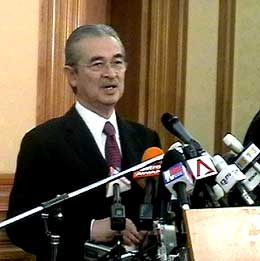 Announcing that the king had consented to dissolve Parliament, the premier indicated he did not expect a repeat of the 2004 landslide when the Barisan Nasional coalition seized 90 percent of parliamentary seats.
"2004 was a special election and it was extraordinary. I pray that BN will get at least two-thirds of the votes in the upcoming election," he told a press conference.
"I hope voters will understand the issues affecting our country objectively," he said, adding that the Election Commission would decide on the polling date.
Voting must be held 60 days after parliament is dissolved, but the government traditionally allows just a two-week campaign period, which would mean a ballot in early March.
Abdullah appealed for calm during the campaign in an apparent reference to a string of public rallies over the past few months which police have broken up with tear gas and water cannons.
"My hope is that during the voting, nothing untoward will happen - there will be no disturbances or trouble that will affect the voting process," he said.
Abdullah heads Umno, which leads the Barisan Nasional multi-racial coalition that holds 200 of the 219 seats in parliament. It has been in power since independence a half-century ago.
The Chinese-based DAP holds 12 seats, the fundamentalist Islamic party PAS has six and Keadilan, which is led by the wife of dissident former deputy premier Anwar Ibrahim, has one seat.
The government's term expires in May 2009 and some commentators say it is going to the polls early to ensure Anwar cannot contest. He was sacked and jailed in 1998 and is barred from politics until April this year.
Looking at PM's track record
In the next elections there will be 222 seats up for grabs due to the creation of new constituencies. The assemblies in the all states and territories, except Sarawak, will also be contested.
Abdullah's popularity rating has plunged from 91 percent when he took power to 61 percent last December, according to research firm Merdeka Center.
"I imagine they will do well but not as well as last elections," said political analyst and Umno-watcher Shamsul Amri Baharuddin from the Universiti Kebangsaan Malaysia.
"The last election was based on expectations - this one is based on his performance in the last four years," he said.
In 2004, the government rode a wave of optimism surrounding Abdullah, who had taken over the year before from veteran leader Dr Mahathir Mohamad, who ruled with an iron fist for 22 years.
However since then, the premier has been criticised as weak and unable to carry out key elections promises like ridding the country of corruption which plagues business and politics.
 PAS secretary-general Kamaruddin Jaafar said it was "disappointing" that the government had sidelined Anwar, but that the opposition parties expected to do well in the polls.
"I foresee that we will see a substantial swing towards the opposition, especially among the non-Malays, who are very unhappy with the economic situation, crime rate and the overall lack of direction that Abdullah's leadership has shown," he told AFP .
Abdullah has admitted that previously staunch support from the nation's ethnic Indians will likely melt away after unprecedented protests last year against discrimination at the hands of Muslim Malays.
Five Indian activists who organised the rallies have been jailed under draconian internal security legislation which allows for indefinite detention without trial.
DAP parliamentary opposition leader Lim Kit Siang condemned the election announcement, which falls during celebrations for Chinese New Year.
"I think it shows a disregard and insensitivity of the diverse cultures and religions in the country," he told AFP .


