


/file/publisher-c1a3f893382d2b2f8a9aa22a654d9c97/2026/07/0bc02c8d1a54bcb37d902ccc0e2d6786.jpg)

RCI: Governance failures, politics, 'creative accounting' led to Tabung Haji's financial crisis
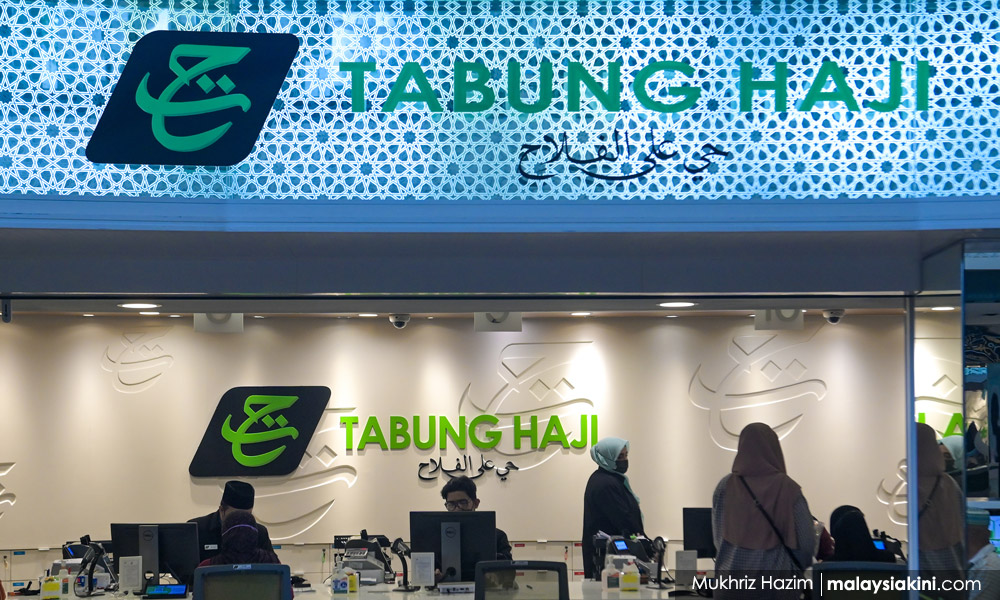
The Royal Commission of Inquiry into Lembaga Tabung Haji has identified serious governance failures, political interference, and questionable accounting practices that contributed to the pilgrimage fund’s financial difficulties between 2014 and 2020.
In its report, the six-member commission chaired by former chief justice Raus Sharif said weaknesses in the Tabung Haji Act 1995 gave excessive powers to the minister in charge of religious affairs, particularly over appointments to the fund’s board and senior management.
The absence of...
The Royal Commission of Inquiry into Lembaga Tabung Haji has identified serious governance failures, political interference, and questionable accounting practices that contributed to the pilgrimage fund’s financial difficulties between 2014 and 2020.
In its report, the six-member commission chaired by former chief justice Raus Sharif said weaknesses in the Tabung Haji Act 1995 gave excessive powers to the minister in charge of religious affairs, particularly over appointments to the fund’s board and senior management.
The absence of clear qualification and expertise requirements allowed active politicians to become involved in the institution’s management, undermining its credibility and influencing decisions over hibah payments and financial assistance.
The RCI panel also recommended amending the law to prohibit active politicians from holding leadership positions in Tabung Haji or its subsidiaries.
It also proposed specific selection criteria for board members, including relevant professional experience and expertise.
Wearing many, many hats
The report found that board members and senior executives frequently held positions as directors or chairpersons of numerous subsidiary companies.
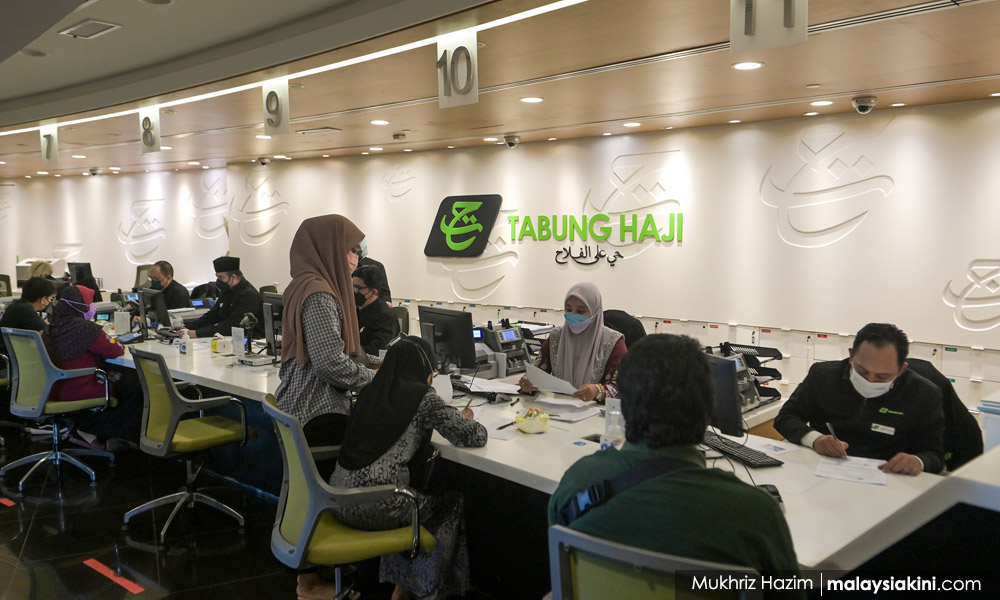
This divided their attention from their core responsibilities and created conflicts of interest, it said.
The report named Tabung Haji’s former board member and CEO, Ismee Ismail, who held positions in seven Tabung Haji subsidiaries and three more after his tenure ended in June 2016.
It also named another former board member, Johan Abdullah, who also served as the group managing director and Tabung Haji CEO from June 2016 to June 2018.
He was found to have held positions in 19 subsidiary companies.
Former board member Zukri Samat, who also served as the group managing director and Tabung Haji CEO between July 2018 and August 2019, was found to hold positions in four subsidiaries.
“The commission was informed by Zukri that he had relinquished those positions to avoid a conflict of interest while leading the management of Tabung Haji,” the report said.
Nik Hasyudeen Yusoff, who was a board member, group managing director, and Tabung Haji CEO between Sept 1, 2019 and May 5, 2021, was found to be involved in four subsidiaries.
The RCI found that Amrin Awaluddin, who has been serving as a Tabung Haji board member, group managing director, and CEO since May 6 to date, holds positions in three subsidiaries.
Rozaida Omar, who served as Tabung Haji’s senior general manager (finance) and group chief financial officer from August 2004 to April 2021 before being reappointed as general manager of its human capital department, also acted as its proxy representative in 21 subsidiaries during her tenure as senior general manager (finance).
Abd Kadir Sahlan, who was Tabung Haji’s chief investment officer from June 2010 to 2018, was found to be a board member in three Tabung Haji subsidiaries.
‘Creative accounting’
The RCI said Tabung Haji faced a serious financial crisis in 2017, which was aggravated by what it described as “creative accounting”.
Among others, the institution allegedly applied inconsistent impairment policies and failed to record substantial losses to support the payment of high hibah between 2014 and 2017, during which Baling MP Abdul Azeez Abdul Rahim was in charge, and Najib Abdul Razak was prime minister.
This included RM227.81 million in impairments involving subsidiaries that were not recognised in its accounts.

The practices contributed to a widening gap between Tabung Haji’s assets and liabilities, the report said.
No names were mentioned in the orders relating to the creative accounting.
The commission also criticised shortcomings in regulatory and audit oversight.
It said the auditor-general was not sufficiently assertive in auditing Tabung Haji’s financial statements, particularly over an “emphasis of matter” in the 2017 accounts that should have been treated as a serious case of non-compliance.
Bank Negara Malaysia’s supervision of the institution was also found to be inconsistent with the provisions of the Tabung Haji Act.
Loss-making investments
The RCI highlighted several investments that resulted in significant losses and recommended forensic audits.
These included investments involving PT TH Indo Plantations, TH Properties Sdn Bhd, and FGV Holdings Bhd.
The report said some investments were pursued under Tabung Haji’s ambition to become a “pillar of the ummah’s economy”, despite the institution lacking sufficient expertise in sectors such as large-scale plantations and property development.
It recommended that Tabung Haji concentrate on fund management and avoid high-risk or strategic investments outside its core competencies.
The commission also proposed dividing ministerial oversight of the institution.
Under the recommendation, the religious affairs minister would be responsible for haj operations, while the finance minister would oversee investments and fund management.
An independent body should also be established to advise the prime minister on appointments to the Tabung Haji board, the report said.
Private auditors proposed
The report recommended that Tabung Haji appoint private accounting firms instead of relying on the auditor-general to audit its financial statements.
It said hibah payments should only be approved based on completed and audited annual financial statements, rather than provisional or pro forma (provided as a matter of courtesy) accounts.
The RCI also proposed establishing a dedicated haj fund to manage haj-related investments under the supervision of the Securities Commission.

To address rising haj costs, the commission recommended increasing the minimum savings required for depositors to qualify for the pilgrimage.
It also said haj subsidies should be targeted only at depositors who genuinely require financial assistance.
The report called for forensic audits into previous investments and for disciplinary or legal action to be taken against board members or senior executives found to have committed wrongdoing.
The RCI concluded that Tabung Haji’s existing institutional structure should be maintained, but said its governance and operations required urgent and fundamental reforms to protect depositors’ savings and ensure its long-term sustainability.
The RCI panel also comprises former chief secretary to the government Samsudin Osman, RHB Group founder Abdul Rashid Hussain, Cariasean Research and Advocacy chairperson Munir Abdul Majid, Universiti Islam Antarabangsa Sultan Abdul Halim Mu’adzam Shah vice-chancellor Asmadi Mohamed Naim, and certified accountant Norsyahrin Hamidon.
The commission’s secretary was then-Jakim deputy director-general for policy Hakimah Yusoff.
It was also assisted by three conducting officers from the Attorney-General’s Chambers - Asmah Musa, Nazran Sham, and Budiman Lutfi Mohamed.
/file/publisher-c1a3f893382d2b2f8a9aa22a654d9c97/2026/06/17625cf0455b674e7dd03bb9ba22a473.jpg)
/file/publisher-c1a3f893382d2b2f8a9aa22a654d9c97/2026/07/47d840e9a7348bd1a114851f2922127b.jpg)
/file/publisher-c1a3f893382d2b2f8a9aa22a654d9c97/2022/02/b011e9f868902232241e308a884dea7a.jpg)
/file/publisher-c1a3f893382d2b2f8a9aa22a654d9c97/2026/07/ff67bb6e9ed039ca5890b4a08e49a39d.png)
/file/publisher-c1a3f893382d2b2f8a9aa22a654d9c97/2026/04/f57ef77adcf7163598e232a7f86d24ec.jpg)
/file/publisher-c1a3f893382d2b2f8a9aa22a654d9c97/2026/05/386d19bef2dc7e610f28c0ecfef49e4f.jpg)


Are you sure you want to delete this comment?
This action cannot be undone.