




Pakatan states urged to create elected area councils
The five Pakatan Rakyat state governments should introduce democratically elected area councils to promote vibrant local governance in residential neighbourhoods and encourage local participation.
The five Pakatan Rakyat state governments should introduce democratically elected area councils to promote vibrant local governance in residential neighbourhoods and encourage local participation.
Since the Pakatan states have shelved its third vote agenda (local council elections) for the time being, it would be ideal for the state governments of Penang, Perak, Selangor, Kedah and Kelantan to introduce democratically-elected local governance at the grassroots level to replace the ineffective and appointment-based village security and development committees (JKKK).
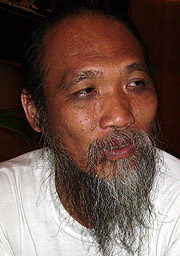 By conducting elections to elect the administrations of area councils, Malaysian Voters Union coordinator BK Ong (
left
) said the Pakatan state governments can nurture local governance based competency, accountability and transparency (CAT) at the lowest rung of society.
By conducting elections to elect the administrations of area councils, Malaysian Voters Union coordinator BK Ong (
left
) said the Pakatan state governments can nurture local governance based competency, accountability and transparency (CAT) at the lowest rung of society.
Penang Chief Minister Lim Guan Eng has been insisting that his administration is based on CAT governance.
In long run, Ong said these positive ethics would develop large number of quality citizens, who are aware of their neighbourhood rights, interests and benefits.
He said local democracy would also encourage residents to register as voters and acquire political administrative experience.
“The citizens will also get a first taste of the CAT governance that Pakatan Rakyat cherishes,” he told Malaysiakini.
Ong said residents in area councils could develop their local political governance based on CAT and democratic check and balance.
“This would also help political parties to unearth and develop local talents to lead and administer their political entities at a higher level,” said Ong.
Good beginning
Since the Pakatan Rakyat governments had yet to deliver on the electoral promise to introduce and promote local government election, he said democratically elected area councils, unlike the appointed JKKK, would be a good beginning to challenge the law discouraging local council polls.
He said the area council governing style could emulate that of Pancayat councils in India.
Indian Pancayats have judicial and arbitration powers within a limited scope of legislative means to execute legally and morally binding decisions on civil and criminal cases involving constituents.
For instance, the Pancayats could decide on civil disputes involving families, land and temples, as well as punish offenders found guilty of committing minor offences such as petty thefts, peeping tom activities, quarrels and fights within and between neighbourhoods.
Although Pancayats’ decisions are based on their own sets of rules and regulations, nonetheless their verdicts are often made after considering all aspects of collective obligations and demands of the neighbourhood community.
Their decisions are often executed to best serve the community, not individuals, interests, rights and benefits.
In India, constituents have utmost respect for Pancayat decisions and adhere strictly to them despite the limited judicial power.
The Pancayat’s limited judicial power also reduces the workload of police force and the court.
“Of course, there should be a legal mechanism to govern the Pancayats, and provide check and balance to its judicial powers,” proposed Ong.
Penang should lead
He suggested that area council boundaries, which would be smaller than local council constituencies, should be created based on proportionate populace representation vis-a-vis registered voters’ population.
This means each parliamentary constituency could have between 25 and 30 area councils with an average between 2,000 and 2,300 registered voters, which means Penang would have between 325 and 390 area councils.
The Penang government should take the lead since its ruling party, the DAP was vocal and explicit on its “Penang Leads” motto during the recent election campaign.
 The party called on Penangites to vote for the party to allow it to play a pivotal role to rejuvenate the state and restore its lost glory.
“Since the voters have answered its call, the DAP-led Penang government should take the lead,” said Ong, who has been highly critical over the DAP's latency to restore the third vote in the state.
DAP has always championed the cause of restoring local government elections.
Prior to the 12th General Election, Lim was among the most vocal voices calling for local council elections, which was suspended after the country's confrontation with Indonesia in 1965.
DAP also launched its `Restore the Third Vote’ campaign several years ago.


Are you sure you want to delete this comment?
This action cannot be undone.