




Motorists angered by new petrol prices
Motorists who turned up at petrol stations today to pay sharply higher prices to fill their tanks were uniformly furious over the decision to increase pump prices by 40 percent.
Motorists who turned up at petrol stations today to pay sharply higher prices to fill their tanks were uniformly furious over the decision to increase pump prices by 40 percent.
"We can do nothing about this government increase - we have to buy fuel, otherwise how can we go to work?" said 56-year-old engineer K Letchumanan.
"For my family it's not so bad as we have two incomes, but the poor people will suffer."
Prime Minister Abdullah Ahmad Badawi's announcement to increase petrol price yesterday triggered chaos across the country as motorists swamped fuel stations to fill up before the measure took effect at midnight.
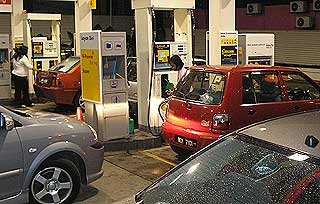 Traffic snarls brought streets to a standstill in Kuala Lumpur as up to 100 cars queued at each petrol station which still had fuel to sell, while many others said they had sold out and turned angry customers away.
Abdullah indicated that further increases were in the pipeline as Malaysia moves to completely abandon fuel price controls that would have cost RM56 billion this year - about a third of the national budget.
'How can I pay for transport?'
Aminah Rahmat, a 46-year-old streetside vendor who had set up her food stall outside a petrol station, said she could already barely manage on her monthly income of less than RM1,000.
"The government does not care for our welfare, that is why they have made such a huge fuel increase," she said.
"How can I afford to pay so much to transport my cooked food to my customers? I will go out of business."
Bus operators said that a third of companies may have to close down and lorry firm said their rates would have to rise, in a move that will trickle down to higher prices for goods and services.
Abdullah said the price hike could suppress economic growth and drive up inflation as high as 5.0 percent this year, from current levels of 3.0 percent in April.
As part of the subsidy reform, industry and power producers will be charged higher prices for gas from July.
Electricity tariffs will rise 18 percent for householders, and 26 percent for commercial and industrial users.
But there was good news for Thais who will now be allowed to buy fuel at border petrol stations after a three-day ban was lifted in view of the subsidy cut.
- AFP


