




Royal commission better than mass crackdown, says Amnesty
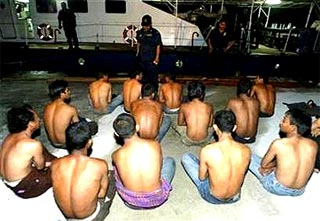
Amnesty International Malaysia has raised concerned over the planned crackdown on illegal immigrants in Sabah, an action which the human rights group described as “simplistic and arbitrary”.
Amnesty International Malaysia has raised concerned over the planned crackdown on illegal immigrants in Sabah, an action which the human rights group described as “simplistic and arbitrary”.
The rights watchdog warned that the plan to deport tens of thousands of illegal migrants could lead to serious human rights violations.
“We fear that the simplistic and arbitrary action ... by the federal government in addressing such a serious and complex issue will only elevate the ongoing human rights and humanitarian concerns in Sabah ... to a serious crisis level,” said K Shan, the organisation’s campaigns co-ordinator.
 Instead, Shan urged the government to immediately set up a royal commission to probe the matter for it to recommend “actions that are in compliance with human rights and humanitarian standards”.
Shan said the mass crackdown may affect thousands of asylum seekers and refugees who have fled from the conflict-ridden province of Mindanao in southern Philippine.
“We have also recorded a high number of stateless people and migrants who have lived in Sabah for more than 10 years including children. We are of the opinion that the federal government’s nilateral action may result in serious human rights violations.”
Politicians in Sabah have pushed the federal government to expel the illegals, saying they were a burden on the economy and pose a security threat by engaging in crime and the drugs trade.
Authorities say there are 130,000 illegal migrants in Sabah, but local politicians put the figure as high as 500,000 - many of whom work in the timber and plantations industries.
Even Malaysians were deported
A similar crackdown six years ago had resulted in panic and confusion that even Malaysian nationals were deported along with undocumented migrants.
 A 13-year-old girl who was suspected to be from the Philippines and later deported was found to be a Malaysian citizen.
“She was also reportedly raped in an immigration detention centre in Sabah state by three policemen,” lamented Shan.
In 2003, two police officers were charged with raping the girl after a bitter diplomatic row between Malaysia and Philippines.
Initially thought to be a Filipino, the girl's claim she had been raped at a detention centre in Sabah provoked outrage in the Philippines.
The girl, identified only as Angelica, was wrongly deported to the Philippines in 2002 along with thousands of Filipinos, but she was found to be a homeless Malaysian citizen living with illegal Filipino migrants in Sabah.
Mass deportations could lead to deaths
In addition, the process of mass deportations of undocumented migrants had also led to the deaths of children, due to dehydration and disease in Sabah’s detention centres.
Amnesty listed a number of concerns over the government’s action of mass expulsion:
- Risk of mass expulsion without examining the individual circumstances of undocumented migrant workers and stateless people.
- Risk of refoulement of asylum-seekers, refugees and others to their country of origin, where they may be at risk of serious human rights violations .
- Lack of guarantees that trials of individuals charged under the Immigration Act will be fully consistent with international standards for fair trials.
- Risk of cruel, inhuman or degrading treatment during arrest, detention and through punishment under the Immigration Act.
- Risk that all those detained, but particularly vulnerable groups, such as women and children, may suffer other human rights violations, including denial of access to adequate healthcare in detention.


Are you sure you want to delete this comment?
This action cannot be undone.