




Long road ahead for journalism ethics
Many journalists have hounded the Malaysian government ceaselessly on the on-going battle for media freedom. However it is the self-censorship tendency among journalists that was questioned at the ‘Roundtable on Protecting Media and Free Expression in Malaysia’.
Many journalists have hounded the Malaysian government ceaselessly on the on-going battle for media freedom. However it is the self-censorship tendency among journalists that was questioned at the ‘Roundtable on Protecting Media and Free Expression in Malaysia’.
Thirty participants from Philippines, Thailand, Indonesia and Malaysia ranging from seasoned journalists, activists and parliamentarians came together to discuss the initiation of media reforms in Kuala Lumpur yesterday.
Although the discussions were split into five major talking points, the event organised by Center for Independent Journalism, Malaysia (CIJ) readily returned to the core issues of the day - self-regulation and journalism integrity.
Luis V Teodoro from the Philippines set the ball rolling when he questioned why journalists should wait for media law reforms to initiate change.
Aggressive approach
Although the scenario in Malaysia does not traditionally draw parallel to the Philippines, journalists present nonetheless could take down a few pointers
“Even during the Marcos’ martial law era, we constantly had journalists who were testing the limits (to what they can do within the laws). They wrote what they believed in,” revealed Teodoro.
“There was a huge democratisation movement before martial law was declared in 1972. Therefore, despite (having a situation of) martial law, it was still a situation that induces political freedom,”
“Although some of them (journalists) were arrested, there was a continuous move to test the waters. Even the mainstream media which was under government regulation, was critical of the government through editorials,
"We need ethical professionals to sustain media freedom,” he added.
The ball was picked up by Andrew Khoo, co-deputy chair of the Bar Council human rights committee who echoed similar sentiments.
“Why do our journalists always stop short of asking the next critical question?,” he asked in reference to a recent article published in the Star, the only daily to carry a story on Standard Chartered Bank suing a Malaysian royal family member for breach of contract.
“They had revealed all the details but stopped short of naming the royal family member who was involved. They (journalists) almost always seem to stop from asking the next obvious question,” he lamented.
“There are no laws that limit them but it is the self-imposed censorship that journalists have imposed on themselves. There seems to be a shift in thinking among journalists as a whole,
“We need an aggressive approach on reporting, to push on and test what the limits are,” he said.
But there were journalists who shot back by saying that even when journalists do ask the critical questions, these questions are not reflected in their stories as they are chopped off in line with editorial policies.
We are free, so what now?
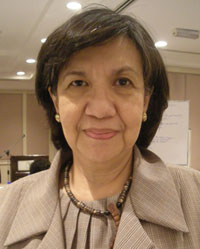 The ethics of journalists were drilled even further when another seasoned journalist from the Philippines, Melinda Quintos spoke on self-regulation.
“The euphoria of political freedom is such that you think everything will fall into place. But freedom itself does not ensure that everything will unfold rightly,
Quintos related her experience when laws were amended and media freedom was clinched after the imposition of martial law in 1972.
“Once we had experienced freedom, we were not going to let the government tell us how we should run our newsroom.
But when the licensing system was dismantled, almost anyone could open a newspaper or a radio station,” she said.
“So how do we keep the government off our backs? We needed self-regulation to prevent press abuse and to promote public service”
A resemblance of self-regulation achieved in Thailand and Philippines indicates that total chaos will not ensue when media freedom is attained, as feared by certain quarters in Malaysia.
“A few examples of self-regulation mechanism that we use are journalism review, citizen press council, press ombudsman and press associations,” Quintos said.
“We should move away from the hunger for 24-hour news and expand on issues of democracy,” she asserted.


Are you sure you want to delete this comment?
This action cannot be undone.