




MCA in business - 1968 to 2008
Founded as a welfare organisation in 1949, principally to help Chinese Malayans settle into new villages during the colonial period, MCA went fund-raising around the country.
They were too many poor Chinese who needed financial help and the MCA was their ‘knight in shining armour.’
Founded as a welfare organisation in 1949, principally to help Chinese Malayans settle into new villages during the colonial period, MCA went fund-raising around the country.
They were too many poor Chinese who needed financial help and the MCA was their ‘knight in shining armour.’
Since then, this second-biggest Barisan Nasional component party has grown by leaps and bounds.
MCA as a political entity today is rich with an estimated worth of some RM1.6 billion in assets ranging from business investments, landed properties, commercial buildings, and ownership in newspapers and a broadcasting station, to educational colleges scattered throughout the nation.
Incorporated in 1977, Huaren Holdings Sdn Bhd, the party’s financial arm in 1979 acquired 67.35 percent stake in Star Publications (M) Bhd with an initial investment of RM4.6 million or paid out capital of RM9.6 million. Today, MCA’s investment of about 40 percent in Star is now worth some RM1 billion in share ownership at market value.
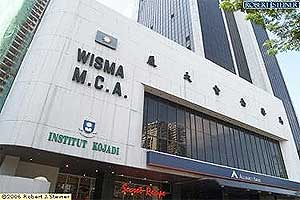
Wisma MCA which houses the party headquarters was built during Lee San Choon’s tenure as president (1974 to 1983). The building has now ballooned from RM38 million in construction costs to a current market value worth RM120 million.
Ka Ting’s ‘debt-free’ legacy
A party insider opined that current president Ong Ka Ting who will be stepping down on October 18 should be attributed a deserving legacy for enabling the MCA to achieve a ‘debt-free’ status for the first time.
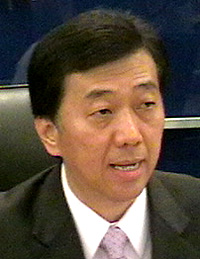 “Wisma MCA is also now fully and wholly owned by the party,” central committee member Wong Mook Leong said.
Despite the party’s clean bill of financial health, a small group calling itself the “Save MCA Campaign” has questioned the party central leadership for hastily setting up [with the intention to approve] a proposed Central Board of Trustees (CBOT).
The group argued that the move is a show of disrespect to the newly elected central delegates who in turn will be electing a new central leadership on Saturday (Oct 18).
Deputy president Chan Kong Choy reasoned that the CBOT comprises a professional team and a panel of advisers, asking “what’s wrong about this, the concept of the proposal has been discussed and deliberated over a period of one year.”
Theng Book, spokesman of the ‘Save MCA’ group claimed that the out-going central committee is comparable to a “care-taker government” adding, “that it is not right for the out-going president to make such an important decision or imposing a decision on an incoming leadership.”
“If the current central leadership insists on going ahead with the move (approving the CBOT), we will urge the delegates not to vote for those who had given their support (those who are re-contesting central committee seats) to the proposal, he added.
Mook Leong felt it was time for the incoming leadership to exercise greater transparency and accountability in handling its financial and investment management more professionally.
“I am probably the longest serving central committee member having sat through the tenure of five presidents including Ong Ka Ting and watched its changing fortunes.”
“I have witnessed how the party almost went bankrupt, owing millions to banks in the 80s,” Mook Leong recalled.
Saving Wisma MCA
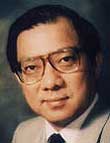 In 1987, MCA’s financial fortunes took a turn for the worse following the collapse of the cooperative movement with the arrest of Tan Koon Swan (over the Pan Electric Industries crisis) and two other party leaders charged with criminal breach of trust in connection with the demise of the MCA-sponsored saving cooperative (Komuda).
At that time, 24 deposit taking cooperatives had its assets frozen by the government because of liquidity problems arising from poor management and over-extended investments.
Compounded by the cooperative problems, the party also had to institute a loan scheme to save Wisma MCA. The party leadership had to organise a nation-wide fund-raising walkathon with the help of party branches and also launched a life-membership campaign.
Looking back, Mook Leong said party leaders should have handled the financial problems in a more transparent and professional manner.
This was also mentioned in Edmund Gomez’s publication titled, “Political Business-Corporate Involvement of Malaysian Political Parties” on the take-over of Multi-Purpose Holdings by Kamunting Tin Dredging Corporation Bhd.
 Gomez wrote, “Despite Kamunting’s indirect links with Umno treasurer Daim (Zainuddin)and in view of the MCA’s ostensible reason for rejecting the Hume (Industries) offer, it was therefore surprising that the MCA president (Ling Liong Sik) welcomed the Kamunting bid, describing it as the white knight.”
Ling was instrumental in disposing MPHB, four of the latter’s listed companies which included Malaysian Plantations, Bandar Raya Developments (property development), Magnum Corporation (Gaming) and Dunlop Estates.
“The nature of some of these transactions lent weight to accusations that an attempt was being made to strip MPHB of its most important assets. Denying these allegations, Kamunting directors argued that MPHB’s restructuring exercise was to divest the company’s involvement in plantations, trading and shipping, and to concentrate its activities on gambling, property development and financial services.” ( Star - Feb 5, 1990)
It was years much later that former president Tan Koon Swan privately lamented on Ling’s move to dispose MPHB, saying that “he (Ling) could have only sold Malaysian Plantations to resolve MCA’s financial problems, and there was no need to dispose all”.
Mook Leong also stressed the point that it was time for the party to institute reforms in financial management to stop rancorous bickering between MCA leaders over the handling of businesses owned by the party during times of leadership instability.
 “In the 1990 MCA power struggle, a former vice-president Kok Wee Kiat alleged that Dr Ling Liong Sik had acted on his own when he rejected Hume’s bid for MPHB in favour of Kamunting. According to Wee Kiat, Kamunting had since been asset-stripping MPHB,“ Gomez wrote.
Ling argued that Kamunting provided the best deal for KSM depositors who eventually opted overwhelmingly for cash.
Roller coaster pattern
Indeed, the changing fortunes of the party’s financial arm had seen a roller coaster pattern.
“Company records indicated that Huaren Holdings in 1985 reported accumulated losses of RM9.32 million and by 1987, its accumulated losses almost doubled at RM17.3 million,” wrote Edmund Gomez.
“In an attempt to cut its losses, Huaren Holdings reduced its stake in Star Publications to 58 percent,” he wrote. In 1992, Huaren Holdings lost control of Tong Bao when it sold for an undisclosed sum its 100 percent equity in Malayan Thung Pau Daily News to an obscure company, Stock Trade Sdn Bhd ( Star , July 8, 1992).
In fact, Mook Leong said it was fortunate that the leadership was advised not to sell the entire stake of Star Publications during the party’s hard times to save its own building.
“Reforms are necessary given the unpredictability and volatile nature of the world economy. That should be an important reason to engage more professionalism in the handling of the party assets,” he concluded.
Perhaps, by not selling the Star Publication was Mook Leong’s best advice in his long tenure in the central committee. The company turned out to be the “golden goose” that has helped the party immensely return to the black.


Are you sure you want to delete this comment?
This action cannot be undone.