




Dr M wants more gov't, less market
Former Prime Minister Dr Mahathir Mohamad has chosen Djibouti, the capital of Somalia from which in recent days to press home his favourite theme that more government, less market, was the key to managing the economy.
Former Prime Minister Dr Mahathir Mohamad has chosen Djibouti, the capital of Somalia from which in recent days to press home his favourite theme that more government, less market, was the key to managing the economy.
 The idea of the markets regulating themselves has not worked, pointed out Mahathir. He cited the ‘pyramid investment scheme’ operated by Bernard Madoff as a prime example of what can go wrong in the economies of the developed world.
"The pyramid scheme operated by Madoff paid high dividends regularly," noted Mahathir in his talk, ‘Global Financial Crisis: How should a developing Islamic country cope with the challenges’.
"That Madoff was possibly taking the money invested with him to pay the dividends was never raised. And so Madoff lost US$50 billion of the investors’ money before he was discovered."
Dr Mahathir spoke on Jan 30 but his speech was only made available to Malaysiakini yesterday via email. He had several speaking engagements in Djibouti after earlier visiting the United Kingdom and Riyadh in Saudi Arabia.
The former prime minister reiterated his belief that the first casualty of the current economic crisis is the belief that markets should regulate themselves and that the government should not interfere.
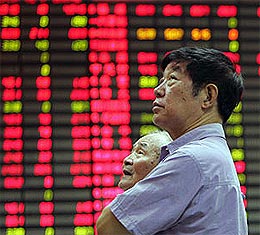 "The economies of the west are so much controlled by the rich who have been pushing for schemes for making money much more quickly. Towards this end, they came up with the idea of less government, of the markets being regulated by the markets themselves," said Dr Mahathir.
"I must admit that I cannot understand many of these get-rich-quick schemes. But they were actually approved and promoted by the people who were supposed to regulate the financial market. The Federal Reserve Bank of the US under Alan Greenspan actually facilitated these schemes."
He said the ‘making money from money’ phenomenon soon degenerated into an obsession with capital gains, short-selling, investing in hedge funds and derivatives, trading in currencies and extending loans, resulting in the sub-prime meltdown in the US recently.
The result has been a study in contrasts between the rich countries who are in deep economic crisis because they had the money to gamble and the poor countries "who appear to be less affected by the crisis because they did not have the kind of money the former had".
Even so, the poor countries don’t get off that easily because they are dependent on the markets of the developed world which are either not buying or buying less and paying even less.
‘Get rid of gamblers’
Dr Mahathir cites Malaysia as an example of a less developed economy which exports more than US$100 billion worth of manufactured goods and raw materials each year.
"The exports have shrunken as the rich countries of Europe and America, which normally take 40 percent of our exports, have reduced their imports. Already, their bankrupt banks are not able to issue letters of credit for the importers," observed Dr Mahathir.
"National reserves held in foreign currencies will fall in value just when the economies of the poor countries are declining and the reserves are needed for sustaining the economy. It is also likely that the currencies of the poor countries will depreciate, making them even poorer."
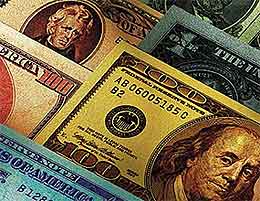 The US dollar is a double-edged sword, warned Dr Mahathir, noting that poor countries lose the value of their reserves and exports when the currency depreciates and have to pay more for imports when the currency appreciates.
The solution, according to the former premier, is diversification of national reserves away from the US dollar and a greater reliance on gold as a standard for determining export and import prices.
Dr Mahathir also does not see the bail-out and stimulus packages in the west as effective "since they are still in a state of denial over the actual cause of the crisis and the proper remedies to be applied".
Instead, data made available by the rich economies themselves suggest a fall-back on all sorts of confusing economic terms that cannot be easily understood by average poor country experts, "especially so since the poor countries themselves do not indulge in the kind of dubious activities that they (the rich) have invented for their own benefit".
"They (the rich countries) are not going to turn around the economy any time soon. So, we and the rest of the world can safely conclude that the crisis will not end quickly. We will have to live with this crisis for a long time and if we want to cope with it, we must be prepared for the long haul," advised Dr Mahathir
"The world must work together to come up with monetary and financial systems that will get rid of the gamblers and will not work in favour of the rich countries only. The poor must have a say in any new system."


