




Constitutional monarchy revisited
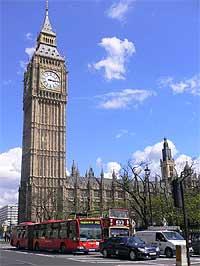
At the time of Independence, our system of parliamentary democracy was fashioned very much after the Westminster model. Like many other political institutions in Malaysia, the institution of our constitutional monarch also has its historical root in Europe, especially in the evolution of that Mother of all parliaments, the House of Commons.
To understand and unravel many of the unfolding dramas in Perak and elsewhere nowadays, perhaps we have to visit again 17 th century Europe, especially the evolution from absolute monarchy to constitutional monarchy in England. That big step in human history took the toll of three civil wars in that country, and the head of an English monarch, culminating in the Glorious English revolution of 1688.
At the time of Independence, our system of parliamentary democracy was fashioned very much after the Westminster model. Like many other political institutions in Malaysia, the institution of our constitutional monarch also has its historical root in Europe, especially in the evolution of that Mother of all parliaments, the House of Commons.
To understand and unravel many of the unfolding dramas in Perak and elsewhere nowadays, perhaps we have to visit again 17 th century Europe, especially the evolution from absolute monarchy to constitutional monarchy in England.
That big step in human history took the toll of three civil wars in that country, and the head of an English monarch, culminating in the Glorious English revolution of 1688.
Even before this turbulent century, the personal will of the king in England for absolute rule over his realm had been limited by the Magna Carta, a legal Cha rter issued in the year 1215.
Personal properties
The Magna Carta required King John of England to proclaim certain rights for the nobles and barons, requiring him to follow certain legal procedure and accept that his royal will could be bound by the law. It gave birth to the famous legal instrument the writ of habeas corpus that would protect the king’s subjects from arbitrary arrest. Raja Petra Kamarudin was freed upon such an application for writ of habeas corpus.
Nevertheless, Europeans monarchs in early 16 th century still treated their states and their subjects as personal properties. Likewise, they were revered in personal terms, irrespective of their personal conduct, wisdom, or courage. Any criticism of the monarch or even the slightest sign of disrespect was labelled as treason punishable by banishment or death. (Does that sound familiar in modern day Malaysia?)
In the early 17 th century, the monarchy had been transformed into an office of state, embodying personally their nation. That was the beginning of the proto nation-state in Europe.
In exercising their royal prerogative to rule their kingdom in any way he saw fit, the English king relied on his divine right to rule. The king had been annointed by God’s divine will to be his representative on earth to look after the subjects. In a country where all the people were Christians of one kind or another, this was a powerful argument.
But the kings in their newfound glory also suffered many setbacks. They had to find a lot of money, to maintain a standing army for the constant warfare with neighbouring states, to fund a luxurious life style in the palaces, and to hire and pay an ever expending army of government functionaries to run his realm. He had to levy taxes, usually on those least able to pay them, the towns tradesmen, the farmers, and the artisans.
In 1620 and 1641, there were two droughts that sent the poor people of England to the brink of a famine. Elsewhere in Europe, the rising price of bread was often the cause of many riots, culminating in the storming of the Bastille and the bloody French Revolution of 1789.
In 1640, a Scottish army had successfully invaded England under the rule of Charles I. An army had to be raised and a war had to be fought, so the king summoned the Long Parliament to seek money for the war efforts.
The Long Parliament sat for a long time, and saw little urgency in helping King Charles I. Instead, they were trying to wrestle away some concessions from his royal power. The king grew impatient, and so he left London and headed north, where, in 1642, he raised his royal standard and declared the leaders in Parliament rebels and traitors. England was plunged into a civil war.
Declaration of Rights
After three years of inconclusive war, the Parliament finally triumphed in 1645, and King Charles was captured. He was finally trialled and executed in on 30 Januar y, 1649. The monarchy and the House of Lords were abolished, and England was declared a Commonwealth. It was a time of very intense instability for the country.
 After a while, the ruling class discovered that they could not rule the country without their king, and so Charles II (1649-1685) took the throne in 1660.
Parliament emerged as the powerful force within the Crown’s government, as royal power over taxation and religion was curtailed.
After a while, the ruling class discovered that they could not rule the country without their king, and so Charles II (1649-1685) took the throne in 1660.
Parliament emerged as the powerful force within the Crown’s government, as royal power over taxation and religion was curtailed.
England was to be a reformed Protestant state. But the tension between the palace and the House of Commons persisted.
This tension came to the fore when James II came to the throne in 1685. A declared Catholic, he tried to use his power of appointment to foil the constraints that Parliament had imposed upon him.
He appointed Catholics to top positions in the military and in the central government to usurp the power of the Parliament. He dismissed judges. He even tried to pack the Parliament with his supporters.
This was too much for the governing class, so they negotiated with William of Orange in Holland, husband of Mary, King James’ eldest daughter. In 1688, William landed in England with a small force.
James II fled to France, and the throne was declared vacant. So William and Mary were proclaimed King and Queen of England. The transition was achieved without much bloodshed, and the event came to be known as the Glorious English Revolution.
The Declaration of Rights was presented to William and Mary before they took the throne. The Declaration re-asserted the fundamental principles of constitutional monarchy as they had developed in England in the previous 50 years.
Security of property and the regularity of Parliament sittings were guaranteed. The Toleration Act granted religious freedom to nearly all groups of Protestants. The liberty of the sub jects and the rights of the sovereign were to be balanced.
The great theorist of the Revolution was the philosopher John Locke, who developed the theory of the Social Contract to legitimate the power of the sovereign to rule, to replace the old theory of the King’s Divine right to Rule.
In the case of England, the sovereign is a symbolic constitutional monarch sitting at the head of a council of people’s representatives operating according to the rule of law.
People would obey laws and all political authorities because when they emerged from a “State of Nature”, they sort of arrived at a collective contract in which power was given to a sovereign in return for guarantee of personal security and ownership of property.
If that contract was broken, the n the legitimacy of power of the ruler would be lost.
Exemplary Queen Elizabeth II
 In the case of England, the institution of constitutional monarchy has worked well, and despite her domestic problems, Queen Elizabeth II has been exemplary in the discharge of her duty, as successive prime ministers who have served under her reign would testify.
(I watched her being interviewed on TV once, and could not help admiring her when she commented at how fast her prime ministers aged in office. That is the touching human side to Her Majesty.)
Even so, there had been calls in the UK for the monarchy to be scrapped altogether. In Australia and Canada, there are more than a few people who do not see any sense in retaining the Queen as the constitutional head of their respective state.
I have read historians who argue for the legitimacy of the monarchy in Malaysia as well. The history of the Malay Sultans goes back five centuries.
Certainly, in the Umno Malay nationalist narrative, the institution of the sultan is at the core of their collective memory as an ethnic nation. The sultan is vital for the self identity of the Malay ethnic community. I can understand and empathise with that.
But the institution of constitutional monarchy in Malaysia has been evolving in the past half century, just as the Malay self-identity has also evolved and become much more diversified and modernised than in the early stage of our Independence.
 In his very learned piece on
Malaysiakini,
the former Court of Appeal justice
NH Chan
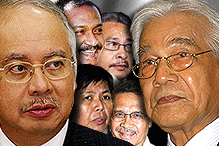
has argued how important it is for the Malaysia rulers to show justice in the discharge of their constitutional duties.
In his very learned piece on
Malaysiakini,
the former Court of Appeal justice
NH Chan
has argued how important it is for the Malaysia rulers to show justice in the discharge of their constitutional duties.
Justice must not only be done, but it must be seen to be done. The sultans must not be seen to be biased in the exercise of their very important discretionary powers. The event in Perak will be discussed for decades, among both legal practitioners and laymen alike.
Meanwhile, Perak is locked in a political impasse, and I wonder how the state government can lift itself from this paralysis. Again, I agree with many commentators and ordinary people both inside and outside Perak, that the only solution to the whole charade is to hold a fresh state election soon.
Unfortunately, given the waning appeal of Umno and Barisan Nasional as a whole, a state election in Perak is not going to happen any time soon,
It all goes to show how we Malaysians have arrived at these interesting but dangerous days!
SIM KWANG YANG was MP for Bandar Kuching from 1982 to 1995. He can be reached at kenyalang578@hotmail.com.
Related commentary


Are you sure you want to delete this comment?
This action cannot be undone.