




Data on Sabah human trafficking shows tragic suffering
Malaysia is not only a destination country but a source and transit country for trafficked persons including those forced into prostitution, sex slavery, sex vacations, labour, domestic servitude and adoption, among others.
Malaysia is not only a destination country but a source and transit country for trafficked persons including those forced into prostitution, sex slavery, sex vacations, labour, domestic servitude and adoption, among others.
This is the picture that re-emerges from preliminary estimates in an on-going church study which indicate that there are somewhere between 30,000 and 32,000 trafficked persons in Sabah alone based on the official figures of 600,000 to 800,000 migrant workers in the state.
“Women and girls are brought in from the Philippines, for instance, to Labuan and then to Kota Kinabalu, Kuching and Kuala Lumpur,” said Tenaganita’s Anti-Trafficking in Persons Programme Officer, Lee Soo Choo.
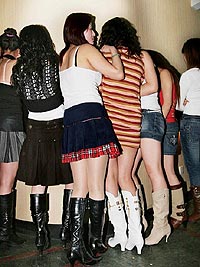 “Young girls are trafficked for prostitution not only in brothels but also in karaokes, KTVs, golf clubs, resorts, condominiums, 5-star hotels, restaurants and massage parlours.”
“Due to raids, traffickers are using catalogues for their customers while girls are sent by taxis to hidden locations.”
Tenaganita is collaborating with the church group in Kota Kinabalu, the Archdiocesan Human Development Committee (AHDC), on the human trafficking study. Tenaganita has also been conducting field assessments since December last year of Indonesian migrant workers working as domestics and in plantations and factories in Kota Kinabalu and Tawau.
AHDC is also working closely with the Jakarta office of the International Catholic Migration Commission (ICMC) on the study.
Five urban centres are being covered in the study viz Kota Kinabalu, Keningau, Sandakan, Tawau and Lahad Datu and a clearer picture is expected to emerge when it is completed.
“The study is part of the Cross-Border Counter-Trafficking Project 2008-2009,” said Dominic Lim who heads the AHDC. “Tenaganita’s field surveyors have gone down to the ground to interview migrants from neighbouring countries.”
'Held in slave-like conditions'
Included in the AHDC study is data from an ICMC assessment from August last year in Nunukan, an Indonesian island off Tawau.
The assessment found that 5.1 per cent of a random sampling of 360 persons interviewed, 80 per cent women, were held in “slave-like” conditions at least until their debts were settled, salary deductions as a punitive measure was common and violence was employed when workers tried to leave.
The assessment did not cover women forced into brothel-based prostitution or those working in the peripheries of the commercial sex sector such as beer promotion girls, bar hostesses, karaoke singers and masseurs.
“Trafficking must be distinguished from smuggling of migrants,” said ICMC senior manager, Abhijit Dasgupta, who oversaw the Nunukan assessment. “While trafficking may include a complex organisation of contracts, smuggling of people refers solely to unlawful border-crossing services.”
“Domestic workers, women in prostitution, plantation workers and bar hostesses in Malaysia carry higher risks of being trafficked.”
This is a view endorsed by the mother-founder of the Bukit Harapan home in Kota Kinabalu, Mama Anne Keyworth.
“I know a Filipina married to an African and they recruit Filipinas as young as 14 with the promise of good job opportunities with lucrative earnings in Sabah,” said Keyworth. “Instead, these girls were cheated and forced to work as prostitutes in Labuan.”
“Another couple with links to an international syndicate would choose the best-looking Filipinas for clients abroad.”
 Keyworth has also come across a Filipina, the second wife of an aide to a local politician, who helps to get the passes of Filipinas extended in Labuan before facilitating their travel to Kuwait and Saudi Arabia for vice.
“It is so disappointing that the authorities allow this Filipina’s recruitment agency to extend the permits of these women so that she can recruit them for business in the Middle East,” said Keyworth.
She has apparently since passed all the information she has to the Immigration Department in Kota Kinabalu and the Sabah Commissioner of Police, Noor Rashid Ibrahim, who “has been very co-operative”.
Forced into prostitution
Flesh trading and drugs go hand-in-hand, points out Keyworth, whose home provides temporary shelter for victims of human trafficking.
Keyworth adds that there is also a local dimension to the human trafficking problem.
“Recruitment agents or their runners would look for potential victims in Keningau, Tambunan and Tenom,” she said. “These agents would even see the parents to convince them of good job opportunities for their children in Singapore.”
“There are also agents who convince the parents to pay for the airfare, passport and work permits. Once their children reach Singapore, another group will take over and force them into prostitution. They are well-guarded and their earnings seized from them.”
While there are numerous estimates on the number of documented and undocumented migrant workers in Sabah and Malaysia, there are no estimates on TIP (Trafficking in Persons).
The placement of migrant workers are merely categorised under the formal sector viz construction, agriculture and plantation and informal sector i.e. domestic work, restaurants, cafes and karaoke bars.
The best estimate the AHDC has is a 2003 report by the Indonesian Ministry of Women’s Empowerment which claimed that nearly 5,000 Indonesian women have been trafficked for prostitution to Sabah alone.
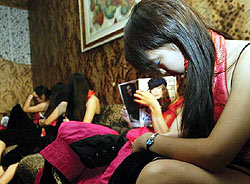 Last year, Tenaganita rescued 119 foreign girls from forced prostitution, of whom 62 were found in Sabah and another 19 in Sarawak.
The girls were rescued from Kota Kinabalu, Labuan, Sandakan and Keningau in Sabah and Limbang in Sarawak,
Overall Indonesian estimates, from the Ministry of Manpower and Kopbumi (Consortium for the Defence of Indonesian Migrant Workers), put documented and undocumented Indonesian workers alone in Malaysia at between 1.5 million and 3.5 million.
Malaysia passed the Anti-Human Trafficking Bill in 2007. The Act was gazetted in July 2007 and enforced at the end of February last year. Under the law, those convicted are liable to a minimum three years jail, not exceeding 20 years in jail and may be fined anything between RM50,000 and RM 500,000.
So far, only two persons have been charged. This includes one whose case has not been heard yet and another who has been jailed for eight years.
Malaysia is also a party to the UN Convention against Transnational Organised Crime. The convention has two important protocols on human trafficking


Are you sure you want to delete this comment?
This action cannot be undone.