




Learn to conserve energy before going nuclear
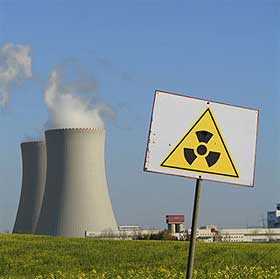
Malaysians need to adopt a culture of conserving energy before considering nuclear power, said Centre for Environment, Technology and Development of Malaysia (Cetdem) executive director Anthony Tan.
Malaysians need to adopt a culture of conserving energy before considering nuclear power, said Centre for Environment, Technology and Development of Malaysia (Cetdem) executive director Anthony Tan.
Contacted by Malaysiakini for his view on the Nuclear Energy Conference that will be held at Armada Hotel in Petaling Jaya on March 22, Tan was of the opinion that Malaysia has not fully explored ways to maximise energy usage in the country.
 “If we can conserve even just between 5-10 percent of national energy usage, there would be no need to construct any new power stations in Malaysia,” he said.
Furthermore, he added, the reserve energy capacity in Malaysia is 25 percent of total output, which is excessive compared to the usual rate of approximately 15 percent in most countries.
“At one point, our national reserve energy capacity even rose to 40 percent after the nationwide power failures in the late nineties.
“We cannot pursue high-risk energy options such as nuclear power when we are not even able to consume energy efficiently,” he said.
The conference, jointly organised by Cetdem and Physicians for Peace and Social Responsibility (PPSR), will question whether nuclear power is a necessity in Malaysia.
It will cover issues such as the real cost of nuclear energy and waste disposal, the subsidies that will be needed to make nuclear energy economically feasible, the environmental dangers and health risks resulting from human error and terrorist attacks, as well as the risk of nuclear weapons proliferation.
“A very strong point of contention in the nuclear energy debate was raised after fuel prices shot up last year,” said Tan.
Malaysia, currently a nett exporter of petroleum, will become a net importer instead by the year 2011.
As such, there were views that it was not possible for Malaysians to continue consuming fossil fuel energy if fossil fuel prices remain sky-high.
However, Cetdem believes that it is precisely because oil prices are disproportionately subsidised that Malaysians have not learned to conserve energy.
Environmental and health dangers
Meanwhile, Tan also stated that the environmental and health dangers of nuclear energy would offset its supposed advantages in cutting carbon dioxide emissions in the long run, and added that there were little economical benefits as well.
“Thailand, Singapore and Vietnam have also announced that they will be going nuclear, so there are no prospects for exporting nuclear power in the region,” he said.
 Among the speakers that will be featured at the conference are renowned environmental activist Gurmit Singh, researcher Dr Mark Diesendorf, CEO of TNB Che Khalib Mohd Noor, political analyst Bunn Nagara and Shell Malaysia chairperson Saw Choo Boon.
The conference will also be attended by five representatives from the Malaysian Meteorological Department (MMD), government and private sector public policy makers, academics, researchers and NGOs.
In its invitation brochure for the conference, Cetdem also noted that International Atomic Energy Agency (IAEA) reported that worldwide nuclear energy usage has actually declined in 2008 by two percent despite global hype over nuclear energy as the choice energy source of the future.
On Jan 17, 2008, Malaysia ratified the Comprehensive Nuclear-Test-Ban Treaty (CTBT).
On June 21, 2008, Deputy Prime Minister Najib Abdul Razak said the government was willing to explore the use of nuclear energy but not before exploring alternative sources such as solar and hydro energy.
The only nuclear reactor in Malaysia was built in 1981 and is managed by the Malaysian Nuclear Agency, formerly known as Mint (Malaysian Institute for Nuclear Technology Research).
The 1Megawatt reactor is a small one and has been in operation since 1982 as a testing facility.


Are you sure you want to delete this comment?
This action cannot be undone.