




M'sian indies: The future of story-telling
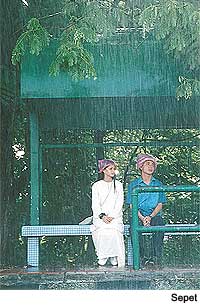
 Malaysian independent filmmaking has been hitting the news recently. All local media are scrambling to get a piece of the cultural pie, only belatedly realising the newsworthiness of the indies. Low-budget indies like
The Big Durian, The Beautiful Washing Machine, Sanctuary
and
Sepet
are winning awards and honourable mentions in festivals abroad, beating out big budget productions like
Puteri Gunung Ledang
.
Malaysian independent filmmaking has been hitting the news recently. All local media are scrambling to get a piece of the cultural pie, only belatedly realising the newsworthiness of the indies. Low-budget indies like
The Big Durian, The Beautiful Washing Machine, Sanctuary
and
Sepet
are winning awards and honourable mentions in festivals abroad, beating out big budget productions like
Puteri Gunung Ledang
.
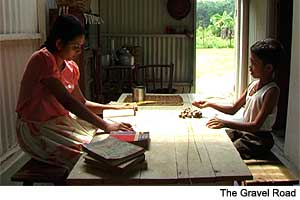
Some were screened at the GSC-MidValley late last year: Visits: The Hungry Ghost Anthology , Ng Tian Hann's First Take Final Cut , Deepak Kumaran's Chemman Chaalai ( The Gravel Road ), and soon, The Beautiful Washing Machine . Sepet played nationwide. What accounts for this phenomenon? What is the future of independent (indie) filmmaking in Malaysia?
The digital revolution has been largely responsible for democratising filmmaking, making it many times cheaper and easier. Labour power can be reduced to one person holding a small digital video camera and then editing it on her home PC instead of processing it in a film lab. Although the current wave of indie filmmakers really began making their films around 1999/2000, interest and momentum have only picked up recently.
 Malaysian independent filmmaking has been hitting the news recently. All local media are scrambling to get a piece of the cultural pie, only belatedly realising the newsworthiness of the indies. Low-budget indies like
The Big Durian, The Beautiful Washing Machine, Sanctuary
and
Sepet
are winning awards and honourable mentions in festivals abroad, beating out big budget productions like
Puteri Gunung Ledang
.
Malaysian independent filmmaking has been hitting the news recently. All local media are scrambling to get a piece of the cultural pie, only belatedly realising the newsworthiness of the indies. Low-budget indies like
The Big Durian, The Beautiful Washing Machine, Sanctuary
and
Sepet
are winning awards and honourable mentions in festivals abroad, beating out big budget productions like
Puteri Gunung Ledang
.
Some were screened at the GSC-MidValley late last year: Visits: The Hungry Ghost Anthology , Ng Tian Hann's First Take Final Cut , Deepak Kumaran's Chemman Chaalai ( The Gravel Road ), and soon, The Beautiful Washing Machine . Sepet played nationwide. What accounts for this phenomenon? What is the future of independent (indie) filmmaking in Malaysia?
The digital revolution has been largely responsible for democratising filmmaking, making it many times cheaper and easier. Labour power can be reduced to one person holding a small digital video camera and then editing it on her home PC instead of processing it in a film lab. Although the current wave of indie filmmakers really began making their films around 1999/2000, interest and momentum have only picked up recently.
The Kelab Seni Filem Malaysia invites submissions of Malaysian short films and documentaries several times a year, and the Freedom Film Festival which encourages documentary filmmaking is now preparing for its third annual event ( www.freedomfilmfest.komas.org ).
Even Universiti Bangsar Utama (UBU - do not confuse this with an accredited educational institution, though UBU does offer tuition classes for underprivileged children and provides a platform and forum for debates among the young, talented, intellectuals and interested) is organising a short film convention ( Kontot: Konvensyen Filem Pendek ) this June.
Meanwhile, a group of friends who are film buffs also gather regularly in Cheras for screenings. In Sarawak, the Sarawak Film Society holds screenings and has an e-forum and website for a small but enthusiastic group of film aficionados ( sarawakfilmsociety.79studios.com ). It is heartening to note that such grassroots film activism, motivated by the sheer love for film and the need for creative self-expression and representation, is occurring because of exposure to foreign and art films all courtesy of one's local DVD pirate.
Now it seems, even the legitimate businessmen are paying attention, particularly when crowd-pleasing indie films like Yasmin Ahmad's Sepet are able to break into the mainstream market. The Indian Film Festival Awards (with free screenings) was held at KLCC, as television channels like Astro get into the game of showcasing indie shorts on their language-based channels: Prima, Vaanavil and Wah Lai Toi. ( www.shortcuts.com.my )
Funding
So there is some support in terms of providing film workshops and opportunities for screening. Funding, however, is a perennial problem. Filmmakers like James Lee and Woo Ming Jin would like to see all kinds of filmmaking being state-funded.
Lee points to the French system whereby taxes on box-office tickets are funnelled into financing subsequent local films and where television companies must invest in film production. In Malaysia, though, such a grant-giving board should compose of those who are exposed to world cinema and who understand film as art, not just its commercial value.
However, how independent will the films be once they are state or corporately funded? Will the indies be forced to exercise self-censorship or censorship? Will the filmmakers then continue to make work that is experimental or non-commercial? So far, some have been able to make their choice short films based on the prize money they receive from Finas for best short films. The names Osman Ali, Liew Seng Tat, Woo Ming Jin come to mind.
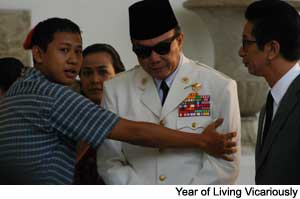 With the ease of digital filmmaking, everyone suddenly thinks they can do it without understanding how to tell an interesting story, how to do it well (style), and with some honesty and restraint.
Some of the films screened attest to this shortcoming. As for James Lee and Ho Yuhang, while they arguably have their own style, their films have been compared to the works of Tsai Ming Liang (Malaysian director based in Taiwan) and Taiwanese director Hou Hsiao Hsien. It is harder to compare films by Amir Muhammad and Yasmin Ahmad to other internationally recognisable filmmakers, partly because their films are so rooted in local politics or infused with a Malay sentiment (though Amir, to his credit, is also experimenting with various styles and genres).
Acting
Unlearning "acting" is the first step to alternative filmmaking in Malaysia. Akademi Seni Kebangsaan graduates like Mislina Mustaffa, Namron, and Ellie Suriaty Omar have shown promise in the indie film scene. But most filmmakers choose to work with non-actors instead because professional local film and television actors have been "spoilt" by the kind of exaggerated performances and acting styles and genres expected of them.
 The old Chinese television actor who plays the tailor in
Sanctuary
was nicely surprised by Ho's directions for him to be more naturalistic, "Oh, you mean method acting?" And Deepak Kumaran during rehearsals for his feature showed his cast Satyajit Ray films and was able to evoke wonderfully natural performances from his lead actor, Gandhi Nathan.
The old Chinese television actor who plays the tailor in
Sanctuary
was nicely surprised by Ho's directions for him to be more naturalistic, "Oh, you mean method acting?" And Deepak Kumaran during rehearsals for his feature showed his cast Satyajit Ray films and was able to evoke wonderfully natural performances from his lead actor, Gandhi Nathan.
However, one wonders how much mileage indie filmmakers can get out of non-actors. Even veteren maverick filmmaker U-Wei Haji Saari admitted that the charismatic young actor in his teledrama Kaki Bakar (The Arsonist) had become "spoilt" when he turned professional after his debut.
Loving Tsai Ming Liang but moving on
Recently, James Lee premiered his first Malay-language short film, Bernafas Dalam Lumpur . During the discussion, he expressed dissatisfaction with the film, saying that he couldn't get into the editing rhythm. Despite his being able to speak Malay, he realised that he was not accustomed to his Malay actors' language, gestures, movements. The most comfortable scene for him was the final unmoving wordless shot of the photographer walking into the distance and out of the frame: trademark James Lee.
Yet, for many in the audience, it was also the most uninteresting scene, its length and stillness out-of-synch with the rest of the film's editing style and rhythm. Lee's discomfort raises an interesting point about how language (and with it, one's culture, body language, gesture, accents, tones) can define cinematic language itself. Is it possible to make a Malay film a la Tsai Ming Liang? Would we want James to?
With the range of diversity within the present independent film movement, perhaps there is a possibility for Malaysian filmmakers to forge their own unique film language that varies from the current multicultural mainstreams in the future. One that is neither Gerak Khas nor a lecturing Tamil melodrama; something not quite Hou Hsiao Hsien or Wong Kar Wai. As ever, I remain optimistic.
KHOO GAIK CHENG is a Malaysian postdoctoral fellow at the Asia Research Institute in Singapore. She can be contacted at this email address: arikgc@nus.edu.sg .


Are you sure you want to delete this comment?
This action cannot be undone.