


/file/publisher-c1a3f893382d2b2f8a9aa22a654d9c97/2025/08/5e0753dad36041413ce9f25a43489608.jpg)

Rethinking social security in a changing world
Social security systems across the globe are being tested like never before. From economic upheavals and public health emergencies to the deepening effects of climate change and demographic shifts, institutions that once seemed stable now face growing uncertainty.
At the heart of these challenges lies a core question: How do we design social security systems that are not only reactive but resilient, inclusive, and ready for the world ahead?
This moment calls for more than policy tweaks - it demands a fundamental rethink of how social protection is structured, governed, and delivered.
The global conversation is shifting towards integrated, lifecycle-based approaches that serve people across changing work patterns, family structures, and life stages.
Global shifts, local strains
The nature of work and social risk is evolving. In many countries, informal and gig-based employment is rising while formal, long-term jobs are declining.
Meanwhile, populations are ageing rapidly, especially in Asia and Europe, placing enormous strain on pension systems and healthcare services. These trends are unfolding unevenly across regions, but their implications are universal.
According to the International Labour Organization (ILO), nearly 4.1 billion people worldwide still lack access to any form of social protection. In low-income countries, coverage gaps stem from limited fiscal space and administrative barriers.
In higher-income economies, the challenge is recalibrating systems designed for a bygone labour market.
We’re living through a transition - economic, demographic, digital - and social security systems must evolve to keep up.

From safety nets to springboards
Traditionally, social protection has been seen as a last-resort safety net. Increasingly, the paradigm is shifting toward systems that promote resilience, enable participation in the economy, and empower individuals across their life course.
This shift requires strengthening institutional capacities. It’s not enough to have the right policies on paper - implementation depends on agile, capable institutions that can respond quickly to crises, adapt to new demands, and deliver services effectively at scale.
Leadership, governance, and investment in workforce capacity all play a role. Resilience is not just about having robust reserves; it's about having systems that can pivot and respond when the unexpected happens - whether it's a pandemic, flood, or mass unemployment.
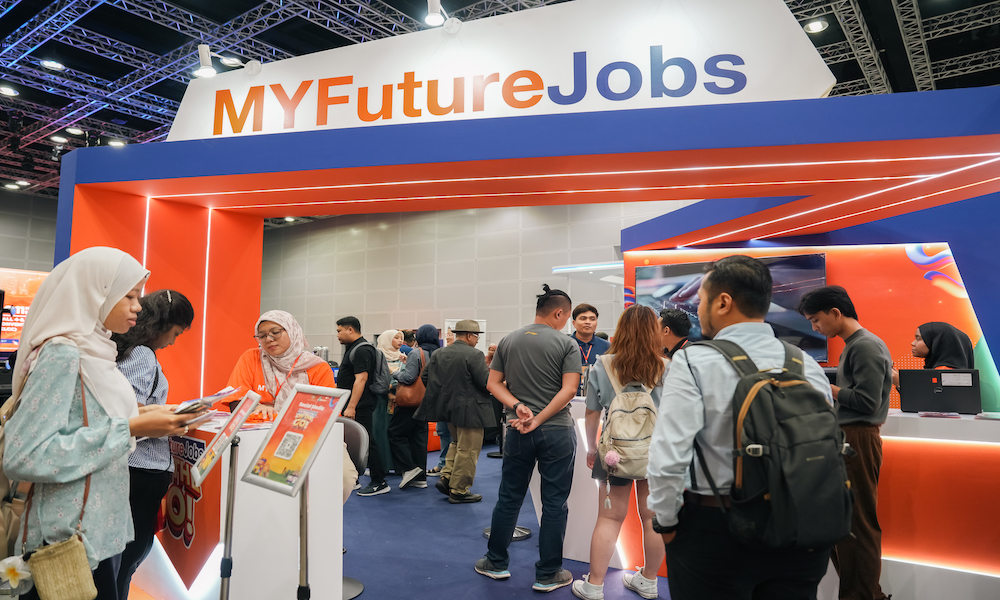
Malaysia’s PERKESO (Social Security Organisation) exemplifies this shift. Through services like MYFutureJobs, PERKESO has expanded from compensation-based support to proactive employment placement and upskilling, redefining what modern protection can look like.
Innovation without exclusion
Technology is transforming how social security is delivered. In Estonia, for instance, digital identification, real-time databases, and artificial intelligence are enabling smarter, faster, more targeted support.
Predictive analytics can flag risks before they escalate. Mobile payments have made it easier to deliver benefits in remote or underserved areas.
But while digitalisation offers immense promise, it also introduces new risks. Without inclusive design, tech-enabled systems can deepen inequality and leave the most vulnerable behind, particularly older people, persons with disabilities, or those with limited digital access.
The challenge is to ensure that innovation enhances human dignity, not just efficiency. Technology should serve people, not the other way around.

Serving people across the life course
A forward-looking social security system follows individuals through life, from childhood to retirement. It recognises the value of unpaid care, protects workers through employment transitions, and enables healthy, secure ageing.
Childcare support, parental leave, disability benefits, and old-age pensions must be integrated within a coherent policy framework. This life-course approach becomes even more urgent in societies grappling with both ageing populations and low fertility rates.
Gender equity must also be at the forefront. Women are disproportionately engaged in unpaid or informal work, and often excluded from contributory schemes.
Building inclusive systems means recognising and supporting diverse forms of work and care.
Countries like Uruguay have expanded benefits for informal and domestic workers by integrating them into national family support programmes, offering lessons in inclusive policy design.

Towards inclusion and sustainability
Inclusion is not just a matter of fairness; it’s essential for long-term sustainability. When more people are covered and contributing, systems are stronger. When design reflects the realities of diverse communities, trust in institutions grows.
And when social protection supports environmental resilience, such as through climate-adaptive safety nets, it helps secure livelihoods and ecosystems alike.
The future of social security lies in its ability to adapt without losing sight of its mission: to protect human dignity.
That means embracing innovation, expanding coverage, and strengthening institutions - not in isolation, but as part of a larger, interconnected transformation.
This Sept 29 to Oct 3, global social protection leaders, policymakers, and innovators will gather in Kuala Lumpur for the World Social Security Forum (WSSF) 2025. It’s not just a meeting of minds, it’s a chance to shape a future where no one falls through the cracks.
Who should be there? Decision-makers, public sector reformers, civil society leaders, and anyone committed to building more inclusive, sustainable systems. Because designing social security for tomorrow starts with the conversations we have today.
The forum is open to ISSA members. Register here.
This Social Security series is in collaboration with PERKESO.


