


/file/publisher-c1a3f893382d2b2f8a9aa22a654d9c97/2025/11/3167b1c099554e4c847386ef764ec7b1.jpg)

EIS reforms vital for future-ready workforce, says FMM
The Federation of Malaysian Manufacturing (FMM) has voiced strong support for the government’s proposed enhancements to the Employment Insurance System (EIS) while urging that the reforms be implemented with sound financial governance to preserve the fund’s long-term sustainability.
In a statement issued on Nov 5, FMM said the Employment Insurance System (Amendment) Bill 2025, tabled in Parliament by Human Resources Minister Steven Sim, marked an important step toward strengthening Malaysia’s social protection framework under the EIS, administered by PERKESO.
Among the proposed improvements are an increase in the training fee ceiling from RM4,000 to RM7,000, the introduction of a daily training allowance of RM30, and an enhancement of the early re-employment allowance from 25 to 50 percent of the unpaid Job Search Allowance.
The employers’ group said these changes reflect the government’s commitment to advancing active labour-market policies.
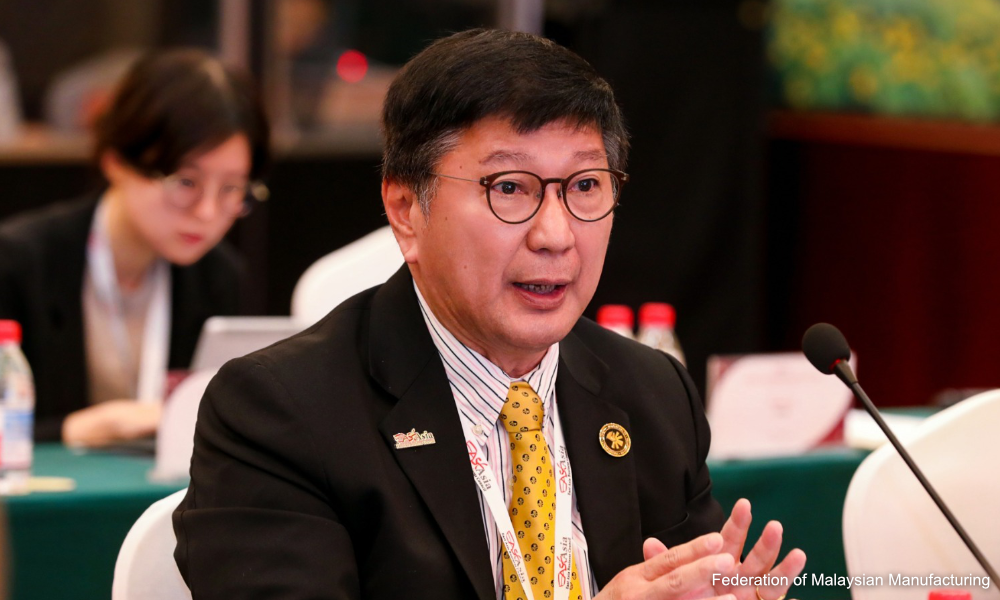
“They will help encourage upskilling and improve job matching, especially in emerging and high-demand sectors,” said FMM President Tan Sri Soh Thian Lai.
He added that the introduction of a new Mobility Assistance Allowance was particularly timely, as it would ease labour mismatches across regions and promote greater talent mobility. “It’s a practical initiative that supports relocation for employment and strengthens Malaysia’s workforce resilience,” he said.
Prudent financial management paramount
However, Soh emphasised that programme expansion must go hand in hand with strict financial discipline and measurable outcomes.
“Every ringgit channelled through the EIS must result in tangible improvements in employability and sustainable job placements—not just training participation,” he noted.
FMM called for greater accountability and transparency in the use of training funds, urging robust monitoring mechanisms to prevent abuse or leakage.
The federation also proposed that future funding frameworks adopt a clear, outcome-based approach to ensure that training resources are directed toward industry-aligned and demand-driven programmes.
While FMM welcomed the move to expand EIS benefits, it warned that the long-term sustainability of the fund must not be compromised. Enhancements, it said, should be supported by sound actuarial assessments and prudent financial management.
“Employers are already contributing to multiple statutory and social-security schemes,” Soh pointed out.
“Any future adjustments to contribution rates must be approached with utmost caution and only after comprehensive stakeholder consultation. Policymakers need to take into account business competitiveness, cost pressures, and SME resilience.”
He added that while strengthening worker protection is vital, reforms must also preserve Malaysia’s job-creation capacity.
“Social protection improvements and economic competitiveness are not mutually exclusive. They must progress together,” he said.
FMM reaffirmed its commitment to working with the Human Resources Ministry and PERKESO to ensure that EIS reforms deliver meaningful employment outcomes and maintain a sustainable model that supports both employees and employers as Malaysia navigates a rapidly changing labour market.
This Social Security series is in collaboration with PERKESO.


Are you sure you want to delete this comment?
This action cannot be undone.