


As Malaysia’s residential energy landscape evolves, the conversation is no longer centred solely on solar panels. Increasingly, attention is shifting towards how energy is stored, managed and deployed and the economic implications are becoming harder to ignore.
A report by TransitionZero highlights just how significant this opportunity could be, finding that Peninsular Malaysia could achieve 80 per cent hourly clean power by 2030, cutting annual LNG (liquefied natural gas) import costs by US$600 million while lowering overall system costs by a further US$20 million compared to today’s setup. In Sarawak, the outlook is equally promising: 90 per cent hourly clean power could be achieved with just 1 GW of solar and 350 MW of battery storage, unlocking an additional US$44 million in fuel savings each year.
These projections point to a critical reality. The future of energy is not just about generating clean power, but about when and how that power is used.
As this shift becomes more evident, industry players are beginning to focus on how energy is stored and managed, not just generated. The conversation is moving beyond generation towards something far more important; control over energy usage.
For companies like United Solar Energy Malaysia, this means moving beyond generation to deliver more complete control over how energy is used.
Its residential BESS solutions are designed for both existing solar owners looking to enhance system performance, and new adopters seeking integrated solar and storage systems from the outset. Rather than focusing only on generation, these systems aim to optimise how energy is used and managed throughout the day.
Supported by smart monitoring platforms, homeowners are able to track energy usage in real time, prioritise solar power, and maintain continuity during outages.
Rather than treating storage as an optional add-on, many industry players are positioning BESS as a foundational component of a modern residential energy system.
Introducing BESS: The missing link in solar
BESS addresses a fundamental limitation of solar power, which is timing.
Solar panels generate electricity during the day, often when household demand is low, while consumption typically peaks in the evening.
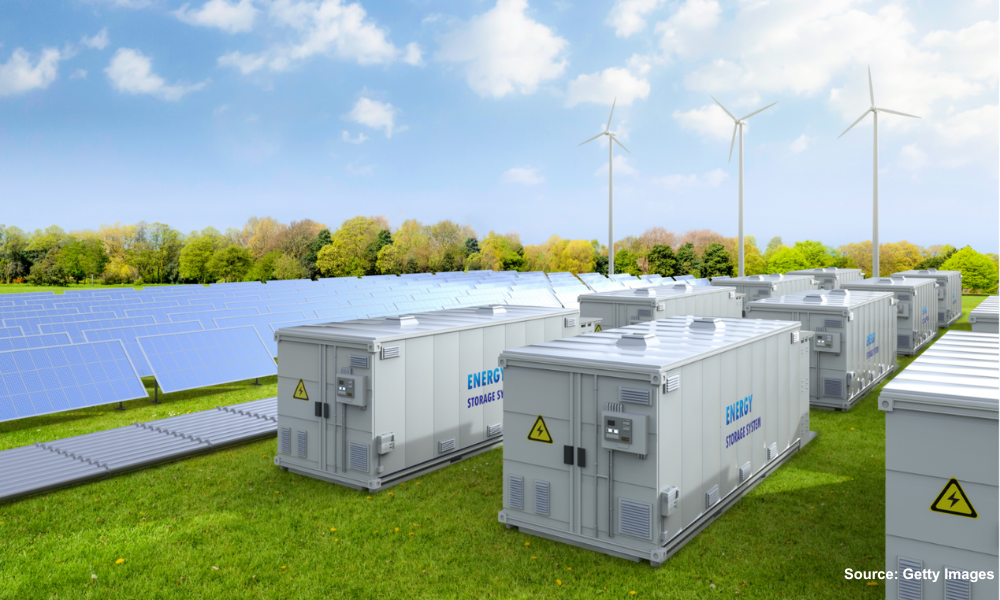
Battery storage bridges this gap by capturing excess daytime generation and making it available when needed.
In practical terms, it functions much like a power bank for the home, supplying energy at night, during peak tariff periods, or in the event of outages. This shifts solar from a passive generation tool into an active energy management system.
Beyond cost savings, BESS is gaining relevance as homeowners increasingly prioritise energy independence. With tariffs becoming less predictable, subsidy structures under review, and greater reliance on uninterrupted electricity, particularly with the implementation of Work-From-Home (WFH) by the government recently.
There is a growing demand for control over energy supply. Storage provides that control, reducing exposure to external uncertainties.
From bill savings to self-consumption
To understand this shift, it is necessary to revisit how Malaysia’s solar journey began. The earlier narrative was simple. Install solar panels and save on electricity bills.
Under schemes such as Net Energy Metering (NEM), excess energy exported to the grid could offset consumption.
However, with initiatives such as the Solar for Rakyat Incentive Scheme (SolaRIS) under the ATAP framework, the emphasis is moving away from exporting energy towards self-consumption, where households prioritise using the energy they generate.
This shift exposes a structural gap. Solar systems produce the most energy during the day, while household demand is typically higher at night.
As tariff structures evolve, exporting surplus energy is no longer always the most advantageous option. Maximising self-consumption within the home is becoming the more strategic approach.
Against this backdrop, BESS is not merely an upgrade; it is a logical progression.
Homeowners today are increasingly focused on reliable backup for essential appliances, better utilisation of their solar systems, more predictable long-term energy costs, and reduced reliance on the grid.
These priorities reflect a broader transition from passive savings to active energy management.
Completing the solar equation
Solar energy, while transformative, was never a complete solution. It addressed generation, but not timing, usage or control.
Battery storage closes that gap by enabling households to capture and use energy whenever required, reducing dependence on the grid while enhancing resilience. In doing so, it delivers continuous savings, reliable backup and full control over energy consumption.
As Malaysia’s energy landscape becomes more complex, the direction is clear : solar alone was the beginning, solar plus storage is the future of residential energy.
To discover how integrated solar and battery storage can optimise your energy usage, reduce reliance on the grid and enhance reliability, visit www.unitedsolarenergy.com.my to explore solutions from United Solar Energy Malaysia (USEM).
This Sustainable Energy Series is in collaboration with United Solar Energy Malaysia (USEM).
The views expressed here are those of the author/contributor and do not necessarily represent the views of Malaysiakini.
